

 English

























































































































































































































































Tokyo Shrine Where Fans Pray for Concert Tickets Draws Global Attention
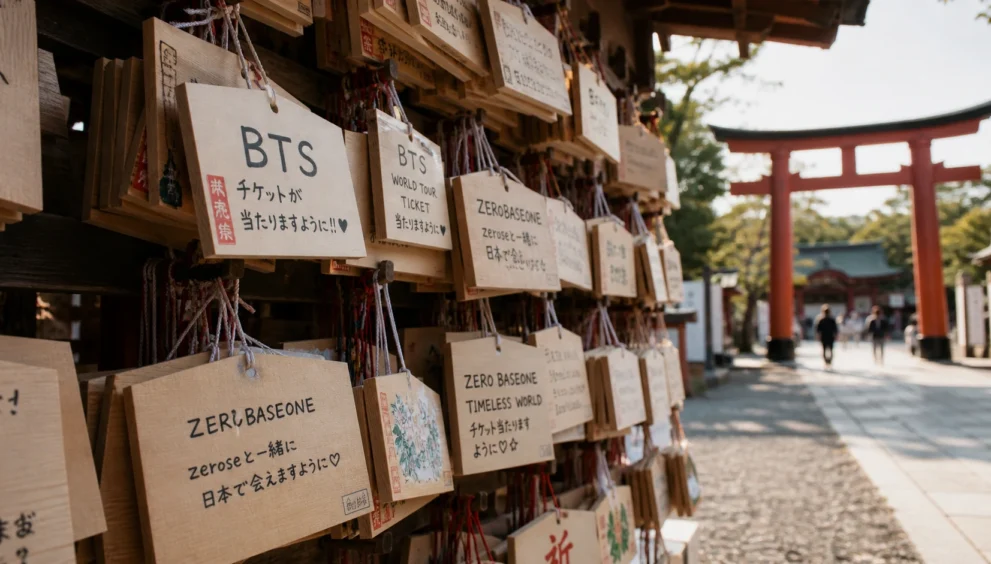
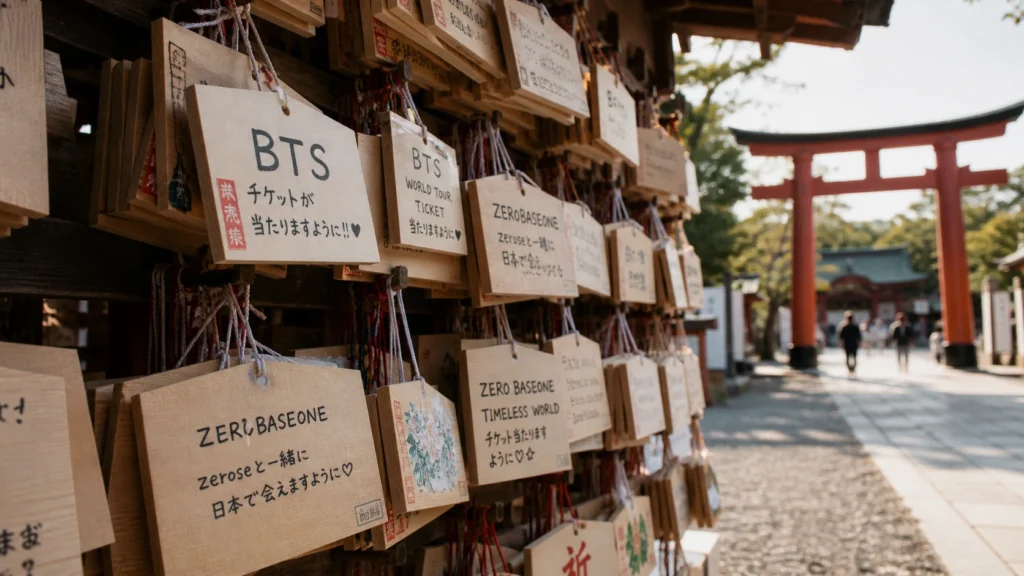
A Tokyo shrine where fans pray for concert tickets has become an unlikely pilgrimage site in the city’s Nihonbashi district. Fukutoku Shrine, built in the 9th Century and originally dedicated to the rice deity Inari, now draws J-Pop and K-Pop devotees seeking divine intervention in Japan’s competitive online ticket lottery system. The Tokyo shrine, where fans pray for concert tickets, sees hundreds of visitors writing pleas to see bands including BTS and ZeroBaseOne on wooden ema prayer cards.
How a Tokyo Shrine Where Fans Pray for Concert Tickets Began
Fukutoku Shrine gained prominence in 1590 when the samurai Tokugawa Ieyasu became a patron. He granted the shrine special privileges, including the right to host lotteries. Winners funded improvements and kept a share of the jackpot. Over four centuries, the association between this Tokyo shrine, where fans pray and luck hardened into tradition.
When J-Pop exploded in the 1990s—with bands such as Glay, Speed, and Morning Musume selling out venues across Japan—a new fandom emerged around the concept of “oshi,” the band member a fan supports with intense devotion. Fans purchase merchandise and follow every appearance. What they cannot easily buy is access to live performances.
Japan’s major concerts operate on multi-step online lottery systems. Fans enter for the chance to purchase limited tickets. The system prevents scalping but also prevents certainty. Fans began visiting this Tokyo shrine where fans pray for concert tickets, reasoning that if the kami could help with lottery winnings centuries ago, divine intervention might extend to concert tickets today.
The Pandemic and the Tokyo Shrine Where Fans Pray for Tickets
During the COVID-19 pandemic, concerts stopped, but devotion continued. When restrictions were lifted, the Tokyo shrine where fans pray for concert tickets experienced a surge of visitors.
Ulli Nambo, a guide with Arigato Travel who includes the shrine on her food tours, told the BBC that the shrine became so crowded that “you couldn’t even see the praying area because there were so many people.” The street outside had to be closed to manage crowds at the Tokyo shrine, where fans pray for tickets.
The ema prayer cards, which worshippers purchase for approximately 500 to 1,000 yen, now display requests for BTS concerts, ZeroBaseOne tours, and specific venue dates. Visitors follow traditional Shinto rituals: purifying hands and mouth at the water fountain, bowing twice, clapping twice to summon the kami, offering silent prayers, and bowing once more.
Cultural Meaning at the Tokyo Shrine Where Fans Pray
Scholars of Japanese religion note that Shinto focuses on present-moment concerns rather than strict dogma. Beth Carter, assistant professor of Japanese at Case Western Reserve University, told the BBC that such interactions should not be viewed as purely materialistic exchanges but as preparation for deeper spiritual engagement.
Japanese fans describe the practice as doing everything possible. “Japanese people will do basically anything to increase their chances, even by 1%,” said Cyber Bunny, a Tokyo-based guide and content creator. “They think going to Fukutoku to pray for tickets is better than not doing it.”
The Tokyo shrine, where fans pray for concert tickets, now draws a demographic most ancient religious sites cannot reach: young, digitally native, pop-culture-obsessed visitors seeking analog intervention in an algorithmic world.