

 English





















































































































































































































































































































































































What Heart Rate Variability Tells You About Your Health
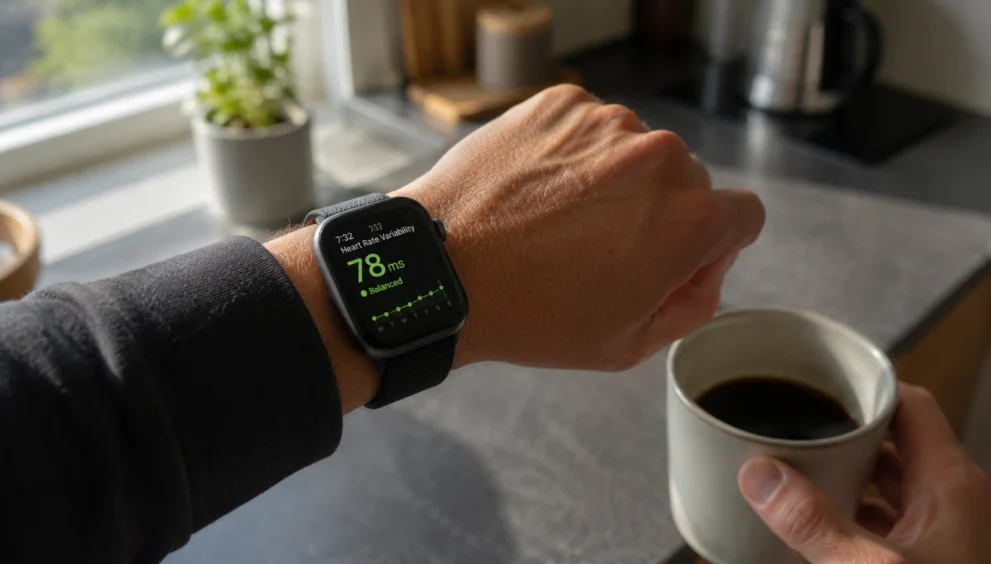
Heart rate variability has moved from cardiology departments to consumer wearables, allowing millions of people to track the tiny fluctuations in time between heartbeats that researchers now study for links to mental health, stress, exercise recovery, and ageing. Heart rate variability reflects how well the nervous system shifts between the fight-or-flight stress response and rest-and-digest relaxation. The technology has made the data widely available. The clinical interpretation has not yet caught up.
What Heart Rate Variability Measures
Heart rate variability measures the variation in time between heartbeats on the order of milliseconds. A higher average heart rate variability generally indicates a responsive, adaptable nervous system. When the body is at rest, the heart naturally beats at a more variable pace, speeding up slightly during inhalation and slowing during exhalation.
A lower heart rate variability can suggest the body is stuck in a stressed state. Deepak Bhatt, director of the Mount Sinai Fuster Heart Hospital in New York, told the that “you want a heart to beat more or less regularly,” but even a healthy heart has variation. The question is how much, and what the variation reveals about the system controlling it.
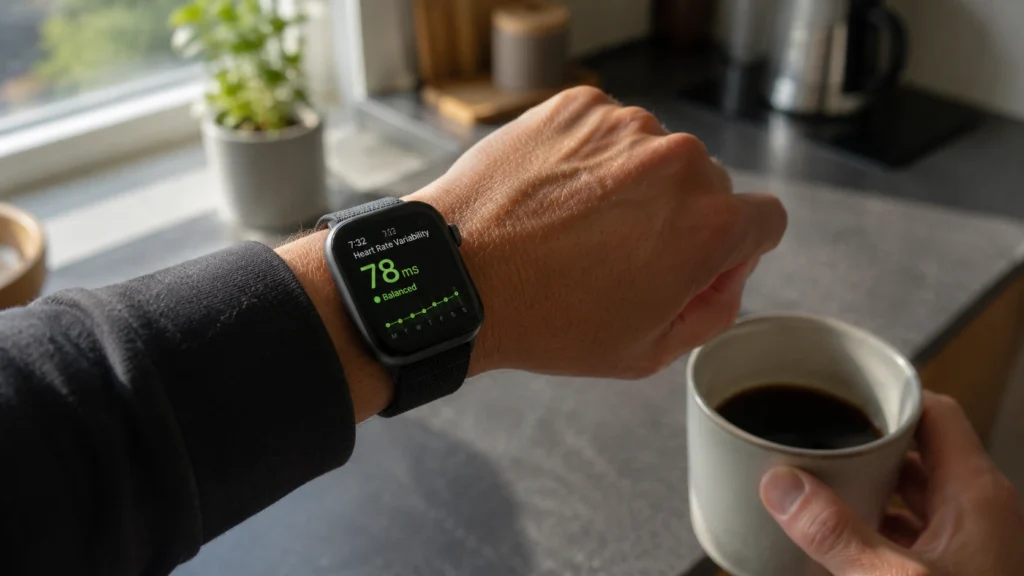
There is no single ideal heart rate variability score. It varies by age, fitness level, sex, tracking device, and calculation method. One wearable brand reports average scores of 65 milliseconds for men and 62 milliseconds for women among its users. The average for 25-year-olds is 78 milliseconds, compared with 44 for 55-year-olds. The decline in heart rate variability with age may indicate how well someone is ageing.
Heart Rate Variability and Mental Health
A 2023 research review found that heart rate variability tends to be lower among people with anxiety and depression compared with people without these diagnoses. Dennis Larsson, a postdoctoral research fellow at Kiel University in Germany, explained that someone with clinical anxiety exists in “a continuous state of stress or duress. There, you see a continuously reduced level of heart rate variability.”
The body gets stuck in fight-or-flight mode. Heart rate variability reflects the trap.
Other studies have found lower heart rate variability scores in people with post-traumatic stress disorder, dementia, and schizophrenia. When patients receive treatments such as psychotherapy or transcranial magnetic stimulation, their heart rate variability sometimes improves, suggesting the nervous system is recovering.
The evidence comes with caveats. Many studies are small and have not been replicated. Measurement methods vary. Karin Steere, an associate professor at the University of Puget Sound in Washington state, has found that chest-strap devices are more accurate than wrist-worn wearables for measuring heart rate variability.
Can Heart Rate Variability Be Improved?
Some researchers believe heart rate variability can be actively improved through breathwork. Tim Herzog, a clinical psychologist and certified biofeedback practitioner in Virginia, recommends approximately 20 minutes of slow, mindful breathing twice daily, inhaling for four seconds and exhaling for six. The heart rate variability responds to this rhythm.
Studies suggest that structured breathing programmes may reduce symptoms of PTSD and depression, improve sleep, lower blood pressure, and lessen chronic pain. The research is mostly small and preliminary.
Bhatt describes the relationship as “a chicken-and-egg sort of thing. Is the heart rate variability improving, per se? What’s important? Or is it what led to it improving?” Heart rate variability often improves when people adopt healthier behaviours such as exercising or getting consistent sleep. Whether the metric itself causes better health or simply reflects it remains unresolved.
How to Use Heart Rate Variability Data
Steere recommends tracking heart rate variability over time rather than focusing on a single reading. “Every morning, take your HRV, see what that looks like, and then think about what just preceded that,” she said. Bhatt noted that other metrics, including heart rate, blood pressure, weight, and cholesterol levels, remain more important for most people.