

 English

























































































































































































































































































































































Trump Administration Tests 90-Day Rule with Aggressive Voter Roll Purges
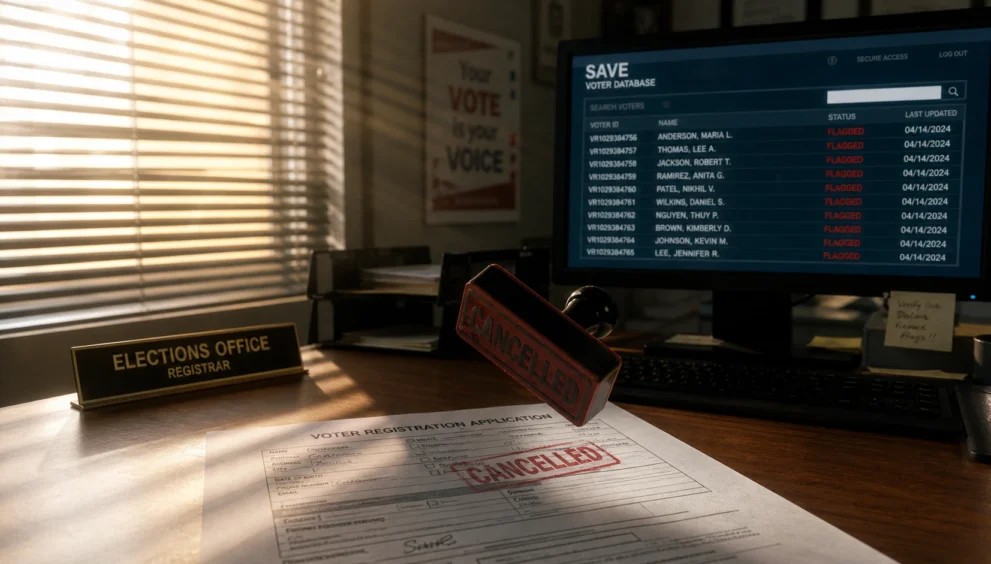
The Trump administration is pursuing aggressive voter roll purges through a nationwide review of state voter registration files, using a federal immigration database to flag suspected non-citizens for removal. The Justice Department argues the effort can continue up to Election Day, challenging the National Voter Registration Act’s 90-day quiet period on systematic removals. State experience with the SAVE database has shown significant false positive rates, raising election administration concerns ahead of the midterms.
How the Trump Administration Is Conducting Aggressive Voter Roll Purges
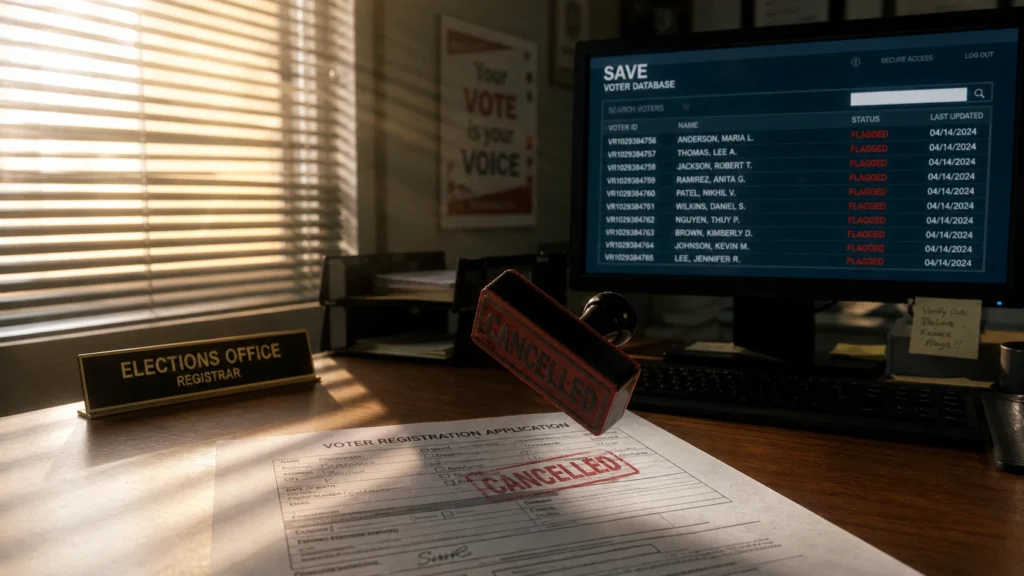
The Justice Department’s aggressive voter roll purges rely on the Systematic Alien Verification for Entitlements (SAVE) database, originally designed for benefits eligibility verification. The Trump administration expanded SAVE to draw upon additional federal data sources and tasked the DOJ with obtaining nearly every state’s voter registration file for screening.
State-level experience with the SAVE database has revealed substantial accuracy problems. Idaho Secretary of State Phil McGrane told CNN that an initial review of nearly 1.1 million registered voters flagged 760 potential non-citizens. After further investigation, approximately three dozen cases were referred to law enforcement, with a confirmation rate of less than 5%.
In Texas, a lawsuit challenging the state’s aggressive voter roll purges documented wide variation in how counties handle SAVE matches. Some election officials cross-check flagged names against state citizenship records before sending notices. Others mail cancellation letters to every name SAVE identifies. The voter’s experience depends on their county.
The Department of Homeland Security told CNN that 150 employees now conduct manual checks of SAVE matches before sending results to states. As of early April, DHS identified 21,000 potential non-citizens out of 60 million records0.035%. Approximately 3% of all comparisons returned inconclusive.
The 90-Day Rule and the Legal Fight Over Aggressive Voter Roll Purges
The National Voter Registration Act prohibits systematic voter removal programs within 90 days of a federal election. The quiet period was designed to give eligible voters mistakenly flagged adequate time to prove their citizenship and restore their registrations.
The Trump administration argues the NVRA’s quiet period does not apply to aggressive voter roll purges targeting non-citizens, asserting people who should never have been registered can be removed at any time. One federal appeals court rejected this argument in 2014. Another appeals court rejected it in a Virginia case.
The Supreme Court issued an emergency order in 2024 allowing then-Governor Glenn Youngkin to continue aggressive voter roll purges days before the election. The order did not resolve the merits. The Republican National Committee is now asking the Supreme Court to take up the question in a case from Arizona. A ruling is unlikely before the midterms.
In Ohio, Republican Secretary of State Frank LaRose defends using SAVE and state DMV data for aggressive voter roll purges. Other election officials express concern about the lack of guidance on handling flagged matches.
What Aggressive Voter Roll Purges Mean for Voters
Eligible voters flagged by flawed data matching face the most immediate risk. The DHS manual review system still produces a 3% inconclusive rate. For those voters, there is no answer, only a notice questioning their eligibility and a limited time to respond.
MIT professor Charles Stewart told CNN that ending the quiet period would “dump” investigatory work on local election officials during the final weeks before a vote. Every hour spent verifying SAVE flags reduces time for preparing polling places and training poll workers.
Wren Orey, director of the Bipartisan Policy Center’s Elections Project, warned that voters flagged during the 90-day window face a higher risk of inadequate time to obtain required documentation. Birth certificates and passports can take months to secure. Provisional ballots and same-day registration provide partial safeguards but are not available in all states.