

 English




























































































































































































South Korea’s Cafes Sell Design as Coffee Becomes Secondary
South Korea’s cafes sell design and architecture as their primary product, with coffee functioning as the entry point to a broader cultural experience. The phenomenon has produced what Koreans call a “kafe-republic,” a landscape so competitive that a cafe can open to acclaim and be forgotten within months when a more visually compelling space appears. South Korea’s cafes sell design through a concept called gamseong, the emotions evoked by aesthetically pleasing places.
How South Korea’s Cafes Sell Design Through Gamseong
Jihyu Kim, co-CEO of Seven Island Coffee in Busan, describes what customers purchase as “emotional capital,” or gamseong ja-bon. The companion framework is the experience economy, gyeong-heom gyeong-je. South Korea’s cafes sell design because customers now value experiences that move them more than products alone.
“In the past, money and technology were capital,” Kim told CNN. “However, as time goes by, things that move us or touch our minds are much more valued.” Coffee prices in South Korea can run higher than in other markets. Customers continue to pay. Koreans, Kim said, “are willing to pay for it if they are satisfied with the experience and emotional satisfaction.”
For many Koreans, a cafe visit now functions as a cultural outing. Kim said modern cafe culture is “considered the same as going to a museum or the movie theater.” South Korea’s cafes sell design so successfully that the country has developed a term for the tribe that studies in cafes, cagongjok, and another for the industry itself, kafe-republic.
Two Strategies as South Korea’s Cafes Sell Design
The competitive pressure has produced two distinct approaches. City cafes, working within limited footprints, compensate with intentional design and quick-hit novelty. Rain Report in Seoul’s Yongsan District offers customers the sensation of drinking coffee on a rainy day, every day, through environmental simulation.
Suburban cafes compete through space, scenery, and escape. Heesu Jeon, CEO of architecture firm A. The live and lead architect behind the award-winning OUTPOST cafe on Ganghwa Island, said these spaces focus on “healing and recharging in a space with nature.” She added, “The best interior is nature. Because the view you see is different in each of the four seasons, the reason people come is actually created by nature.”
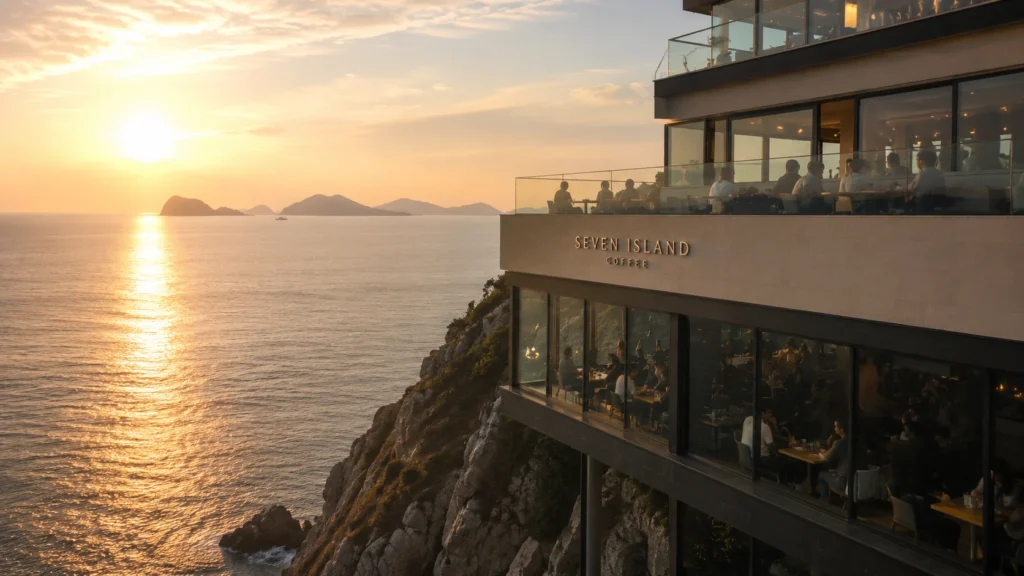
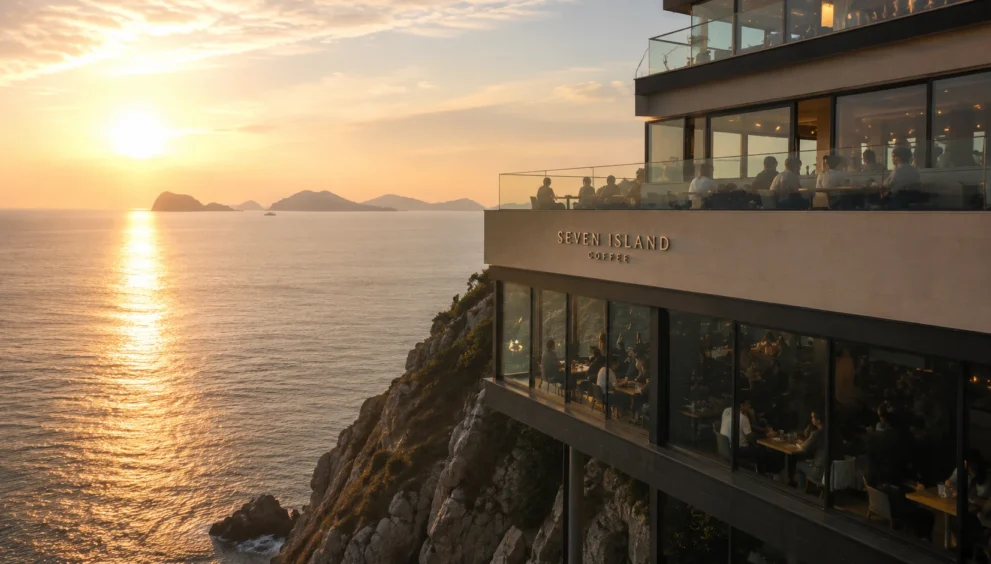
OUTPOST draws inspiration from dondae, ancient military watchtowers from the Joseon dynasty. Jeon reimagined a structure built for tension as a place of peacefulness. Seven Island Coffee, perched on cliffs off Busan’s southern coast, was named one of the World’s Most Beautiful Restaurants by the 2025 Prix Versailles. Its exterior buildings face different islands, so patrons experience shifting views as they move through the space.
The K-Pop Parallel
Kim drew a comparison between the cafe phenomenon and South Korea’s global cultural exports. “K-pop has gone beyond just the music. It combines performance and fashion to enhance the experience,” she said. “Similarly, in Korea, cafes are more than just coffee. They combine architecture and the owners’ brand storytelling.” The logic is identical. The product is the entry point. The experience is what sells.
What Comes Next
Jeon expects city cafes to sharpen differentiation around specific specialties. Suburban cafes, she predicted, “will move toward delivering more dramatic experiences in a stronger, more stimulating and impactful way.” Seven Island Coffee has begun hosting art exhibitions and cultural collaborations. The cafe is becoming a gallery and a destination that justifies the drive.