

 English

























































































































































































































































Taylor Swift Leaned Against the Counter. She Talked About Sally Rooney.
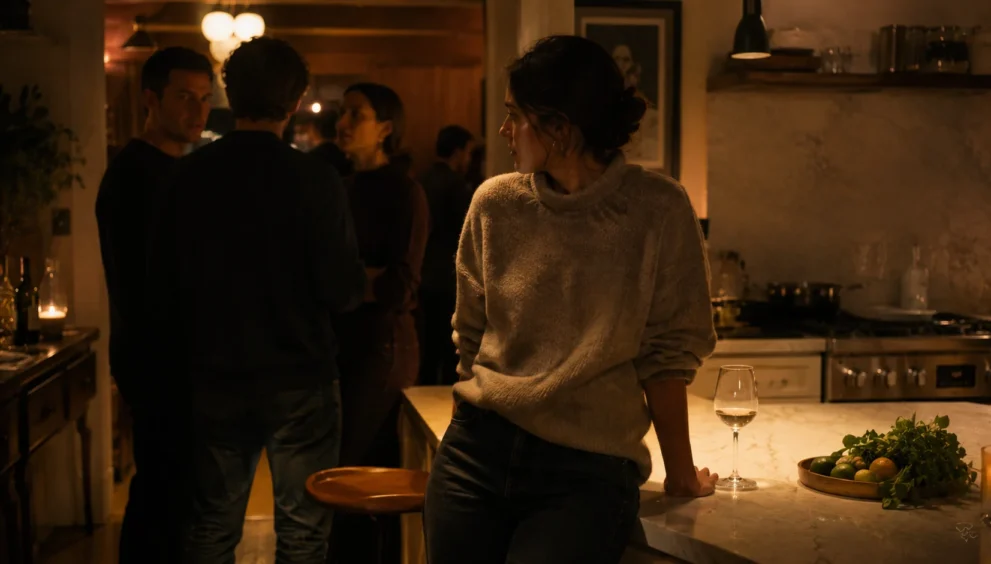
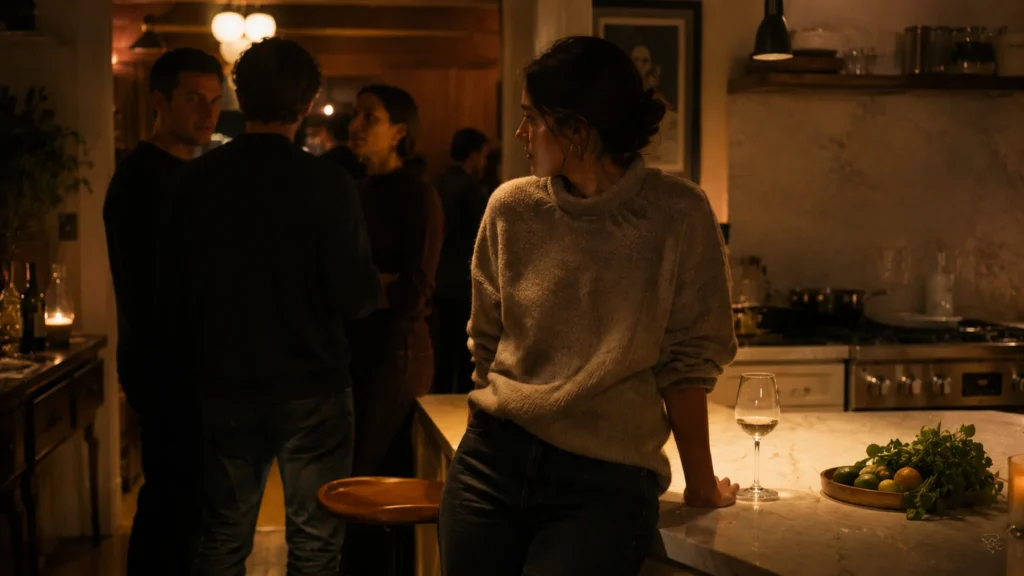
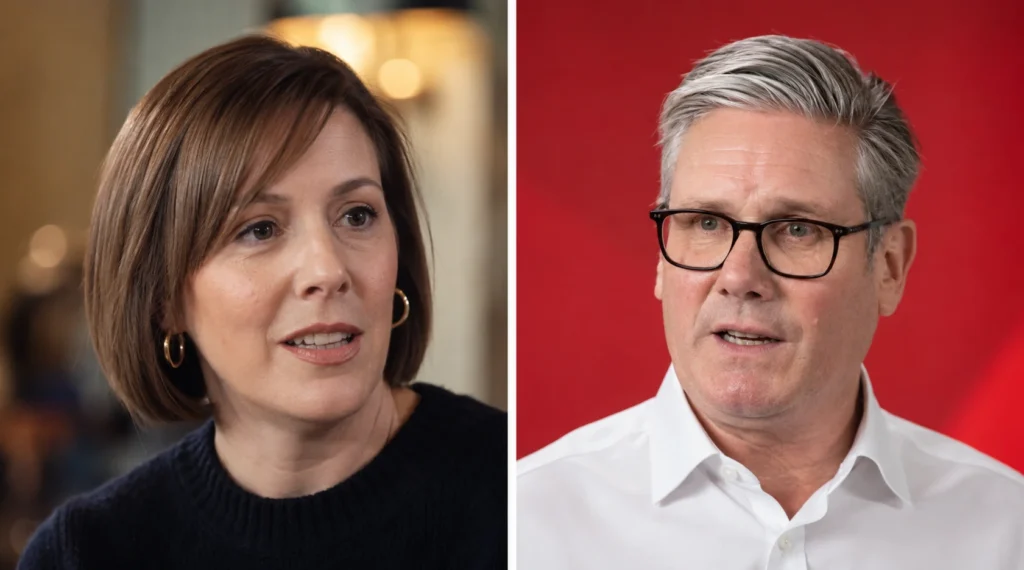
The room was not what you would imagine. No entourage. No velvet rope. No handlers signalling when time was up. Taylor Swift leaned against a kitchen counter, drinking white wine from the bottle, talking about Sally Rooney. The journalist she was talking to—the Guardian’s deputy music editor Laura Snapes, who has met Swift multiple times—describes her manner as “very easy and normal to talk to.” The setting was not a press junket or a backstage green room. It was someone’s house. The conversation drifted to novels. The wine was casual. The singer of the highest-grossing tour in history was just a person at a party, holding forth about books.
This is the detail that explains everything. Not the $2 billion net worth. Not the 12 studio albums. Not the four re-recorded “Taylor’s Versions” that hollowed out a music executive’s investment and proved an artist could own her own past. Not the Eras tour, which became a cultural pilgrimage for millions. Not the engagement to Travis Kelce with 38 million Instagram likes. The kitchen counter. The white wine. The Sally Rooney chat.
Swift’s entire career has been a negotiation between scale and intimacy. The scale is now incomprehensible—she is talked about alongside Madonna, Michael Jackson, the Beatles. The intimacy is the kitchen-counter conversation, the secret messages in sleeve notes, the show where she met fans until 1am in 2019, the Easter eggs hidden in lyrics that make devotees feel like they are decoding a private language. The two things should cancel each other out. They don’t. That’s the trick.
But the secret isn’t in the music. It’s in the way she learned to be watched. While other kids watched the Disney Channel, Swift took notes on VH1’s Behind the Music. She wasn’t studying success. She was studying what happened when careers went off the rails. The music was instinct. The survival strategy was homework.
The Curriculum
Behind the Music ran for nearly two decades, documenting the rise and fall of musicians who had made it and then lost it. While her peers absorbed the fantasy of fame, Swift absorbed the mechanics of its collapse. She learned what happened to young female artists when they aged past 27, when the industry decided they were old hat, when the masters slipped out of their control, when the narrative turned.
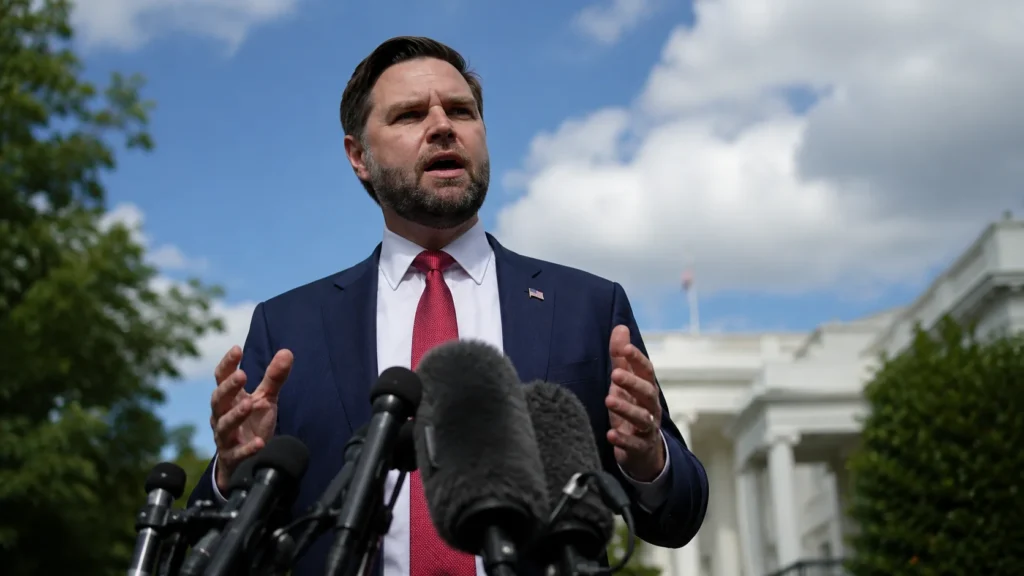
The result is a career that has systematically dismantled each of those threats before they could dismantle her. She re-recorded her first six albums note for note after Scooter Braun bought the master recordings from her former label—a move that hollowed out his investment and proved an artist could simply recreate her own catalogue from scratch. She then bought the rights back. She held Spotify and Apple Music to account over streaming royalties. She showed younger artists like Olivia Rodrigo that owning masters from day one was a negotiable condition, not an industry given. She condemned the Supreme Court’s overturning of Roe v Wade. She endorsed Kamala Harris and signed off the Instagram post “childless cat lady,” a pointed reference to JD Vance’s description of leading Democrats.
Each move was deliberate. Each move was legible to anyone who had been watching as long as she had. The girl who took notes on Behind the Music became the woman who refused to become an episode of it.
The Intimacy That Cannot Scale
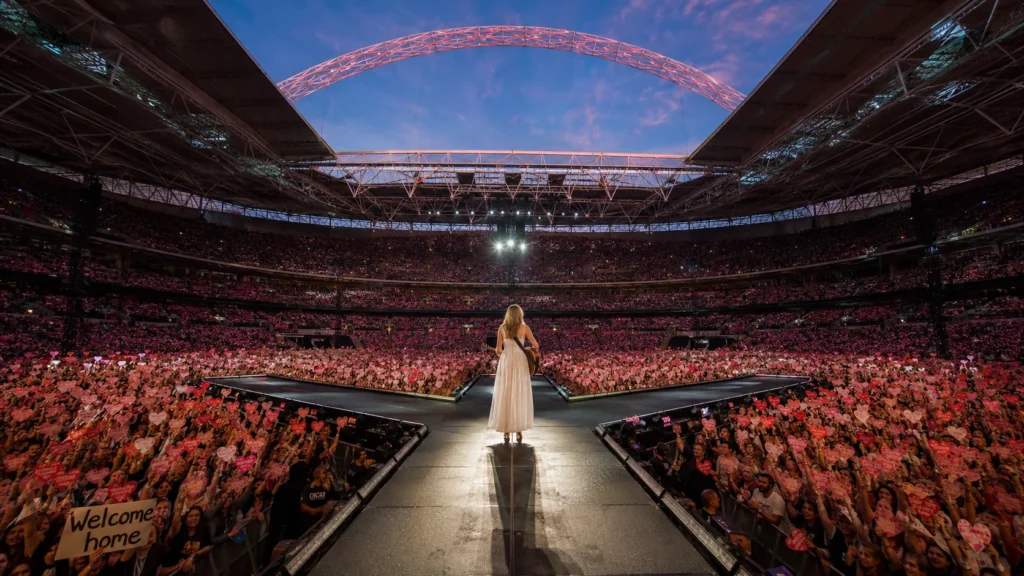
The kitchen-counter conversation cannot happen at a stadium show. The security requirements of being the most famous pop star on earth make casual meet-and-greets impossible. The Easter eggs have become the substitute—hidden messages in lyrics and sleeve notes that once felt like secrets shared among a small congregation and now feel like a mass-market scavenger hunt. The fans still decode them. The codes are now widely reported. The intimacy has changed texture but not function.
Snapes describes the fan culture around Swift as something the fans themselves create: the friendship bracelets, the ardently chosen outfits, the new lexicon of audience interaction built around responses to particular sung lines and shared memes. The Eras tour generated its own language. Swift provided the occasion. The audience built the meaning.
This is the deeper structure. Swift’s relationship with her fans is not primarily musical. It is narrative. She tells stories about her life. The fans tell stories about what those stories mean to them. The exchange produces a bond that feels personal even though it operates at a scale that makes personal connection impossible. The kitchen counter is real. The stadium is real. The space between them is where the career lives.
The Breakup Song That Changed Everything
At some point, Swift’s breakup songs stopped being about heartbreak and started being about structural mistreatment. The shift is traceable. Early songs described being hurt. Later songs described being treated poorly on a systemic level—by partners, by executives, by the media that counted her romantic partners and mocked her for having them. The progression is from “you hurt me and that was bad” to “you treated me poorly on a structural level, and that is even worse.”
This is the political education embedded in the discography. It is not separate from the love songs. It is the love songs, evolved. The diss tracks—Bad Blood for Katy Perry, All Too Well for Jake Gyllenhaal and the scarf he would not return—are not petty. They are assertions of narrative control. The person who tells the story owns the story. Swift has always understood this. The song is the story. The story is the power.
Blank Space took on the media’s characterisation of her as a serial dater. The Man wondered aloud what her career would look like if she were male. The songs are not polemics. They are pop music. The politics are dissolved into the hooks. The hooks reach people who would never read a feminist essay. The transmission is more effective for being indirect.
What Comes After the Wedding
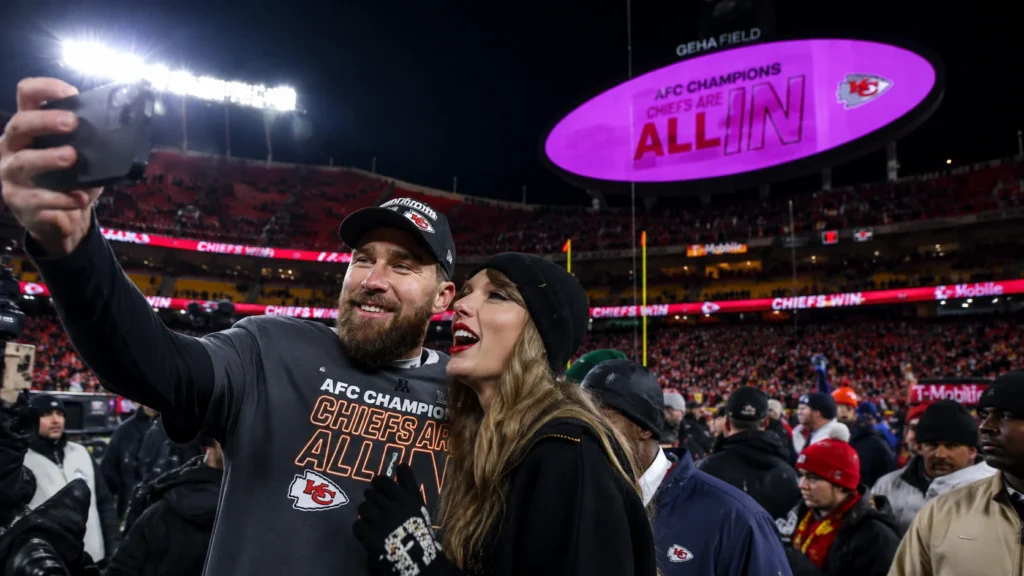
Swift will marry Travis Kelce this summer. The engagement announcement drew 38 million likes. The question that follows is predictable: will marital happiness dull the creative edge of pop’s great sceptical romantic? The question is also wrong. Swift spent six years with British actor Joe Alwyn, and wrote some of her best songs about the intricacy of long-term love during that time. Domestic contentment is not an endpoint. It is material.
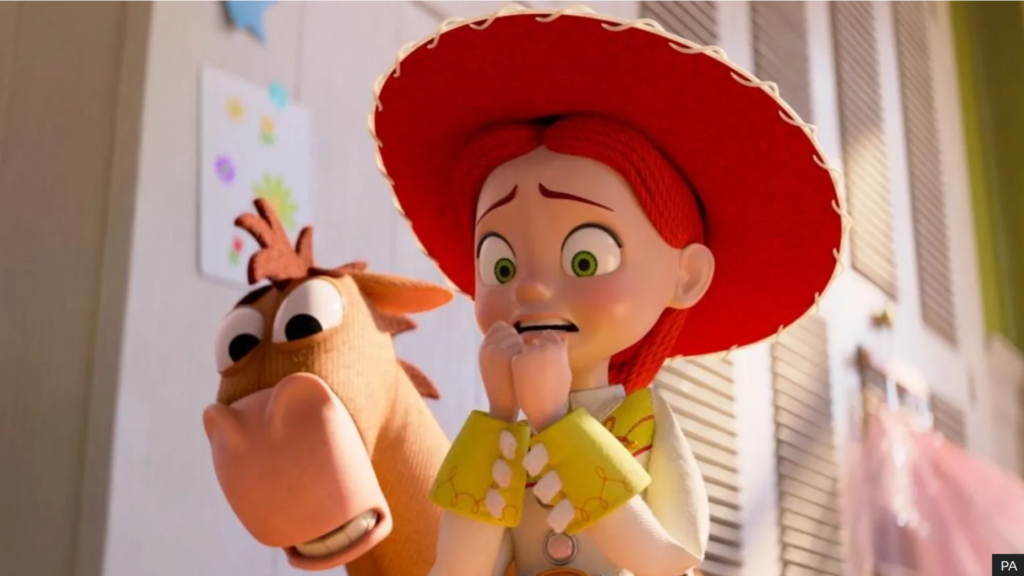
The most recent album, The Life of a Showgirl, disappointed some critics and fans. The lead single for the Toy Story 5 soundtrack, released shortly after, is, according to Snapes, “one of her best songs in years.” The trajectory is not a decline. It is a wobble followed by a correction. The creative engine is still running. The wedding is not a finale. It is a scene.
An Oscar seems plausible. A Tony would complete the EGOT—she has three years to beat Jennifer Hudson and become the youngest to achieve it. The Eras tour set a financial benchmark that may never be matched. The next tour, if it comes, will likely be more intimate—the all-day festival format she planned after Lover in 2019, before the pandemic intervened. Snapes believes it would take “three or four terrible albums in a row to dent her stardom.” The assessment is not fandom. It is analysis. Swift has become the default pop star. The default does not easily break.
Two Small Things
Try this: The next time you encounter a Swift song you think you know, check whether it’s the original or “Taylor’s Version.” The differences are small. The fact that they exist at all is the point. Someone took her work. She made it again. That is a lesson in agency that applies far beyond music.
Consider this: The Easter eggs, the secret messages, the codes—they are not marketing. They are a structure for maintaining intimacy at scale. You have your own version of this. The group chat, the inside joke, the ritual that makes a large world feel smaller. Pay attention to it. It matters more than you think.