

 English



































































































































































































































































































































I Wore AI Glasses in Paris. They Got the Tower Wrong.
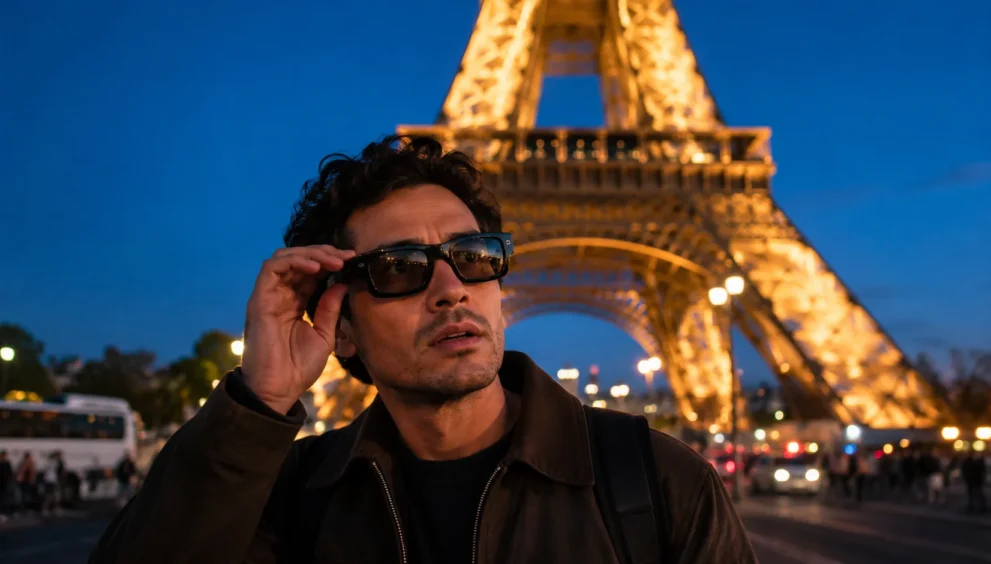
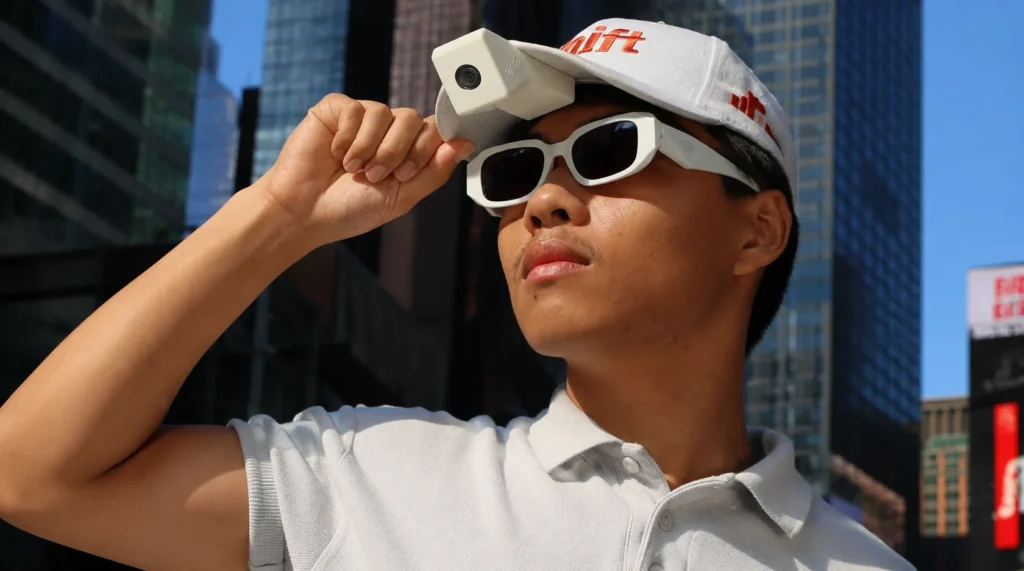
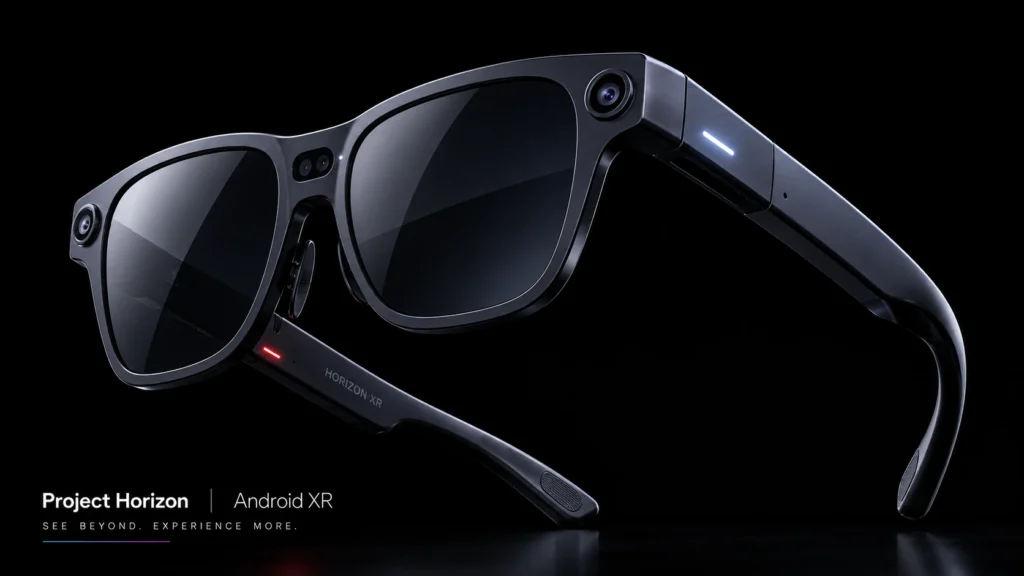
I stood beneath the Eiffel Tower arguing with my own face. The Ray-Ban Meta AI glasses—chunky, black-framed, seven million units sold in 2025—had just told me, through a tiny speaker near my ear, that the tower was 330 metres tall. A few minutes later, I asked again. This time: 324 metres. The official website says 330. The glasses did not seem to care. They delivered both answers with the same smooth confidence, the same frictionless certainty. When I asked where the information came from, the response was vague. “I get my information from my training data, internet searches, and other sources.”
The error was small. The implications were not. If the glasses cannot reliably tell me the height of the most famous structure in Paris—a fact that sits on a single official website, unchanging, easily verifiable—what else are they getting wrong? The history of Place de la Concorde? The translation of the menu? The directions to the Seine? I had been wearing them for a day. I had already trusted them with all of these.
The travel technology industry is now converging on a single proposition: that the friction of being a stranger in a new place—the lost moments, the awkward exchanges, the serendipitous wrong turns—is a problem to be solved. Meta’s glasses, Google’s forthcoming rival, Samsung’s in-development competitor, Apple’s widely reported project: all of them promise to smooth the path between you and the city. The glasses will translate. The glasses will navigate. The glasses will recommend. The glasses will answer. You will never need to ask a stranger for directions again. You will never need to be lost. The question the industry has not answered is whether being lost is something travellers actually want to stop being.
But the height of the Eiffel Tower wasn’t the story. The story was Digital Convenience vs Human Discovery—and what happens when the technology that promises to connect you to a place instead places an invisible layer between you and it.
The Promise and the Privacy Problem
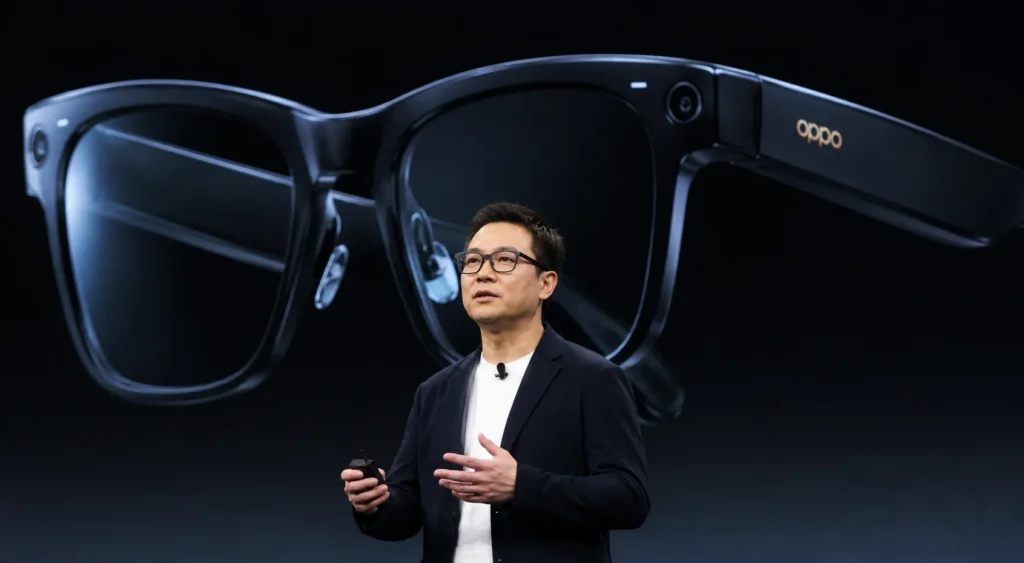
The glasses are an extraordinary piece of engineering. More than seven million pairs sold in 2025, according to reports. Rival products from Google and Samsung are in development. Apple is widely expected to enter the market. The category is moving from novelty to mainstream at speed. The promise for travellers is immediately compelling: live translation, hands-free photography, quick answers about landmarks and menus, voice navigation that leaves your eyes free to look at the city rather than a screen.
Some of this works. The translation function handled a French newspaper and a café menu without trouble. The voice directions, once I learned to set the route on Google Maps and use the glasses as a headset rather than a navigation tool, were genuinely better than wearing headphones—I could hear the city around me while being guided through it. The historical summaries, the Eiffel Tower aside, were accurate when I checked them later. The currency conversions gave me a ballpark. The technology is useful. It is not trustworthy.
Then there are the privacy concerns. Wired has reported instances of the glasses being used to record women without their knowledge or consent, earning them the label “pervert glasses.” Swedish newspaper Svenska Dagbladet reported that workers reviewing data from Meta smart glasses had seen intimate and sensitive footage, including people who appeared not to know they were being recorded. Meta’s own privacy policies state that voice interactions can be stored and processed using machine learning and trained reviewers. Transcripts and stored audio recordings may be kept for up to a year unless users delete them sooner. The privacy concerns are serious. They are also well-documented. What interests me more is something else.
The Layer Between You and the City
The longer I wore the glasses, the more I noticed what they were replacing. In years past, if I were lost in Paris, I might have asked a stranger for directions. I might have relied on a hotel concierge for a recommendation. I might have wandered without a destination and discovered something by accident. The glasses eliminate all of these. They handle the directions, the translation, the information, and the recommendations. They reduce friction. They increase convenience. They also remove the need to interact with anyone.
This feels like part of a wider shift in travel technology. Every innovation promises to make travel easier. Translation apps remove the need to learn phrases. Map apps remove the need to ask for directions. Review platforms remove the need to trust a local recommendation. Recommendation algorithms remove the need to stumble upon something unexpected. The glasses are the logical endpoint of this trajectory: a device that handles all of it, seamlessly, invisibly, without requiring you to speak to a single person who lives in the place you have travelled to see.
The trade-off is not trivial. Some of the most memorable moments on a trip happen precisely because things do not go according to plan. The wrong turn leads to a courtyard you would never have found. The mistranslated order that arrives as something unexpected and wonderful. The conversation with a stranger that begins with a request for directions and ends with a recommendation no algorithm would have made. The glasses are designed to eliminate these moments. They succeed.
Who Gains, Who Loses
The power recalibration is visible across multiple axes.
Meta gains a new category of data—what travellers look at, ask about, photograph, and navigate toward. The glasses are a data-collection device as much as a travel tool. The privacy policy makes this explicit. The value of that data, aggregated across millions of users, is the business model. The glasses are not the product. The data the glasses generate is the product.
Travellers gain convenience and lose serendipity. The trade-off will appeal to different people in different contexts. A business traveller with limited time may value efficiency over discovery. A first-time visitor to a city where they do not speak the language may value translation over wandering. A repeat visitor to a familiar place may value neither. The technology is not uniformly good or bad. It is uniformly oriented toward a particular idea of what travel should be: efficient, frictionless, predictable. The idea is not neutral. It is a choice.
Locals lose the interactions that the glasses replace. The request for directions, the halting attempt at a foreign language, the moment of shared humanity between a lost visitor and a resident who stops to help—these are small things. They are also part of what makes a city feel like a place rather than a backdrop. The glasses remove the need for them. The city becomes a visual experience rather than a social one. The distinction is the difference between looking at a place and being in it.
The travel industry gains a new product category and a new tension. The glasses will get better. The accuracy will improve. The privacy concerns will be litigated. The fundamental question—does easier always mean better?—will remain unanswered. The industry will sell the glasses as a way to connect more deeply with a destination. The reality, at least for now, is that they connect you more deeply to a device.
The 12-Month Trajectory
The glasses will improve. The accuracy problems that produced two different heights for the Eiffel Tower will be reduced. The translation will get sharper. The navigation will get smoother. The product will become more compelling. More travellers will buy them. The privacy debate will intensify and then settle into the background, as privacy debates tend to do when the product is good enough.
The deeper question will persist. Travel technology has spent two decades removing friction from the experience of being in an unfamiliar place. The result is a generation of travellers who have never been lost, never asked a stranger for help, never discovered something by accident. The glasses are the culmination of that project. They are also, for some travellers, the point at which the project’s costs become visible. The smooth path through the city is not the same as the city. The information layer is not the same as the place. The convenience is real. The loss is harder to name.