

 English















































































































































































David Hockney Died at 88. He Painted Until the End.
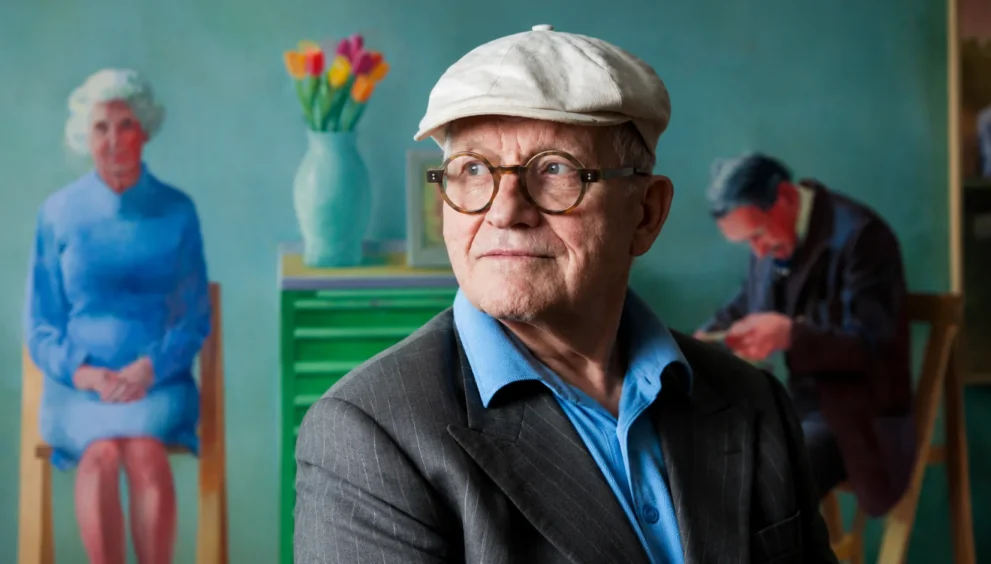
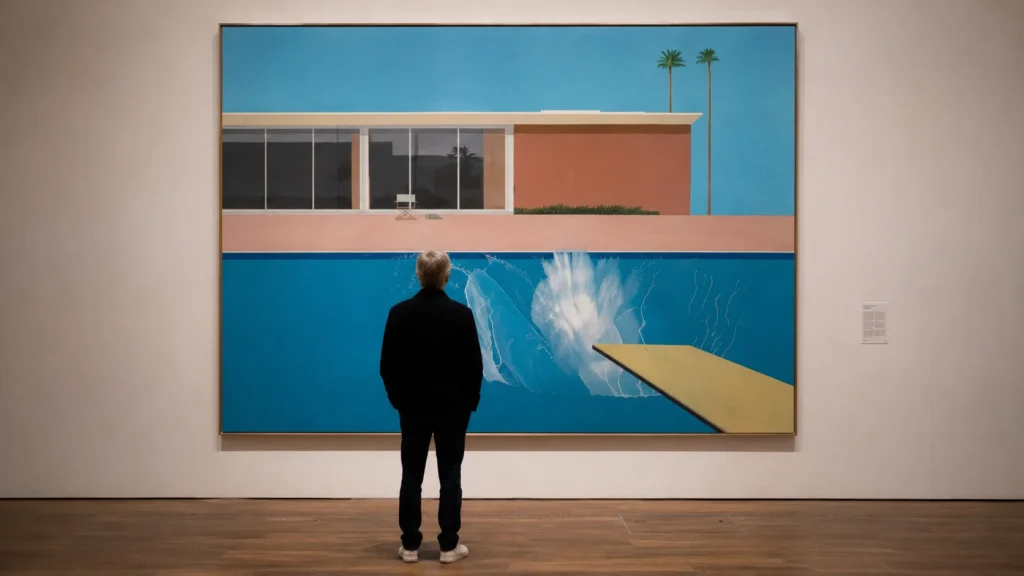
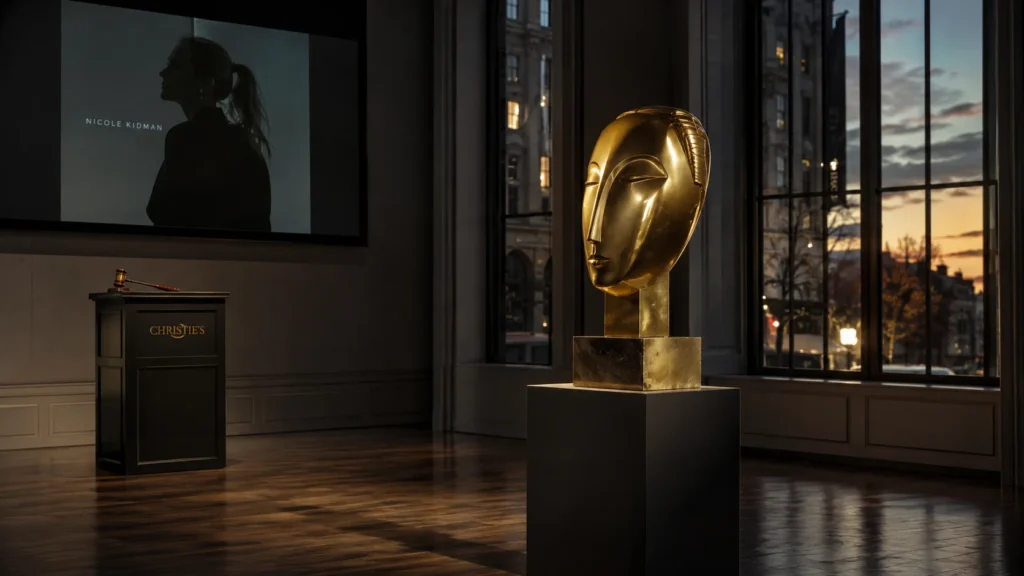
The swimming pool was blue. Not the blue of a real pool, but the blue of a place that exists only in memory—flat, electric, impossible. David Hockney painted it in Los Angeles in 1972. His dealer sold it that same year for $18,000. In 2018, the same painting, *Portrait of an Artist (Pool with Two Figures)*, sold at Christie’s for $90.3 million. It became, briefly, the most expensive work by a living artist ever auctioned.
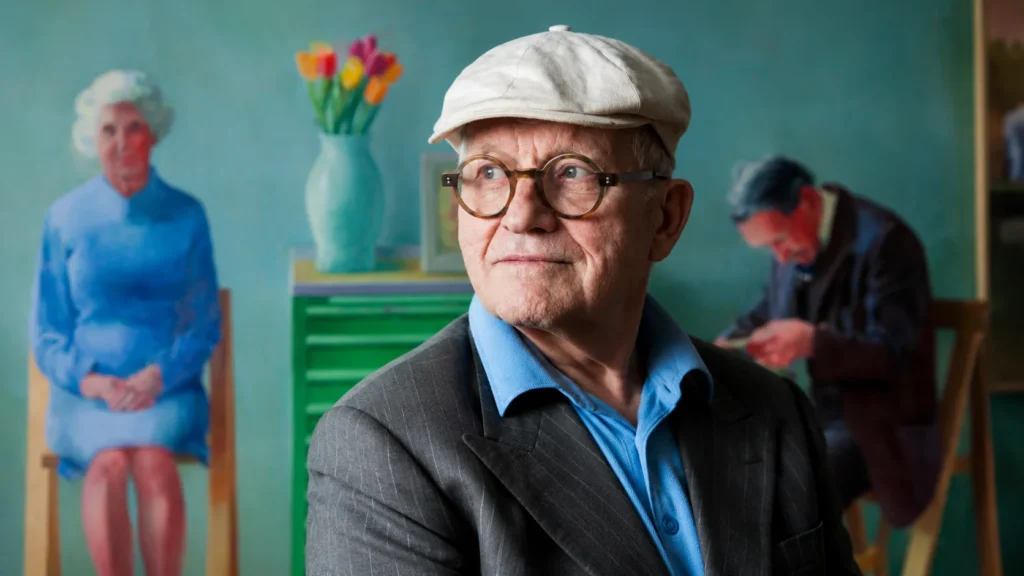
Hockney was alive for that. He was alive for the record, the headlines, the breathless coverage of a market that had chased his prices into the stratosphere. He was alive when his double portrait, Henry Geldzahler and Christopher Scott, sold for $49.5 million the next year. He was alive when *Nichols Canyon* crossed $41 million. He was alive, and he was in his studio in California, painting for six or seven hours a day, telling a visiting journalist that he felt 30 when he worked.
He died Thursday, peacefully at home, one month short of his 89th birthday. The market will now do what markets do when an artist of his stature dies. The prices will rise. The available works will shrink. The gap between what Hockney cared about and what the market values will widen into something unbridgeable. He held onto much of his own work. He established a foundation to manage it. The foundation will now manage a different kind of legacy—the legacy of an artist who refused to separate living from working, or working from pleasure, or pleasure from the serious business of looking at the world.
So what is actually happening here? The death of an artist always triggers a recalibration between the work and the market. With Hockney, that recalibration is especially strange. He never seemed interested in the commercial value of his paintings. He experimented constantly—photocollages, stage design, iPad drawings of the Normandy countryside. The market rewarded the pools. He kept making whatever he wanted. The tension between artistic restlessness and market fixation on signature works defined his career. His death does not resolve it. It freezes it in place.
The Studio That Made Him Feel 30
Hockney’s relationship to work was not complicated. He told CNN in 2017, at 80 years old, that he painted every day because it made him feel young. “I’m perfectly happy doing this,” he said. “I feel 30 when I’m in the studio, so I come in every day and work, because then I feel 30.”
This is not the standard artist’s statement. The standard artist’s statement describes the work as compulsion, as necessity, as something extracted at great psychological cost. Hockney described it as the thing that made him happy. The happiness was visible. The pools were happy. The dachshunds—Stanley and Boodgie, immortalised in a series of paintings and a book—were happy. The portraits of friends and lovers, the men showering or quietly sitting together, the domestic scenes painted at a time when homosexuality was still outlawed in England: they were not political statements, though they functioned as such. They were records of ordinary contentment. The contentment was radical.
He moved from Bradford to London to Los Angeles. He studied at the Royal College of Art. He established himself alongside Andy Warhol in the Pop Art movement but turned his attention away from commercialism and toward his immediate surroundings. Warhol painted soup cans and Marilyn Monroe. Hockney painted his friends, his lovers, his dogs, the light on the water. The difference was not one of talent. It was one of temperament. Warhol looked at consumer society and reflected it back. Hockney looked at his own life and invited you in.
The Market Gap
The auction records tell one story. The $18,000-to-$90.3-million trajectory of Portrait of an Artist (Pool with Two Figures) is the story the market prefers: undervalued genius, belated recognition, the inexorable logic of price discovery. But the numbers obscure the actual relationship between Hockney and his work’s commercial value.
He did not benefit from the record sale. The painting left his possession in 1972. The $90.3 million went to the seller, not the painter. Hockney held onto enough of his own work that the foundation he established will manage a significant collection. The decision to retain rather than sell was not primarily financial. It was an act of control. An artist who keeps his work decides what happens to it. An artist who sells it watches it disappear into private collections, reappearing only at auction when an estate liquidates or a market peaks.
The foundation will now face the same question that every artist’s estate confronts after death: how to balance preservation with access, scholarship with commerce, the work’s meaning with its price. Hockney’s long publicist Erica Bolton described his legacy as reflecting “his underlying enthusiasm for life, his outstanding sense of humor, his immense generosity and his investigative curiosity encapsulated by his signature phrase, ‘love life.'” The phrase is not marketing. It is the organising principle of a body of work that refused to separate the act of looking from the experience of being alive.
The Technology of Looking
Hockney never stopped experimenting. In his seventies and eighties, he embraced the iPad as a drawing tool. During the Covid-19 pandemic, while living in Normandy, he produced a series of digital renderings of the surrounding countryside. These were later printed and exhibited at London’s Royal Academy and the de Young Museum in San Francisco. The medium was new. The subject was old: the landscape, the changing light, the patient observation of the natural world.
The iPad drawings were not a departure. They were a continuation by other means. Hockney had always been interested in how technology shapes vision. His photocollages of the 1980s used multiple photographs to create composite images that mimicked the way the eye actually moves across a scene. His stage designs for ballet and opera extended his visual language into three dimensions. The iPad was simply the latest tool in a lifelong investigation of what it means to look at something and then make something from that looking.
Tate Britain director Alex Farquharson praised Hockney for teaching “us about the joy of looking, seeing things the rest of us failed to notice — his witty and sharp observations a constant presence in his work and in person.” The observation is precise. Hockney’s gift was not for dramatic subjects but for the drama of the ordinary. A swimming pool. A friend. A dog. A hillside in Normandy. The joy of looking. The rest followed.
The Yellow Crocs
Hockney turned down a knighthood. He accepted the Order of Merit, a group limited to 24 living members at any time. He attended a luncheon at Buckingham Palace in 2022 wearing bright yellow Crocs. King Charles III, according to reports, was delighted.
The Crocs were not a provocation. They were a continuation of the same principle that governed his paintings: wear what you want, paint what you see, take the work seriously but not yourself. The Order of Merit luncheon is the kind of event that most people attend in formal dress. Hockney attended in the shoes that made him comfortable. The comfort was not a lack of respect. It was a different kind of respect—the respect of someone who knows who he is and does not need the occasion to confirm it.
What Remains
The pools remain. The dachshunds remain. The iPad landscapes, the photocollages, the stage designs, the portraits of men who were loved and painted and are now remembered because Hockney looked at them long enough to fix them in place. The foundation will manage the work. The market will price the work. The public will continue to look at the work and find, as generations have found, that the looking itself is a form of happiness.
Hockney’s death closes a career that spanned photography, printmaking, painting, and digital art—a career that refused to settle into a single style or a single market category. The art world will now begin the process of canonising him. The process will simplify him. The pools will dominate the retrospectives. The iPad drawings will be treated as a late curiosity. The market will reward the signature works and neglect the experiments. Hockney, who spent his entire career refusing to be defined by what had already made him famous, would probably find this predictable. He might even find it funny. He would almost certainly go back to work.