

 English


































































































































































































They Played a Junior Final in 2016. Only One Became the Top Seed.
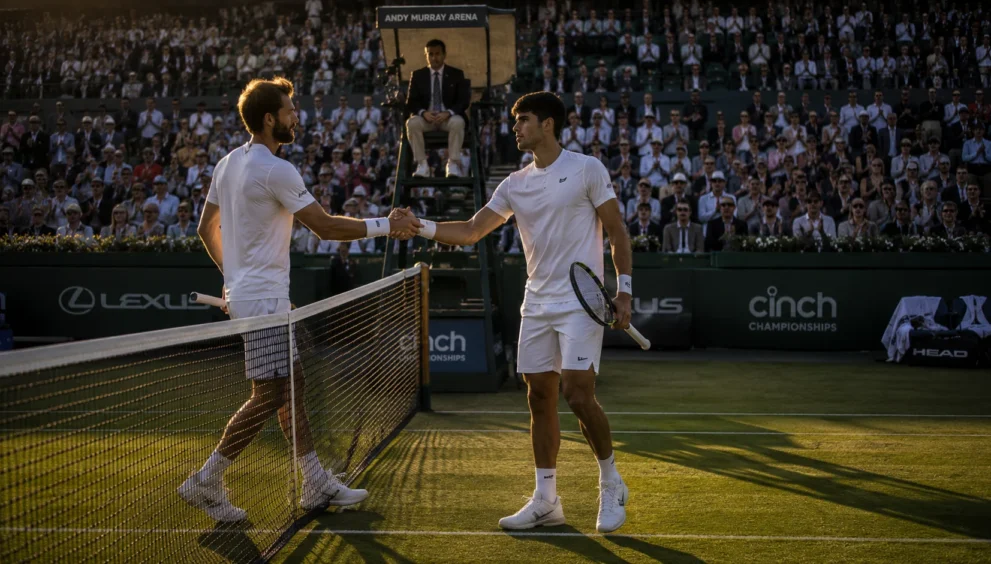
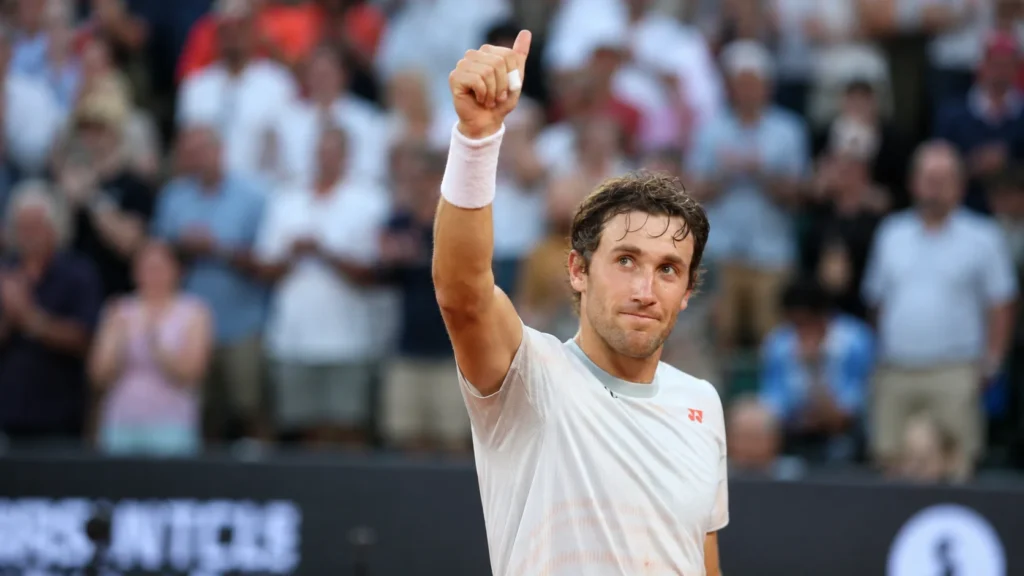
The last time Alex de Minaur and Denis Shapovalov faced each other with a trophy on the line, it was 2016. Wimbledon. The junior final. Shapovalov won it 4-6, 6-1, 6-3. They were teenagers then, still becoming the players they would eventually be. The match was a glimpse of the future. The future has arrived.
De Minaur is now the top seed at Queen’s. He is a top-10 player, one of the fastest movers on tour, a competitor who has extracted every ounce of talent from a game built on speed, tenacity, and the refusal to yield. Shapovalov is ranked lower, more volatile, capable of beating anyone on his day and losing to anyone on the next. Their paths diverged after that junior final. De Minaur climbed steadily. Shapovalov flickered. The gap between them is now a seeding line. The memory of 2016 is all that remains equal.
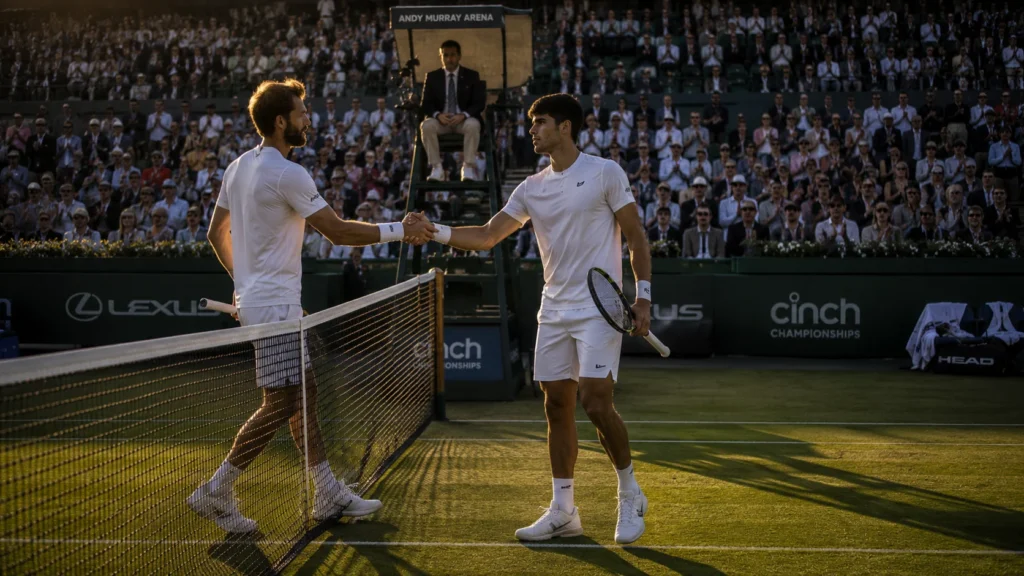
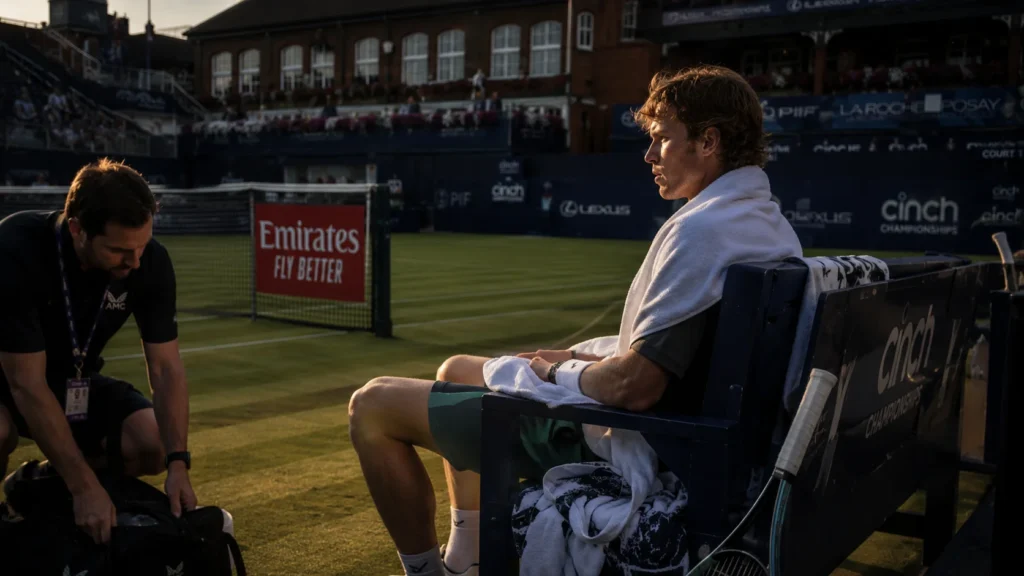
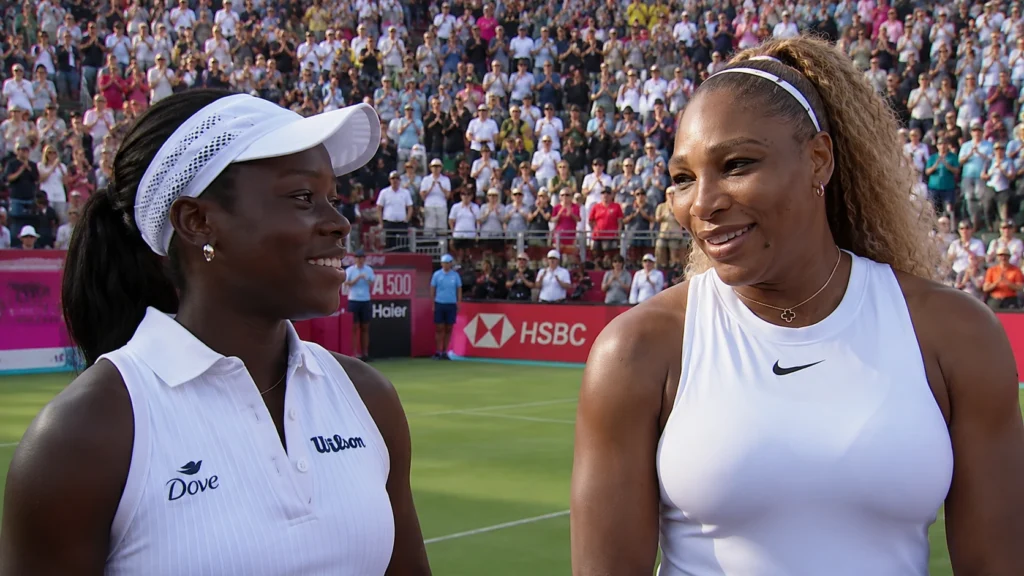
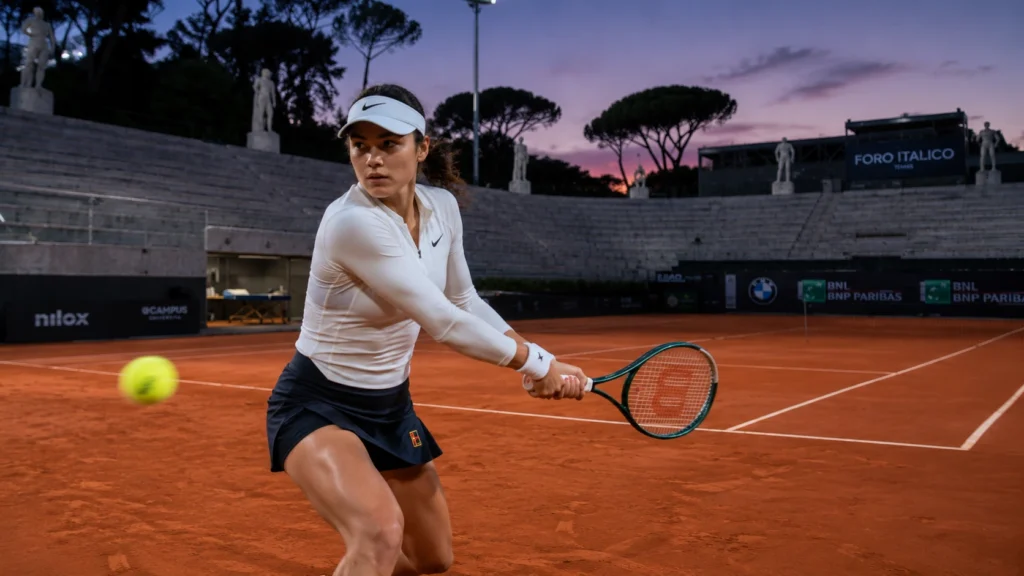
Shapovalov won the coin toss and chose to serve. The Andy Murray Arena is filled. The match began. The stakes were not a junior title. They were a place in the quarter-finals of the most prestigious grass-court tournament outside Wimbledon. The boys who played on the junior lawns of SW19 are now men who play for keeps on the grass of Queen’s. The surface is the same. Everything else has changed.
But this wasn’t about the result. This was about Legacy vs Present Reality—and what happens when two careers that began on the same court, on the same day, with the same prize in sight, arrive at the same tournament a decade later carrying vastly different weights.
The Divergent Paths
De Minaur’s rise has been linear. He broke into the top 100 in 2018. He broke into the top 50 in 2019. He broke into the top 10 and stayed there. The trajectory is a graph of incremental improvement. His game—defensive speed, relentless retrieval, the ability to absorb pace and redirect it—was never going to produce the kind of highlight reel that generates viral moments. It produces wins. The wins accumulate. The ranking rises. The consistency is the weapon. The consistency is the career.
Shapovalov’s path has been more dramatic. His single-handed backhand is one of the most aesthetically pleasing shots in tennis. His peak level is unplayable. His average level is beatable. The gap between the two is the gap between the top 10 and the player he has become: dangerous, unpredictable, capable of the spectacular and the self-destructive in equal measure. He has been ranked as high as 10 in the world. He has beaten the best. He has never sustained it.
The junior final was supposed to be the first chapter of a long rivalry. It became a standalone moment. De Minaur and Shapovalov have played since, but never with the symmetry of that first encounter. The rematch at Queen’s is not a rivalry renewed. It is a reminder of how differently two careers can unfold from the same starting point.
The Psychology of the Top Seed
De Minaur arrived at Queen’s as the favourite. The status is familiar. He has been the higher-ranked player in most matches he has played for the past three years. The pressure of being expected to win is different from the pressure of being expected to lose. De Minaur has learned to carry it. His game does not produce the kind of explosive shot-making that turns matches in an instant. It produces sustained pressure. The pressure is quiet. The pressure is constant. Opponents crack before he does.
Shapovalov arrived as the challenger. The role suits him. He has always played better when the expectations belong to someone else. The left-handed serve, the whip-crack backhand, the willingness to take risks that more cautious players would not consider—these are the weapons of a man who needs to disrupt, not to control. Against a player as steady as De Minaur, disruption is the only path. The question is whether Shapovalov can sustain it for three sets. The question has always been whether he can sustain it.
The Junior Echo
The 2016 junior final is a footnote in both careers. Neither player lists it as a defining moment. De Minaur has won ATP titles. Shapovalov has beaten Grand Slam champions. The junior match matters only as context—a reminder that these two players were once considered equals, that their careers were once projected along similar arcs, that the divergences were not inevitable. They were the product of choices, of temperaments, of the thousand small decisions that separate the consistent from the mercurial.
Playing each other at Queen’s, on the same surface where they first met competitively, closes a loop. The players who walked onto the junior court in 2016 no longer exist. The players who walked onto the Andy Murray Arena are their successors, shaped by everything that happened between then and now. The match will be played. The winner will advance. The loser will go home. The symmetry will remain.
What Changes Now
The winner will move into the quarter-finals. The grass-court season will continue to narrow toward Wimbledon. De Minaur, if he wins, will reinforce his status as one of the players best equipped to succeed on this surface—a mover, a returner, a competitor who thrives in the faster conditions that grass provides. Shapovalov, if he wins, will remind the tour that his peak is still capable of unsettling anyone, anywhere, on any surface. The reminder will be temporary, or it will be permanent. The distinction is up to him.
Arthur Fery, the British wildcard, plays Adrian Mannarino later in the day. Jenson Brooksby faces Francisco Cerundolo in the evening. The tournament moves forward. The junior echo fades. The present asserts itself. Two players who once shared a court and a trophy will share a court again. One will leave with more than a memory.393