

 English

















































































































































































































































































































































Sheeran Found a Lost Album in a Shop. The Internet Missed It.
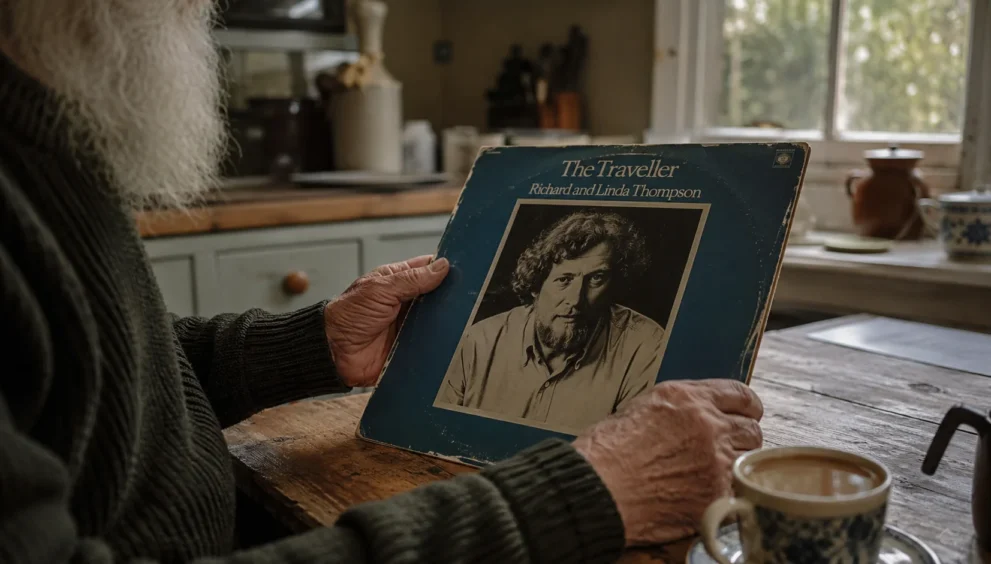
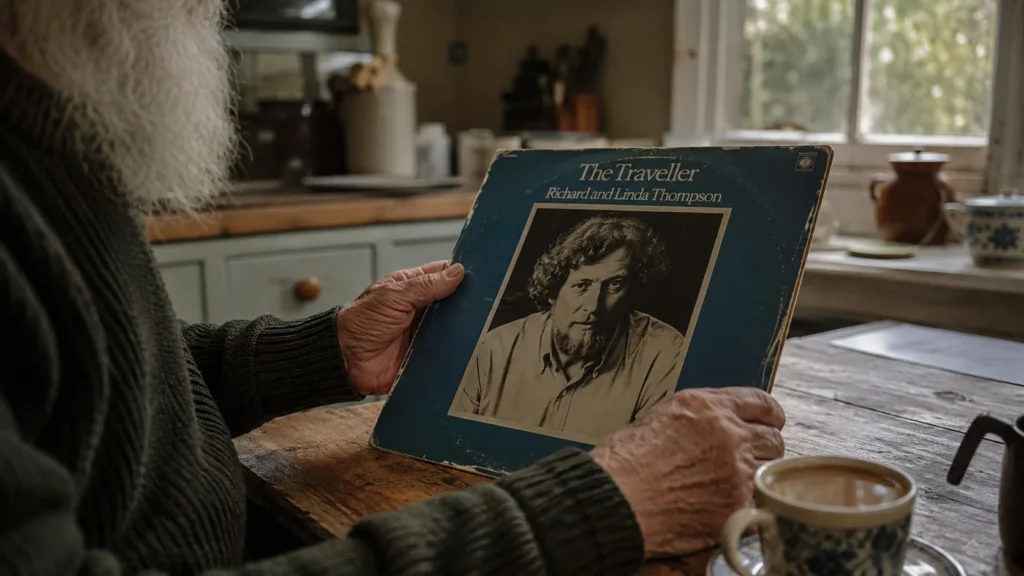
The LP sat in a record store in Williamsburg. It had been there long enough that no one remembered putting it there. The cover was blue. The title was The Traveller. The artist was Allan Taylor, an English folk singer who had released it in 1978, toured the world, signed major record deals, supported Fairport Convention at the Royal Albert Hall, hung out in New York with Bob Marley, and watched mainstream success pass him by. The album had been available unofficially on YouTube, in the grey-market way that forgotten records survive. It was not on streaming services. It was not anywhere online that a casual listener could find it. It was in a second-hand shop in Brooklyn.
Ed Sheeran bought it. He posted about it on Instagram in April. “Been buying random vinyl at record stores, coming across some gems,” he wrote. “Allan Taylor – The Traveller I found in a record store in Williamsburg, and I love it. Can’t find it anywhere online, so feels like a special vinyl in the collection.”
Taylor, now 80, had been preparing to retire. Health problems had forced him to cancel a string of farewell concerts at folk clubs this summer. He had made his peace with a career that had been fulfilling without being famous—highly respected on the folk scene, well-known in northern Europe, covered by dozens of artists, but never a household name. Then his phone rang. Sheeran wanted to talk. “He says he wants to drop by for a cup of tea.”
The Traveller is now on streaming services for the first time. The album that could not be found online can now be found everywhere. The singer who was about to retire is now fielding interest from a generation that had never heard of him. The song that had been covered more than 100 times—”It’s Good To See You,” by Don Williams, Nana Mouskouri, Hannes Wader—now has a new audience. The mechanism that produced this reversal was not a record label, a marketing campaign, or a viral TikTok. It was a single Instagram post by one of the most famous musicians in the world, holding up a piece of vinyl he had found in a second-hand shop.
This is not an isolated event. This is a structural shift in how cultural memory is transmitted—not through institutions, archives, or gatekeepers, but through the chance encounter amplified by a platform that reaches millions. The gatekeeper is now a pop star with a phone. The archive is a record store in Brooklyn. The algorithm did not surface Allan Taylor. Ed Sheeran did. The difference matters.
The Career That Mainstream Success Eluded
Taylor’s story is not unusual. The folk circuits of the 1960s and 1970s produced hundreds of musicians who toured relentlessly, built loyal audiences, and never crossed into the mainstream. The difference between Taylor and most of his peers is that his career was distinguished enough to attract the attention of major labels—and his mistakes were costly enough to keep him from capitalising on it.
He signed a deal with a major US label after supporting Fairport Convention at the Royal Albert Hall. “I screwed that up,” he says now. “I didn’t get a lawyer. I lost thousands.” He signed another deal as frontman of a band called Cajun Moon. “I signed that contract under financial pressure because I was just running out of money. And again, I should have gotten a lawyer.” He developed nodes on his vocal cords. He went silent for three months. He wrote The Traveller as a reckoning with what he had lost and what he had chosen. The title track’s chorus runs: “Running for the money / Running for the fame / Lost where he was going / And forgot his name.”
Taylor’s response to that loss was to define success on his own terms. “If the objective is money and fame, then if you lose, you lose your identity,” he says. “Whereas if you stick to your beliefs, you fail on your terms, but you don’t fail on anyone else’s terms. Which was what I decided to do.”
The decision produced a body of work that found its audience in Europe—Warsaw, Bonn, and Berlin are now his top cities on Spotify—and sustained a career that lasted five decades. It did not produce an album that could be found online. Until Sheeran walked into a shop in Williamsburg, Taylor’s work existed in the analogue world of vinyl and the grey-market world of YouTube uploads. It did not exist in the digital archive that has become the default mode of cultural transmission.
The Post That Changed the Archive
Sheeran’s Instagram post was not a marketing campaign. It was a personal endorsement, delivered in the casual language of someone sharing a discovery. “Can’t find it anywhere online, so feels like a special vinyl in the collection.” The post did not ask anyone to listen to the album. It did not need to. The audience that follows Sheeran—one of the most commercially successful musicians of the streaming era—did the rest.
The Traveller appeared on streaming services. The album that had been missing from the digital archive was now part of it. The mechanism was not institutional. It was interpersonal. Sheeran found the record. Sheeran posted about it. Sheeran called Taylor. The two spoke at length. “I found him remarkably down-to-earth, friendly, and very interesting as a songwriter,” Taylor says. The gatekeeper did not commission a rediscovery campaign. The gatekeeper acted like a fan.
The shift is structural. The old model of cultural preservation depended on institutions—record labels maintaining back catalogues, archives digitising collections, critics writing reappraisals. The new model depends on individuals with platforms. The platform amplifies the individual’s taste. The taste becomes a recommendation. The recommendation becomes a market. The market puts the album on streaming. The album enters the archive. The archive now contains something it had missed.
Who Gains, Who Loses
The power recalibration is visible across multiple axes.
Taylor gains late-career recognition and a streaming presence. His retirement, which had been forced by health problems, now includes a new chapter. Sheeran has said he wants to visit for tea. The conversation between the two songwriters—one who found the path to mainstream success, one who missed it—has already begun. Taylor says he is among “the last of a generation of troubadours who experienced and wrote about the romance of the road.” Sheeran, whose early career followed a similar trajectory of pubs, bars, and sleeping on floors, recognises something in that experience. The recognition is personal. The amplification is public.
Sheeran gains nothing material. The endorsement is consistent with his public persona—a musician who talks about music as a fan, who posts about discoveries, who treats influence as something to be shared rather than hoarded. The consistency reinforces the persona. The persona reinforces the platform. The platform reinforces the power to surface forgotten work.
Streaming services gain a new entry in their catalogue. The album costs them little. The story around it—found by Ed Sheeran in a second-hand shop—generates engagement. The engagement generates streams. The streams generate revenue. The revenue is small. The symbolic value is large.
The folk circuit loses a retiring performer to a late-career revival. Taylor’s farewell concerts were cancelled. He may not perform again. But his music will continue to be heard. The archive has absorbed him. The archive will keep him.
The 24-Month Trajectory
Sheeran’s endorsement will continue to generate streams for Taylor’s catalogue. The attention will wane as the news cycle moves on. What remains is the fact of the album’s presence on streaming services. The archive now contains The Traveller. Future listeners will find it not because Sheeran posted about it, but because it is there. The post was the catalyst. The archive is the legacy.
Taylor’s broader catalogue may also benefit. His later albums—Looking For You, released in 1996, which re-recorded and arguably improved several Traveller tracks—may find new audiences. The “romance of the road” that Taylor describes, the experience of a generation of troubadours who lived through the 1960s, 70s, and 80s, will be preserved in the recordings. “There aren’t many of us left who can remember what happened or what we did and what it was like,” Taylor says. “I think young people are interested. I think that’s why Ed is interested.”
The interest is not nostalgia. It is transmission. The older generation tells the story. The younger generation receives it. The platform accelerates the transmission. The archive preserves it. The song survives.