

 English














































































































































Mo’orea Has One Road. The Cruise Ships Don’t Use It.
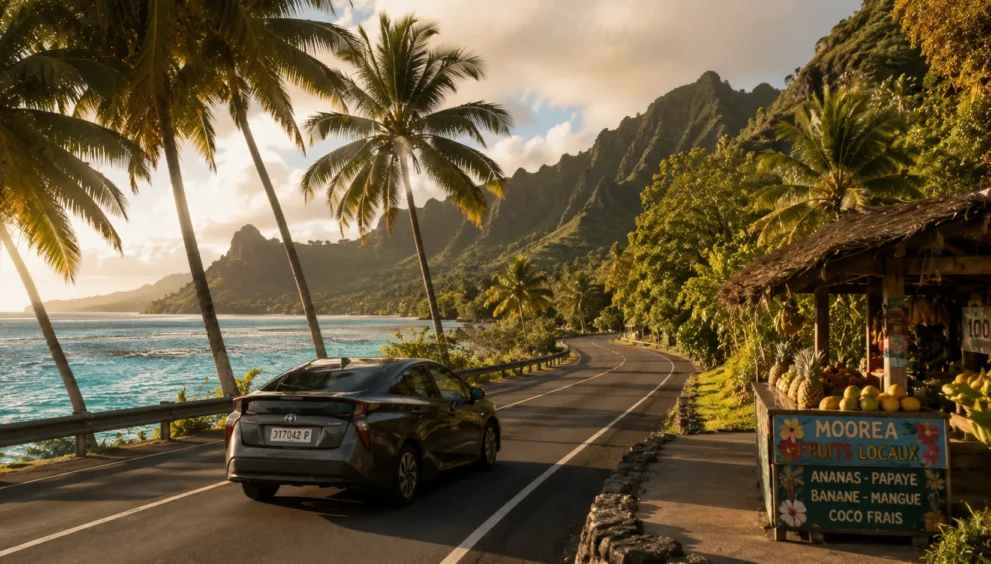
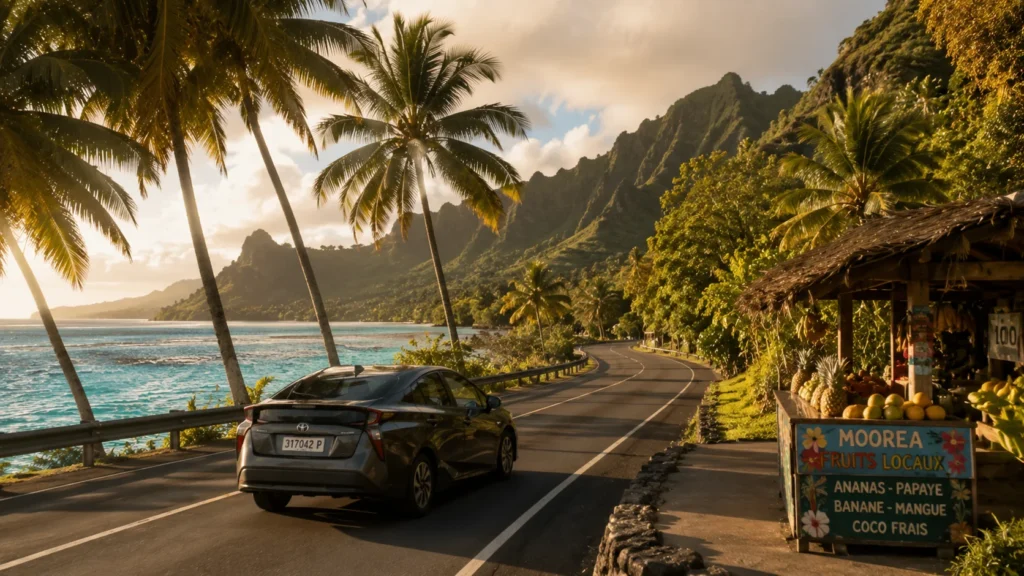
The hire-car agent handed over the keys with a warning that had nothing to do with the vehicle. “Remember not to park under any coconut trees.” The advice was practical. It was also the first signal that Mo’orea operates on a logic that does not accommodate the cruise ships that bring more than a third of its visitors. A falling coconut can kill you. A 60-kilometre coastal road can reveal an island in a weekend. A cruise terminal cannot do either.
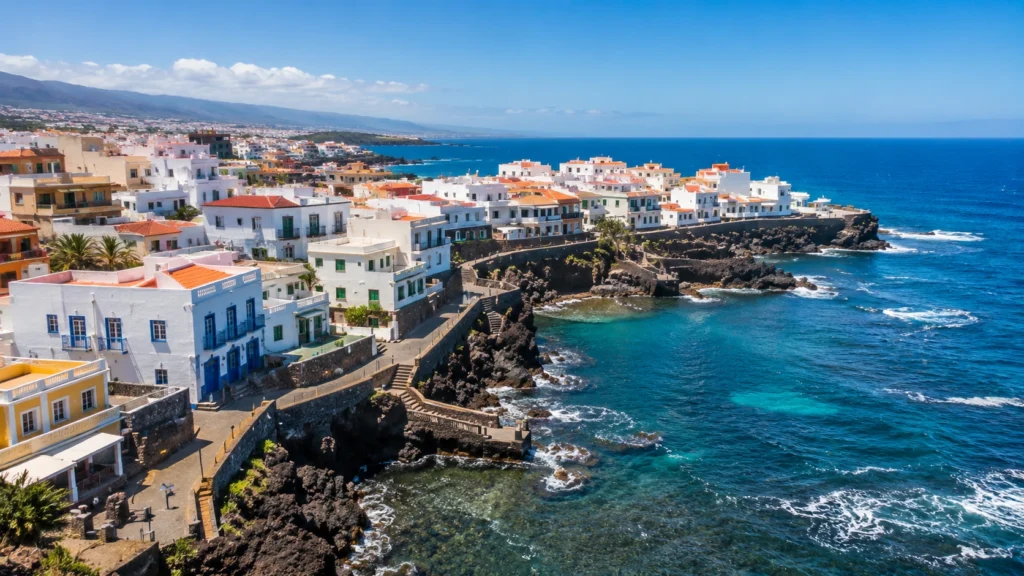
We left the port of Vai’are and drove anticlockwise. Within minutes, the To’atea Lookout opened above us: electric turquoise lagoon, spindly palms leaning over coral-sand beach, the mountainous silhouette of Tahiti across the cobalt channel. Fifteen minutes further, Cook’s Bay—the first of two long fjord-like bays that give Mo’orea’s north coast its distinctive “W” shape. White terns fluttered above the calm water. Picasso triggerfish darted through the gin-clear shallows beside the road, their brushstroke markings visible from the car window. We had been driving for less than half an hour. We had already seen more than any cruise passenger would see in a day ashore.
Mo’orea is 133 square kilometres. It has no high-rises, no traffic lights, no main town. A single road rings it. The road can be driven in a day or stretched into a slower weekend. The island’s compact scale makes it one of French Polynesia’s easiest destinations to explore independently. Its accessibility also makes it one of the most vulnerable to the pressures that accessibility brings. Temae is one of only three public beaches left on the island. It is currently threatened by development that could further limit access for the 18,200 residents and visitors. The very quality that makes Mo’orea appealing—the sense that anyone with a hire car and a weekend can discover it—is being eroded by the infrastructure built for people who arrive by ship, stay for hours, and never drive the road.
But the road trip wasn’t the story. The story was Short-term Visitor Economy vs Long-term Resident Needs—and what happens when an island designed for slow exploration becomes a cruise stop, and the people who live there begin organising to protect what the ships cannot see.
The Island the Octopus Made
Polynesian oral traditions attribute Mo’orea’s striking topography to a sacred octopus. The geological explanation—the collapse of an ancient shield volcano some 1.5 million years ago—is less evocative but equally true. The island’s steep interior leaves much of life concentrated along its narrow coastal fringe. The road that rings it is not a scenic route. It is the only route. Every village, every snack bar, every marae, every public beach sits along it or just off it. To drive the road is to see almost everything the island has made available to be seen.
Some of what we saw was deliberately hidden. Tucked into the rainforest just metres from the road in the ‘Ōpūnohu Valley lie some 500 archaeological structures dating from the mid-15th to mid-17th Centuries. Partially restored, moss-encrusted marae—sacred ceremonial and social spaces—sit along muddy forest trails. Mark Eddowes, a leading authority on Polynesian anthropology who lives nearby, estimates there could be 100 sites yet to be surveyed, reclaimed by the rainforest after Christian missionaries banned Polynesians from practising their traditions at these sites from the late 18th Century onwards.
The marae are freely accessible. Most other cultural sites on the island are not. “Most tourists don’t realise that most of these places are on private property,” says Yvette Léon, the Marquesan owner-operator of Moorea VIP Tours. “If people go by themselves, they might damage a sacred place without knowing.” The road gives access. The access is not always welcome. The distinction between what can be seen and what should be seen is not marked on any hire-car map.
The Lagoon and the Development
At Tiahura on the north-west coast, we booked a thatched-roof fare with an outdoor kitchen for less than US$140 per night and used its complimentary kayaks to paddle into the lagoon. We glided over lavender-hued coral clusters and majestic eagle rays. At Temae Beach, we finned out from shore and found ourselves in a natural aquarium: technicolour parrotfish, monogamous butterflyfish, violet-hued boxfish, and a reef shark cruising past. The reef begins about 150 metres from the beach. The access is direct. It is also under threat.
Temoana Poole, son of renowned marine biologist Dr Michael Poole, founded Keep Moorea Wild in December 2025. The NGO invites the public to “adopt” land by the square metre for conservation. “We meet with landowners looking to sell and promise them if they sell to us, we will protect it,” Poole explains. The initiative has already secured 515 square metres of land in Vai’are that will become a public sanctuary. Landowners in other archipelagos are now asking for help. The model is reactive. It depends on the willingness of landowners to sell to a conservation trust rather than a developer. The willingness is not infinite.
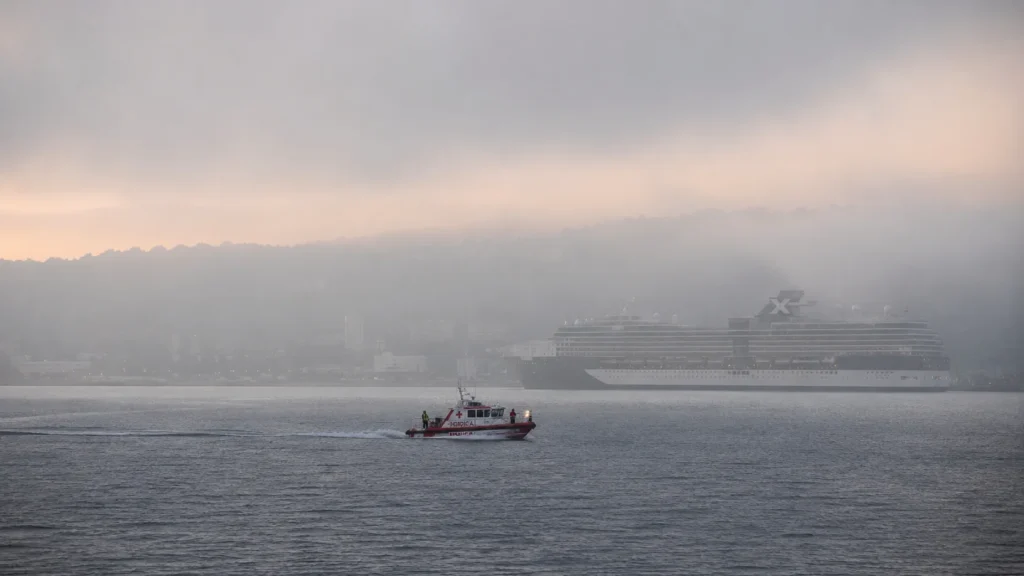
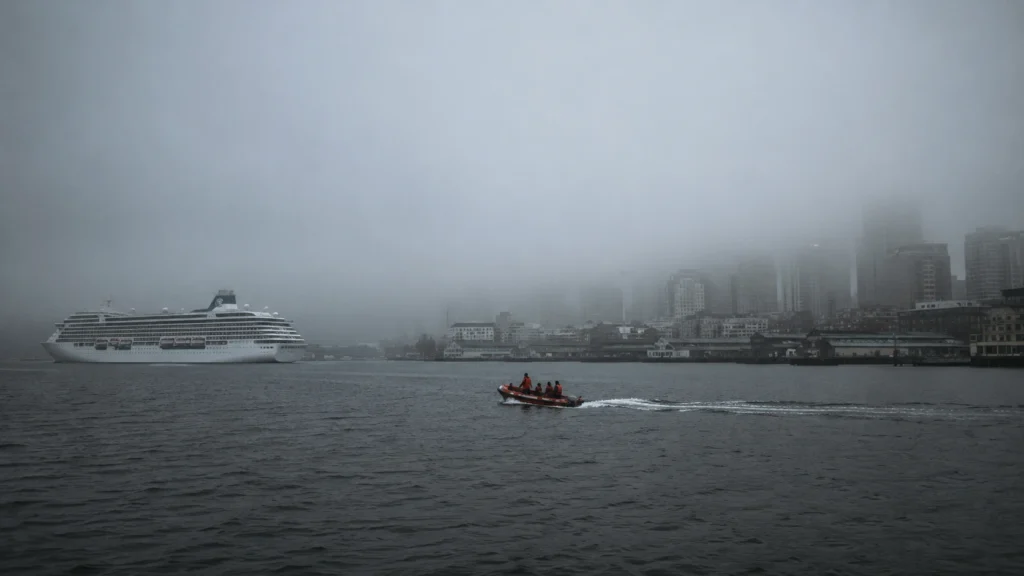
The development pressure on Mo’orea is not driven by independent travellers who stay in fares and drive the ring road. It is driven by the overwater bungalow resorts that offer a Bora Bora-esque experience at a reduced price, and by the cruise infrastructure that delivers visitors in bulk. The independent travellers disperse. The cruise passengers concentrate. The distinction is visible in the geography. The road distributes visitors around the island’s 60-kilometre circumference. The cruise terminal funnels them into a single point. The point intensifies. The ring disperses. The two models are not compatible.
Who Gains, Who Loses
The power recalibration is visible across multiple axes.
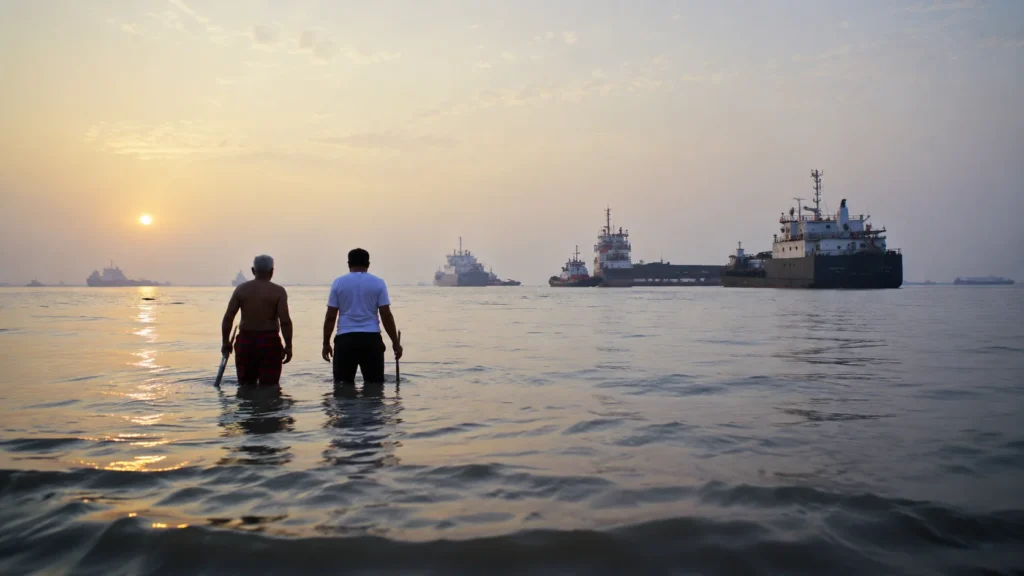
Cruise passengers gain a day in Mo’orea. They see the lagoon, photograph the peaks, buy souvenirs, and return to the ship. The economic benefit to the island is concentrated in the vendors and tour operators who serve the terminal. The cultural benefit is minimal. The environmental cost—anchoring damage, waste, the carbon footprint of the ship itself—is externalised. The passengers do not pay it. The island does.
Independent travellers gain access to the island’s full geography. They eat at roadside snacks run by third-generation Tahitian Chinese families, sample rum cocktails at the Rotui Juice Factory, swim at public beaches, hike the valley trails, and paddle into the lagoon. They spend money at multiple points along the road. The economic benefit is distributed. The environmental cost is lower per visitor. The cultural exchange—ordering dim sum with French mustard, learning to identify a marae, speaking to a guide about what should not be photographed—is deeper.
Mo’orea’s 18,200 residents gain unevenly. Those who work in the cruise economy benefit from its continuation. Those who do not watch public beach access shrink, development pressure intensifies, and the island’s infrastructure strains under a visitor model that delivers large numbers of people for short periods. Keep Moorea Wild represents one response: buy the land before the developers do. The response is local. The pressure is global.
The Cultural Signal
The Eglise de la Sainte Famille in Ha’apiti district, built in 1897 on the site of the island’s first Catholic mission, features a crucifix rising above a stone altar carved with the face of a Tiki. Tikis represent the connection between the human and spirit worlds. The carving is a striking example of the blending of Christian and Polynesian spiritual traditions still visible across the region. It is also a reminder that Mo’orea’s culture has been absorbing external pressures for centuries. The missionaries came. The traditions adapted. The marae were hidden in the rainforest. The Tiki faces were carved onto Christian altars. The culture survived by transforming.
The cruise ships are the latest external pressure. The question is whether the transformation they demand is compatible with what Mo’orea is. The road trip around the island reveals a place that rewards slow attention—the dim sum with French mustard, the white terns above Cook’s Bay, the triggerfish visible from the car window, the marae hidden in the forest, the fare with the outdoor kitchen, and the complimentary kayaks. The cruise terminal reveals a place that can be consumed in a day. The two versions of Mo’orea share the same geography. They cannot share the same future.
The 12-Month Trajectory
Keep Moorea Wild will continue acquiring land. The development pressure will continue intensifying. The cruise ships will continue arriving. The whale-swimming regulations tightened in 2025—capping boat numbers to better balance tourism and conservation—represent one model of intervention. The land-acquisition model represents another. Neither addresses the fundamental tension between a visitor economy built on dispersal and one built on concentration.
The road will still be there. The coconut palms will still drop their fruit. The hire-car agent will still issue the same warning. The independent traveller with a weekend and a hybrid car will still be able to discover Mo’orea at the speed it was designed to be discovered. The question is how much of Mo’orea will still be there to discover.