

 English






































































































































































Harry Styles Opened Wembley by Thanking The X Factor. The Show Is Dead.
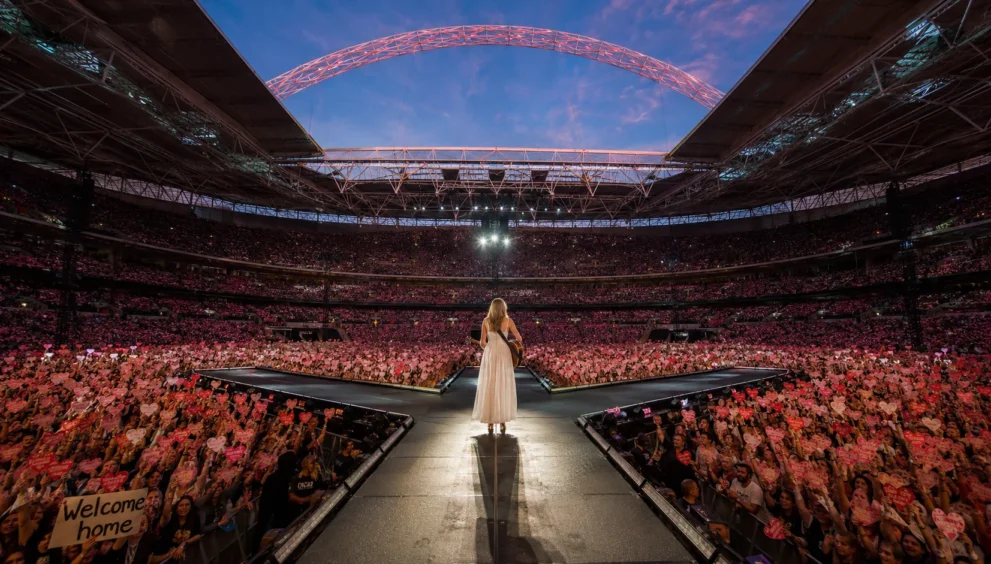
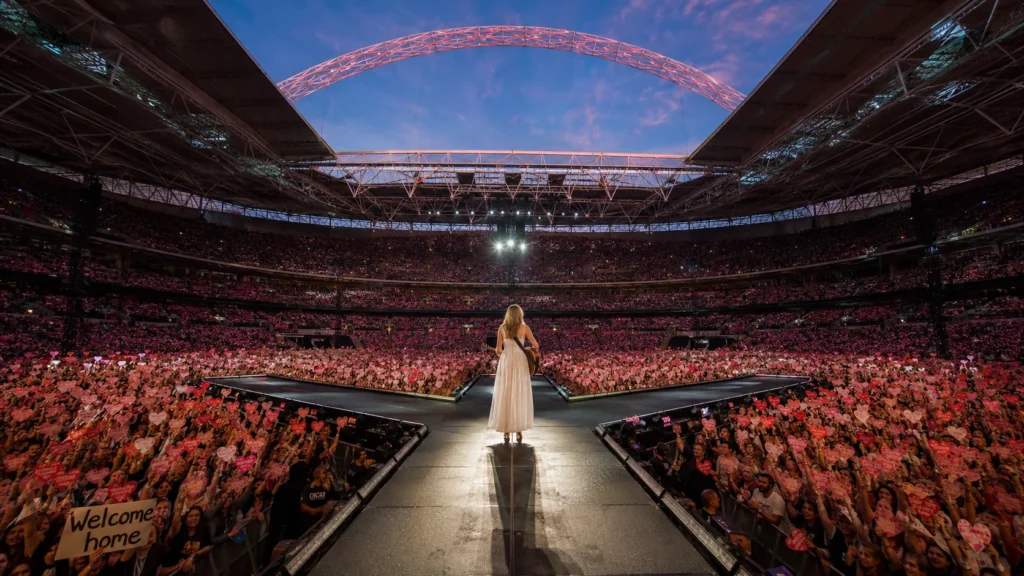
The walk-on music was Elvis. “Bridge Over Troubled Water,” the cover version, not the Simon & Garfunkel original. Harry Styles emerged onto a stage carved into three interconnected catwalks, designed to make 80,000 people feel like they were in a club. The first thing he did was point next door. Wembley Arena, not Wembley Stadium. The building where, 16 years ago, a 16-year-old from Cheshire auditioned for a television talent show.
“It was in that building that I was put in a band,” he said. “We were called One Direction.” The screams that followed were not for the band. The band has been on indefinite hiatus since 2016. The screams were for the memory of the mechanism that produced them. Styles thanked his sister, who brought him to London. He thanked his mother, Anne, who secretly signed him up. “I wouldn’t be here today if she hadn’t done that.”
The gratitude was specific. It was also directed at an infrastructure that no longer functions as it did. The X Factor ended in 2018, a victim of declining ratings and a cultural shift away from the cruelty-as-entertainment model that had defined it. The show that manufactured One Direction out of five solo auditions does not exist anymore. The pipeline that took a teenager from a Cheshire village to a Wembley residency has been dismantled. Styles stands at its endpoint, playing 12 nights in a stadium, breaking the record previously held by Coldplay and Taylor Swift, while the system that found him has vanished.
This is not an isolated event. This is a structural shift in how pop stardom is produced. The old gatekeepers—the television talent shows, the major label A&R apparatus, the radio pluggers—built One Direction. The new gatekeepers—streaming algorithms, social media platforms, the direct-to-fan economy—sustain Styles’ solo career. The transition from the first system to the second is the story of 21st-century pop. Styles is the only artist to have dominated both.
The Format That Built Him
The X Factor was never really about music. It was about narrative. Contestants arrived with backstories. Judges performed skepticism or sentiment. The audience voted. The stakes were elimination. The format produced stars—Leona Lewis, Little Mix, One Direction—by subjecting them to a process that was part talent show, part public referendum, part psychological stress test. The cruelty was not incidental. It was the product.
Styles survived it. He was not a standout in the audition. He sang Train’s “Hey Soul Sister” and Stevie Wonder’s “Isn’t She Lovely.” The judges saw potential but not singularity. The solution was aggregation. Five solo contestants became a group. The group became a phenomenon. The phenomenon became the most commercially successful act the show ever produced.
The infrastructure that supported this—Saturday-night television ratings, tabloid coverage, physical album sales, arena tours booked years in advance—was already fragile by the time One Direction went on hiatus. It is now largely gone. The television talent show has been replaced by TikTok discovery. The tabloid exclusive has been replaced by the artist’s Instagram story. The physical album has been replaced by the playlist placement. The arena tour booked years in advance has been replaced by the residency model that Styles is now pioneering.
The Residency as a New Model
Styles is playing 12 nights at Wembley. He will do the same in São Paulo, Mexico City, New York, Melbourne, and Sydney. He is not touring in the traditional sense. He is anchoring. The model serves multiple purposes. It allows more elaborate stage production. It protects the health of his band—”People in my band have families now and kids, and it’s really important to me that they’re on the road,” he told Apple Music’s Zane Lowe. It also responds to an economic reality: the cost of moving a stadium show across continents has become prohibitive, while the demand for residencies in major cities has grown.
The shift is structural. The old model assumed scarcity—the artist comes to your city once, maybe twice, per album cycle. The new model assumes abundance—the artist stays in one place, and the audience travels to them. The inversion changes the economics. It changes the relationship between artist and audience. It changes what a tour is. Styles is not the first to do this—residencies have a long history in Las Vegas, and Springsteen played extended runs on Broadway—but he is the first global pop star to apply the model at this scale, in this many cities, as the primary mode of touring rather than a special event.
The 12-night Wembley run breaks the record Coldplay set last summer with 10 shows. Swift played eight in 2024. The numbers are escalating. The escalation suggests the model is working. If it works for Styles, it will become the template. The template will reshape the live music industry around stationary spectacle. The days of the gruelling 80-city tour may be numbered.
The Album That Needed the Stage
Kiss All the Time. Disco, occasionally. was not received as a triumph. Critics called it “unremarkable,” “obtuse,” “lacking in depth.” The album was promoted as a dance record, inspired by Berlin’s club scene and transcendental moments watching LCD Soundsystem. It arrived as a watered-down facsimile of those sounds. The grooves did not groove on record. They did not have to. They were waiting for the stage.
At Wembley, the songs from the new album burst into life. An 18-piece band anchored them with heavy bass and pounding rhythms. “Are You Listening Yet” rumbled along on an irresistible soca rhythm. “Taste Back” absorbed a sample of Underworld’s “Born Slippy” and found a turbo-charged energy it had never possessed in recorded form. “American Girls” opened with a long, trippy intro—Styles messing around on an old analogue keyboard, tweaking low-pass filters, playing squiggly synth noises. The crowd did not know what to make of it. The moment was more interesting for its uncertainty.
This is the old logic reasserting itself. The record is a document. The show is the thing. Styles built his solo career on songs that translated live—”Sign of the Times,” “As It Was,” “Watermelon Sugar”—and his instinct, when the new material faltered on record, was not to retreat but to expand. The band swelled. The arrangements deepened. The songs were not rescued by the stage. They were revealed by it. The record was a sketch. The show was the finished work.
The Fan Contract
A sign in the crowd read: “What’s your favourite type of egg?” Styles answered. “I like a fried egg. Followed closely with a scramble.” The exchange was absurd. It was also the point. The connection between Styles and his audience operates through these small, legible gestures of attention. He reads the signs. He answers the questions. He thanks his band by name. He puts their faces on the video screens, surprising some of them. He tells the crowd they have made him “feel more hopeful about the future.”
The contract between a pop star and fan has always involved a promise of intimacy at scale. Styles delivers it through a combination of old-fashioned showmanship and new-fashioned directness. The residency model reinforces the contract. The audience travels to him. He stays put. The show becomes a pilgrimage. The pilgrimage becomes a community. The community becomes a story fans tell themselves about who they are. The egg question is not a joke. It is a ritual of mutual recognition.
The residency model will produce more of these rituals, not fewer. The artist who stays in one city for 12 nights can build a relationship with the audience that the artist who passes through for one night cannot. The repetition deepens the connection. The connection deepens the loyalty. The loyalty deepens the economics. The economics justify the model. The model will spread.