

 English


































































































































































































































































































































A Medieval Mansion Crumbled. A Town Council Bought It.
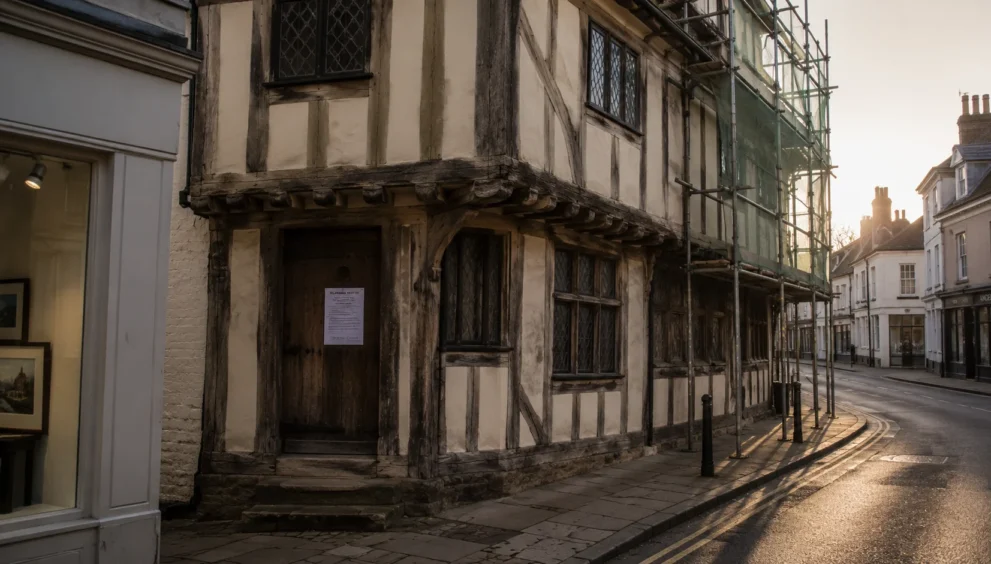
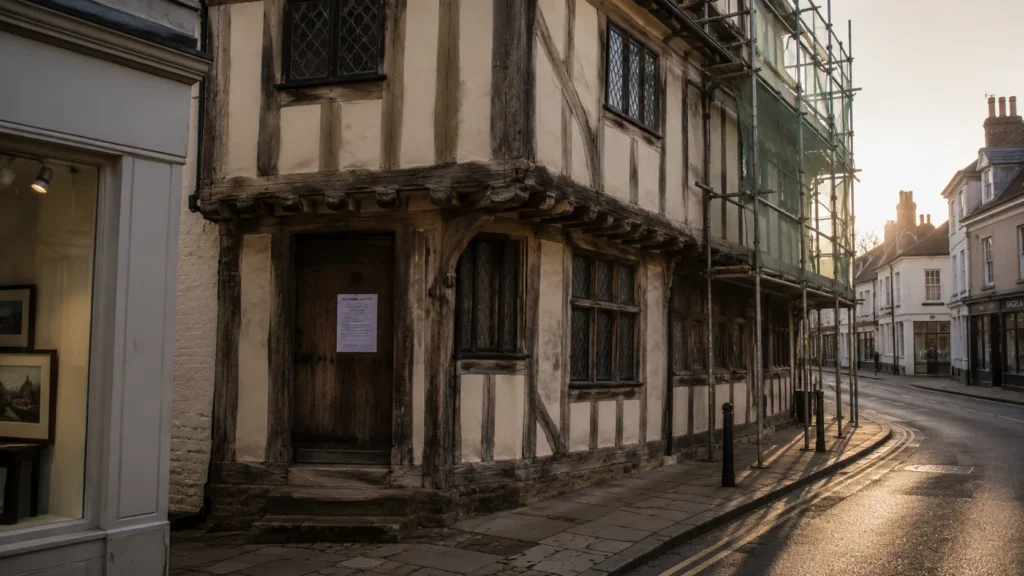
The building has stood in Oswestry since the 1460s. It was a grand merchant’s home then, possibly built around an even older medieval hall. For centuries, it held its ground. Then came the structural changes, the poor repairs, the long neglect. Historic England placed Llwyd Mansion on its Heritage at Risk register. The listing is a bureaucratic designation. What it describes is a slow-motion disappearance—timber warping, stone eroding, a building that outlasted the Wars of the Roses, beginning to lose its fight with rain and time.
In November 2023, Oswestry Town Council bought it. Last year, they secured lottery funding. Now, Buttress Architects have filed a report recommending that the building become a visitor centre, an exhibition gallery, offices, and shops. The council seeks planning permission and listed building consent. The report calls the plans a “sustainable response to Llwyd Mansion’s challenges” and says the building should “thrive as a renewed community asset.”
The language is careful. It is also radical, in a quiet way. A Grade I listed medieval building—one of the most protected categories in English heritage—will not become a museum in the traditional sense. It will not be cordoned off behind velvet ropes, viewable only by appointment, preserved in aspic for scholars and tourists. It will become a place where people work, browse, gather, and look at exhibitions. The preservation is not an act of embalming. It is an act of reanimation.
So what is actually happening here? A small town council has made a decision that larger institutions often avoid. They bought a crumbling medieval building not to freeze it in time but to let it live differently. The tension is between two ideas of preservation: the building as a monument versus the building as an ongoing participant in the life of the town. Llwyd Mansion is choosing the second.
The Heritage at Risk Paradox
Historic England’s Heritage at Risk register is a list of buildings that are slipping away. The reasons vary—failed roofs, absent owners, and the sheer cost of repairing structures built before modern construction standards existed. Listing a building as Grade I protects it legally. It does not protect it physically. Stone still erodes. Timber still rots. Money still needs to come from somewhere.
Llwyd Mansion’s trajectory is familiar. A grand medieval house, built for a wealthy merchant in a market town, survives the dissolution of the class that built it. It gets modified over centuries—walls added, rooms divided, uses changed. At some point, the modifications become damaged. The repairs become inadequate. The maintenance stops. The building enters the long decline that eventually places it on a register designed to sound the alarm before the decline becomes terminal.
What happens next depends on who steps in. Many buildings on the register wait years for a solution. Some never find one. Oswestry Town Council stepped in. The decision to buy the building in 2023 was not inevitable. Small councils do not typically acquire Grade I listed medieval mansions. They maintain parks, manage community centres, and oversee planning applications. Llwyd Mansion was a risk. The council decided the risk was worth taking.
The Visitor Centre as a Preservation Strategy
The Buttress Architects report proposes a mixed-use future for Llwyd Mansion: visitor centre, exhibition gallery, offices, shops. The combination is significant. A single-use museum depends on a single revenue stream. A mixed-use building spreads the risk. Visitors come for the exhibition. Shoppers come for the retail. Workers come to the offices. The building earns its keep across multiple functions, none of which depend entirely on heritage funding cycles.
The model is not new. It is the model that kept medieval buildings alive before the modern preservation movement existed—use, adapt, repair, use again. The merchant who built Llwyd Mansion in the 1460s did not build a monument. He built a place to live and work. The building’s survival across six centuries owes more to that original purpose than to any conscious effort at preservation. The town council’s plan returns to that logic. The building survives by being useful.
The exhibition gallery component matters in a different way. Oswestry is not a major cultural destination. It does not have a Tate or a Royal Academy outpost. The Llwyd Mansion gallery will not compete with those institutions. It will offer something else: a space for art and history in a building that is itself a piece of both. The gallery and the building will interpret each other. The exhibitions will draw people into the medieval structure. The medieval structure will give the exhibitions a context no white cube can replicate.
What Preservation Actually Costs
The tension here is Cultural Preservation vs Creative Destruction—but not in the form of a wrecking ball versus a restoration fund. The destruction has already happened. It happened slowly, through poor repairs and deferred maintenance, through the incremental decisions that leave a building fragile after centuries of standing. The preservation now proposed is not a return to the building’s original state. It is an adaptation. The medieval hall will house offices. The merchant’s chambers will hold exhibitions. The ground floor will welcome shoppers.
Some preservationists will object to this. The argument is familiar: a Grade I listed building should be restored to period accuracy, not retrofitted for modern commercial use. The objection has force. Llwyd Mansion is one of the few surviving medieval merchants’ houses in Shropshire. Its historical value is genuine. Any adaptation risks compromising the fabric that makes it significant.
But the alternative—waiting for a pure restoration that may never be funded—is what placed the building on the Heritage at Risk register in the first place. The town council’s plan accepts a trade-off. The building changes in order to survive. The change is managed, reversible where possible, and sensitive to the listed status. But it is still changing. The principle it establishes is simple: a living building with offices and a gallery is better than a perfectly preserved ruin that no one can enter.
What Comes Next
Planning permission and listed building consent are not guaranteed. The process will involve scrutiny from conservation bodies, heritage groups, and the local community. The Buttress report will be tested against the legal protections that come with Grade I listing. The council will need to demonstrate that the proposed changes serve the building’s long-term survival without erasing its historical character.
If the plans are approved, Llwyd Mansion will become a case study. Small towns across Britain face similar decisions—historic buildings, limited funds, the choice between adaptive reuse and continued decline. Oswestry’s approach will be watched. If it works, it will be copied. If it fails, it will be cited as a cautionary tale. The stakes are higher than one building in one Shropshire town. They are about what preservation means when the money runs out, and the rain keeps coming.