

 English








































































































































































































































































































































She Made the First Animated Feature. Disney Took the Credit.
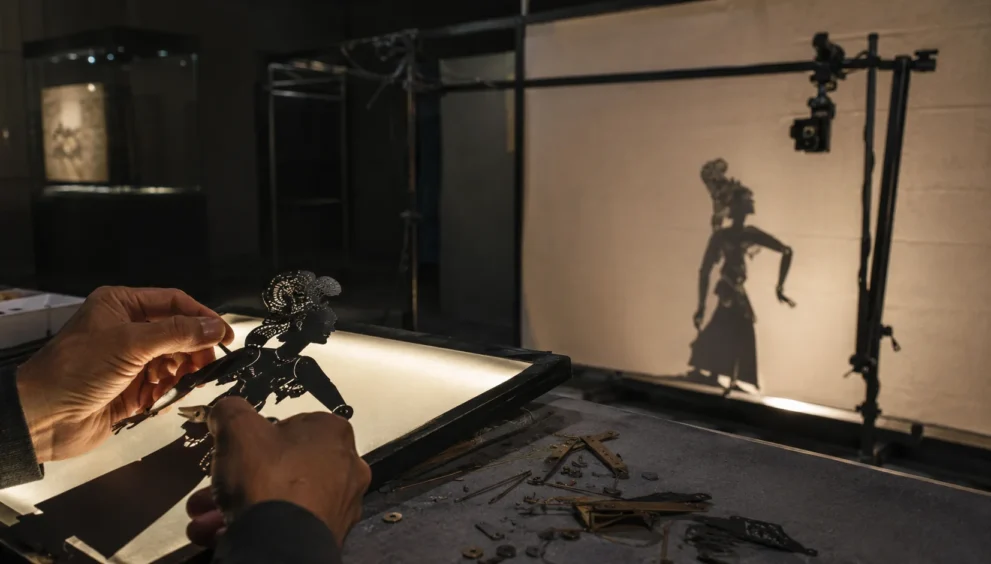
The scissors moved before the camera did. A young German woman, 26 years old, bent over a glass plate lit from below. Her hands adjusted jointed cardboard figures—princes, sorcerers, flying horses—one frame at a time. Above her, a camera mounted on a tall scaffold shot downward through multiple layers of glass. On one layer, the characters shifted. On another, a starry sky moved at a different speed. The effect created depth. No one had done this before.
The year was 1926. The film was The Adventures of Prince Achmed. It took three years to make. It ran feature-length. It is the oldest surviving animated feature in the world.
Walt Disney’s Snow White and the Seven Dwarfs arrived 11 years later. Disney’s publicists called it “the first full-length animated feature ever made.” The claim appeared on DVD boxes, in marketing materials, in the collective memory of a century. The claim was false. It stuck anyway.
So what is actually happening here? A century after its release, Prince Achmed is not just being rediscovered. It is being re-fought. The canon of animation history has a before and an after. The before belongs to a woman who cut silhouettes in a Berlin studio. The after belongs to a studio that patented her invention and wrote her out of the story.
The Rats That Started Everything
Reiniger’s entry into film was not glamorous. She began on an adaptation of The Pied Piper of Hamelin, handling the rats. The real rats refused to follow the piper. The filmmakers switched to wooden rats, moved frame by frame under a camera. Reiniger watched. “This was my first encounter with animation,” she said later.
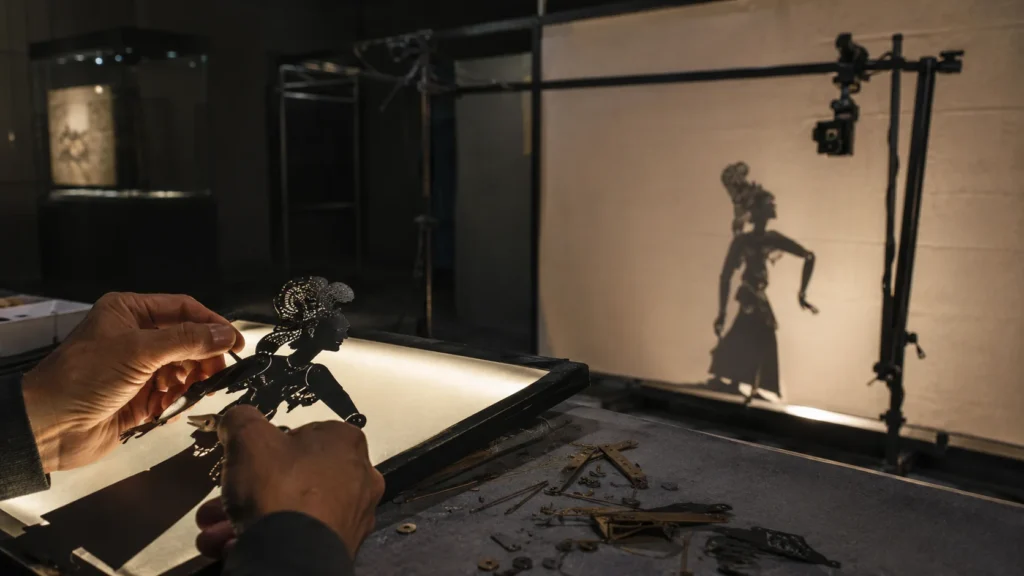
She already had the scissors. As a child in Berlin, she had cut shadow puppets—silhouette figures for miniature Shakespeare performances. The skill was transferred. She began placing articulated figures flat on a glass plate, adjusting them incrementally, shooting from above. More than a thousand frames per minute of film. By 1919, she had completed her first short, The Ornament of the Loving Heart.
In 1923, a Berlin banker offered to finance a longer production. “The opportunity to make a feature-length animated film at that time was an anomaly,” says Jez Stewart, Curator of Animation at the British Film Institute. “But that anomaly was connected to the way Reiniger made films. It was an affordable, artisanal method using limited means.”
She assembled a small team—a few animators, an assistant to track frames, and her husband on camera. She built the puppets herself, cutting characters from cardboard and lead, fixing their joints with wire hinges. She wove several Middle Eastern fairy tales into a single story. The sorcerer fights a witch. They transform into lions, scorpions, and dragons mid-combat. The sequences still dazzle. The silhouettes are fluid. The transformations are seamless. The depth is real.
The Invention Disney Patented
The multiplane camera was Reiniger’s greatest technical achievement. The scaffold held the camera at the top. Glass layers below separated background, midground, and foreground. Each layer could move independently, at different speeds. The effect produced a sense of space—a flying horse against a moving starfield, the stars receding more slowly than the clouds.
Reiniger described it in her 1970 book Shadow Puppets, Shadow Theatres and Shadow Films. The technique was not theoretical. It was built, used, and visible in the finished film.
In 1940, Walt Disney received a US patent for the multiplane camera. In 2000, he entered the National Inventors Hall of Fame for the device.
“Obviously, Disney’s version was more complex,” says Cristina Formenti, President of the Society for Animation Studies. “But Reiniger is the first one that’s known to have used it.”
The patent system does not reward first use. It rewards the first filing. Reiniger did not file. She was a 26-year-old German woman working with scissors and cardboard in a Berlin studio. She had no legal infrastructure, no publicity department, no mechanism for defending her invention against a corporation that would build an empire on the technique she pioneered.
The Canon Rewrite
The erasure was not accidental. Disney’s original Snow White posters and trailers emphasized that the film was “Disney’s first full-length feature production.” The studio’s name was synonymous with animation. The claim that Snow White was the first animated feature became background noise—repeated so often it stopped being a claim and started being a fact.
Historians now correct the record. Quirino Cristiani’s El Apóstol, an Argentine cut-out film from 1917, may have been the first animated feature. But all copies are lost. Its running time is undocumented. In the face of uncertainty, Stewart describes Prince Achmed as “the earliest surviving animated feature.” The qualifier matters. The film exists. It can be screened. It can be seen. The canon shifts when the evidence survives.
The centenary has brought screenings across the United States, Canada, the Netherlands, the Czech Republic, and Germany. In August, Stewart will host a 100th-anniversary event at the BFI with new live music. He has seen screenings with electronic soundtracks mixed live on a laptop in Beijing. The film adapts. It outlasts.
What Reiniger’s Legacy Actually Means
The tension here is Institutional Authority vs Independent Voice. The institution was Disney—a studio with patents, publicists, distribution networks, and the resources to define animation history on its own terms. The independent voice was Reiniger—an artist working with cardboard, lead, and a camera mounted on scaffolding, making a feature film with a handful of collaborators and no precedent.
The institution won for decades. The DVD boxes said Snow White was first. The National Inventors Hall of Fame credited Disney. School curricula taught the Disney version. The independent voice did not disappear. It just became harder to hear.
That is changing. Not because the institution has lost power. Because the film still works. It can still be screened with a laptop soundtrack in Beijing or a live orchestra in London. The silhouettes still move with an elegance that no amount of corporate marketing can replicate or suppress. The work outlasts the erasure.
Reiniger never made another feature. She returned to short films in the 1950s—Puss in Boots, Thumbelina, and fairy tales broadcast on the BBC and US television. Nora Twomey cited her as an influence on the 2017 Oscar-nominated film The Breadwinner. But the influence is less important than the fact of the film itself. A 26-year-old woman, a glass plate, a pair of scissors, and three years of frame-by-frame labor. The oldest surviving animated feature. Still moving.
What Comes Next
The centenary will generate more screenings, more scholarship, and more public recognition. The canon will adjust. Prince Achmed will appear in more film history courses, more animation retrospectives, more lists of essential works. The correction is ongoing.
The deeper shift concerns who gets to claim invention. Reiniger did not just make a film before Disney. She made a film using a technique Disney later patented and took credit for. The gap between innovation and recognition is structural. It favors institutions with legal departments over artists with scissors. The centenary does not close the gap. It names it.