

 English



























































































































































































































































































































































France Records 2,025 Excess Deaths as Europe Braces for Next Heatwave
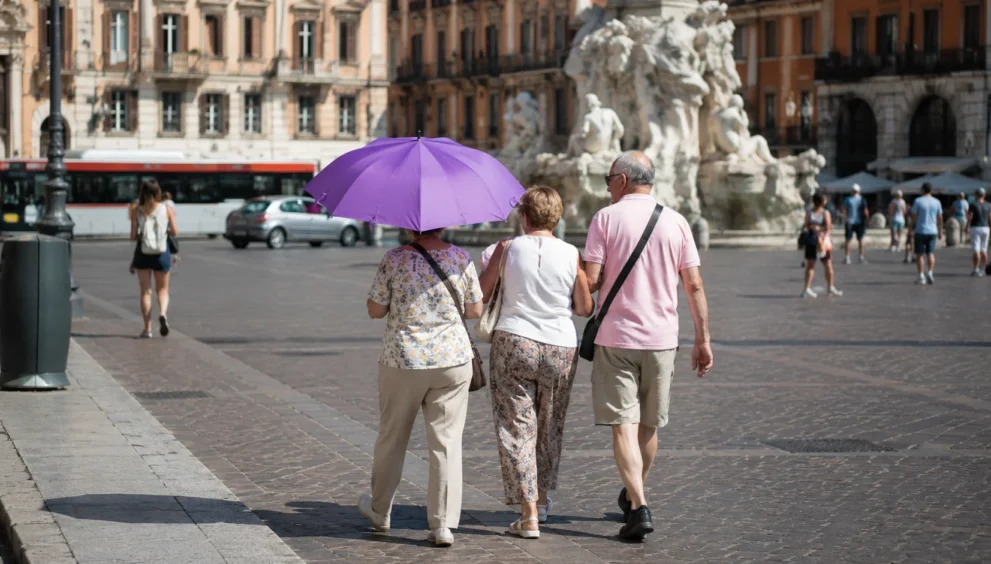
France has reported 2,025 excess deaths during the final week of June’s record-breaking heatwave, a jump of nearly 30% compared to the previous week, as forecasters warn that more extreme temperatures are on the way for parts of Europe this weekend. French health minister Stéphanie Rist said there had been a “clear increase” in deaths among those over 45, with mortality rising by 62% in the Paris region alone. The figures were released on Friday as Météo-France issued red alerts for wildfires in the south of the country and temperatures were forecast to hit 40C again.
Belgium recorded 1,222 excess deaths during the heatwave—a 39% increase—with the country’s health ministry calling the toll “unprecedented.” Almost half the victims were aged 85 and over. The Netherlands reported approximately 480 excess deaths, concentrated in the south and east, where temperatures reached nearly 40C. Portugal has declared a state of alert until Tuesday, and parts of Spain are under orange warnings. The UK is expecting temperatures above 30C. The United States is also experiencing prolonged extreme heat over the July Fourth holiday weekend.
The Death Toll
Excess mortality measures the difference between the number of deaths during a given period and the number expected based on historical averages. It captures not only those killed directly by heatstroke but also people whose underlying conditions—heart disease, respiratory illness, kidney failure—were made worse by temperatures their bodies could not cope with.
In France, the Public Health France agency said the 2,025 excess deaths recorded between 22 and 28 June represented a nearly 30% increase. The health ministry cautioned that the figure was likely an “underestimate” and that the true toll would be higher.
Belgium’s health ministry reported 1,222 excess deaths, a 39% increase. Nearly half of those who died were aged 85 and over. Dutch authorities reported approximately 480 excess deaths, with most victims aged 80 and older and concentrated in the areas where temperatures were highest.
According to French Public Health France excess mortality data and Belgian and Dutch health ministry heatwave death tolls, the age profile was consistent across all three countries. The elderly died in disproportionate numbers—those least able to leave overheated homes, living in buildings not designed for extreme heat, with bodies that had lost the physiological capacity to cool themselves efficiently.
French Interior Minister Laurent Nuñez also reported that 72 people had died by drowning since 18 June, deaths linked to people seeking relief from the heat in water, often in unsupervised locations.
As our analysis of heatwave mortality patterns and the structural vulnerability of elderly populations in Europe has documented, the pattern of excess deaths concentrated among the oldest cohorts repeats in every major European heat event.
The Next Heatwave
The excess death figures were released as forecasters warned of another heatwave beginning this weekend. Temperatures are forecast to reach 40C in southern France, with peaks of 36C to 37C expected around Bordeaux, Toulouse, and Agen. Météo-France has issued red alerts for Friday and Saturday for forest fires, warning that conditions meant the risk of outbreaks was “very high” compared to summer norms.
Portugal’s government declared a state of alert that will remain in place until midnight on Tuesday, with temperatures forecast to exceed 40C in some areas and overnight temperatures above 25C. In Spain, parts of the southwest are on orange alert as temperatures of 40C are expected in some areas.
BBC Weather reported that a large area of high pressure is building from the Azores towards Portugal and Spain, and that heat is forecast to climb across France and southern Britain by the weekend. The UK is expecting temperatures above 30C.
The United States is also affected, with millions of Americans experiencing prolonged extreme heat and high humidity across parts of the central and eastern US during the July Fourth holiday weekend.
According to Météo-France heat and wildfire alerts, Aemet Spanish weather service warnings, and Portugal state of alert declarations, the current conditions continue the pattern that produced the June heatwave.
The Structural Problem
Europe is the fastest-warming continent, heating at twice the global average rate, according to the Copernicus Climate Service. The physical trend is well established. The social adaptation is lagging.
The 2003 heatwave killed an estimated 70,000 people across Europe. The official inquiry in France led to a national heatwave plan, including cooling centres, public warning systems, and check-in protocols for the elderly. The plan has saved lives but has not saved enough. The 2,025 excess deaths in a single week suggest the gap between the plan and its implementation remains lethal.
European cities were largely built for a climate that no longer exists. Buildings are designed to retain heat. Air conditioning is rare in private homes. Nursing homes are often unairconditioned. Public health systems, already under strain from ageing populations, face surges of patients with heatstroke, respiratory distress, and cardiac events.
The wildfires are another dimension of the structural failure. Nearly 7,000 fires have broken out in France since the start of summer, Prime Minister Sebastien Lecornu reported, burning approximately 8,700 hectares. On Thursday, nearly 3,000 people were evacuated after a fire ignited in Sainte-Marie-la-Mer and spread to Canet-en-Roussillon.
As our coverage of European climate adaptation and the increasing frequency of extreme heat events has tracked, the continent’s infrastructure, housing, and healthcare systems are being tested by temperatures they were not designed to withstand.
FAQ
How many people died in the June heatwave?
France recorded 2,025 excess deaths during the week of 22-28 June, a 29% increase. Belgium recorded 1,222 excess deaths, up 39%. The Netherlands reported approximately 480 excess deaths. The figures are likely underestimates.
Who was most affected?
The elderly were disproportionately affected. Nearly half of Belgium’s victims were aged 85 and over. Most Dutch victims were over 80. France reported a clear increase in deaths among those over 45, with the steepest rises in the oldest age groups.
Is another heatwave coming?
Yes. Temperatures are forecast to reach 40C in southern France this weekend. Portugal has declared a state of alert. Spain has issued orange warnings. The UK expects temperatures above 30C. The US is experiencing prolonged extreme heat.
Why is Europe so vulnerable to heatwaves?
Europe is warming at twice the global average rate, according to Copernicus. Many European cities were built to retain heat, air conditioning is rare in private homes, and nursing homes are often unairconditioned. Public health systems designed for a cooler climate are struggling to adapt.
What happened in the 2003 heatwave?
An estimated 70,000 people died across Europe. France’s inquiry led to a national heatwave plan, but the excess deaths in 2026 suggest the measures have been only partially effective.