

 English








































































































































































































































































































































































How Your Phone Is Changing Your Body: From Tech Neck to Weak Grip
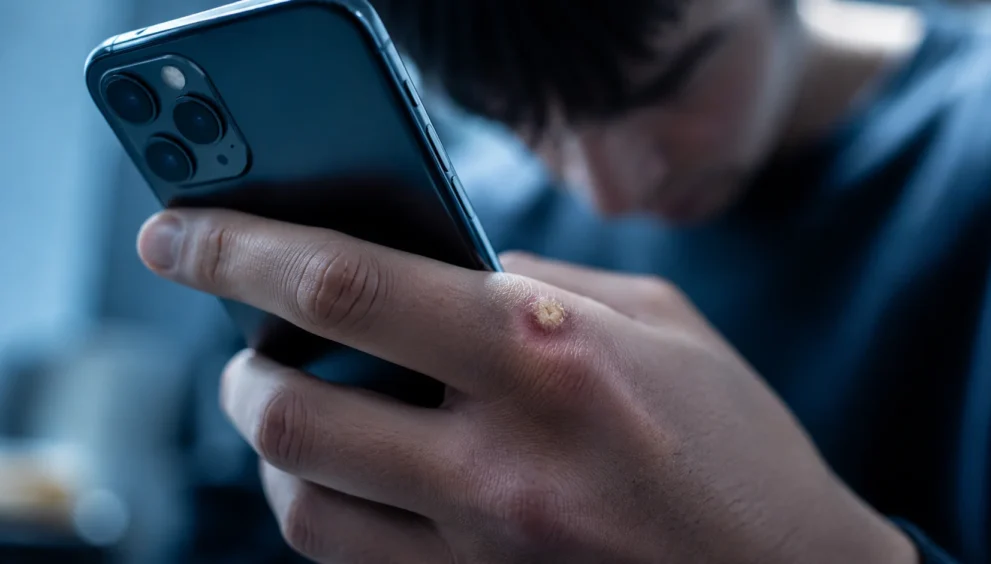
LONDON — The physical toll of constant device use is becoming increasingly clear, with scientists documenting changes to the neck, eyes, hands, and skin linked to the hours spent looking at screens. The phenomenon often called “tech neck”—the forward head posture adopted when looking down at a phone—can place up to 60lbs (27kg) of pressure on the cervical spine. Rates of myopia have been rising for decades, which researchers partly attribute to the indoor life that screen use encourages. Grip strength, a key predictor of overall health, is declining in many countries, especially among younger people. Dermatologists report skin irritation under smartwatches worn continuously.
The effects are subtle, cumulative, and largely reversible—but researchers say the generational shift toward screen-based life may be producing physical changes that are only beginning to be understood.
The Neck
When the head is held upright and aligned with the spine, it weighs roughly 10 to 12 pounds. When tilted forward to look at a phone—a common texting angle of 60 degrees—the effective load on the cervical spine reaches approximately 60 pounds. Over time, this can damage the discs in the spine, degenerate joints and muscles, and even reduce lung capacity.
The condition has a name: “tech neck.” The fix is not to stop using phones but to change how they are held. Clinicians recommend positioning screens at eye level, roughly arm’s length from the face. The same advice applies to computer monitors. Some experts suggest taking a 20-minute break every half hour.
According to research on cervical spine load and forward head posture from clinical biomechanics studies, the pressure on the neck increases with the angle of tilt, making the texting position particularly damaging over years of use.
The Eyes
Rates of myopia—near-sightedness—have been rising for decades. The assumption was that close work, such as reading or looking at screens, was driving the increase. But a longitudinal study of children’s eye development conducted over more than 20 years by Donald Mutti, a professor of optometry at Ohio State University, found otherwise.
“We looked at risk factors for the onset and progression of myopia,” Mutti told the BBC. “The answer was ‘not really'” when it came to a connection between myopia and close work.
What the study uncovered was that time spent outdoors appeared to have a protective effect. The leading theory is that bright outdoor light stimulates dopamine release from the retina, which may affect how the eye develops. In that sense, Mutti said, devices may have an indirect negative effect on eyesight—not because of what they do to the eyes but because they keep people indoors.
The solution, Mutti said, is simple: spend more time outside.
According to Ohio State University longitudinal eye development study and research on outdoor light and myopia prevention, the protective effect of outdoor time has been observed across multiple populations.
As our coverage of screen time, eye health, and the evidence on blue light has documented, the direct effects of screens on eyesight have often been misunderstood. The indoor lifestyle that technology enables may be the more significant variable.
The Hands
Grip strength is increasingly recognised as a key marker of overall health. One major longitudinal study found that it predicts early death better than blood pressure. And grip strength is declining in many countries, particularly among younger people.
Johannes Beller, a professor of medical sociology at the Medical University of Lausitz in Germany, said the trend should be taken seriously. “A generational decline isn’t just about weaker hands; it may be an early warning sign about the future health of younger cohorts,” he told the BBC.
The mechanism is not mysterious: computer-based, sedentary work has replaced physical labour for large portions of the population. Hands are used for typing and swiping rather than gripping, lifting, or manipulating objects against resistance.
Sebastian Suggate, a professor of developmental psychology and education at the University of Regensburg in Germany, has found associations between more screen time and worse motor skills in children. “Even if the effects are moderate to small at the individual level, collectively, across generations, we’re talking about a potential dumbing down of society,” he said, “because the hands are such a central point of contact we have with the world.”
His advice is not to ban screens but to introduce hands-on activities into daily life: preparing meals, physical arts and crafts, playing an instrument, or even just writing by hand.
According to grip strength and mortality research and University of Regensburg screen time and motor skills studies, the decline in physical markers among younger cohorts is a relatively recent phenomenon that correlates with the spread of smartphones and other personal devices.
The Skin
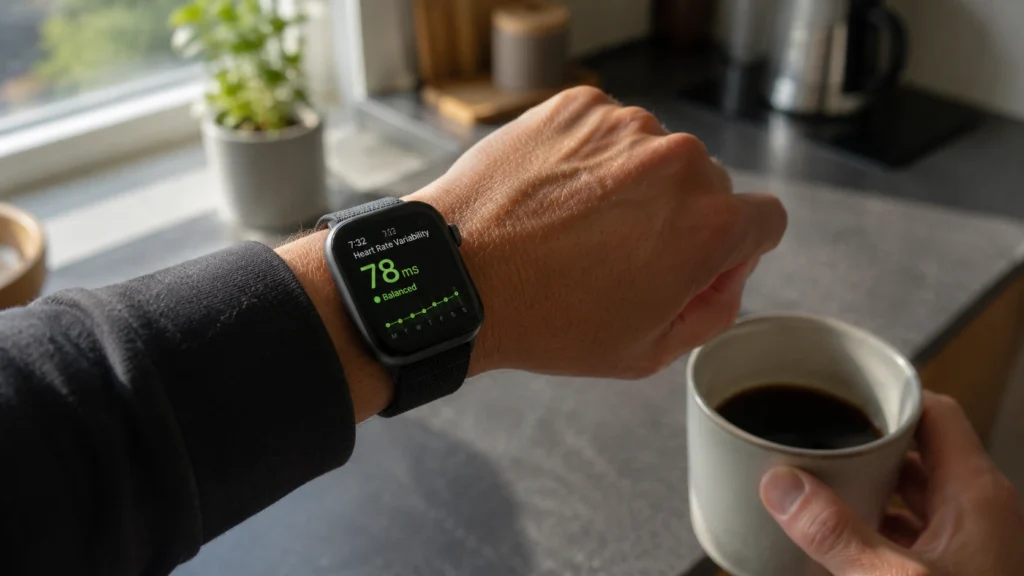
Smartwatches and fitness trackers, worn continuously, can create skin problems. Justine Hextall, a consultant dermatologist and fellow of the Royal College of Physicians in the UK, told the BBC that “a dark, damp environment is great for yeast, so you might get irritation or even eczema” under the strap.
The breakdown of the skin barrier can also lead to sensitivities to materials commonly found in devices, including nickel, rubber, latex, and a group of chemicals called acrylates.
Hextall recommended removing devices more often, washing the skin underneath, and using a barrier cream if wearing a watch all day.
On the question of whether tech neck causes neck wrinkles—a claim that has spawned dedicated skincare products—Hextall said the link “makes sense, in theory” because repetitive stress can cause wrinkles. But she cautioned that there have been no good studies proving the connection, and advised against buying special products marketed for the condition.
As our reporting on wearable technology and skin health has covered, the dermatological effects of devices worn against the skin for extended periods are an emerging area of concern.
FAQ
What is “tech neck”?
Tech neck refers to the forward head posture adopted when looking down at a phone or other device. At a 60-degree angle, it can place up to 60lbs (27kg) of pressure on the cervical spine, potentially causing long-term damage to discs, joints, and muscles.
Does screen time cause myopia?
Not directly, according to research. A 20-year longitudinal study found that close work was not strongly connected to near-sightedness. However, screen use keeps people indoors, and time spent outdoors appears to protect against myopia. The solution is to spend more time outside.
Is grip strength really declining?
Yes. Studies show grip strength is falling in many countries, especially among younger people. Grip strength is considered a key marker of overall health—one study found it predicts early death better than blood pressure.
Can my smartwatch cause skin problems?
Yes. Wearing a smartwatch continuously can create a dark, damp environment that encourages yeast growth, potentially leading to irritation or eczema. The fix is to remove the device more often, wash the skin, and use a barrier cream.
Are “tech neck” wrinkle creams worth buying?
There is no strong evidence linking forward head posture to neck wrinkles, despite the marketing of dedicated skincare products. The concern about posture should focus on spinal health rather than cosmetic effects.