

 English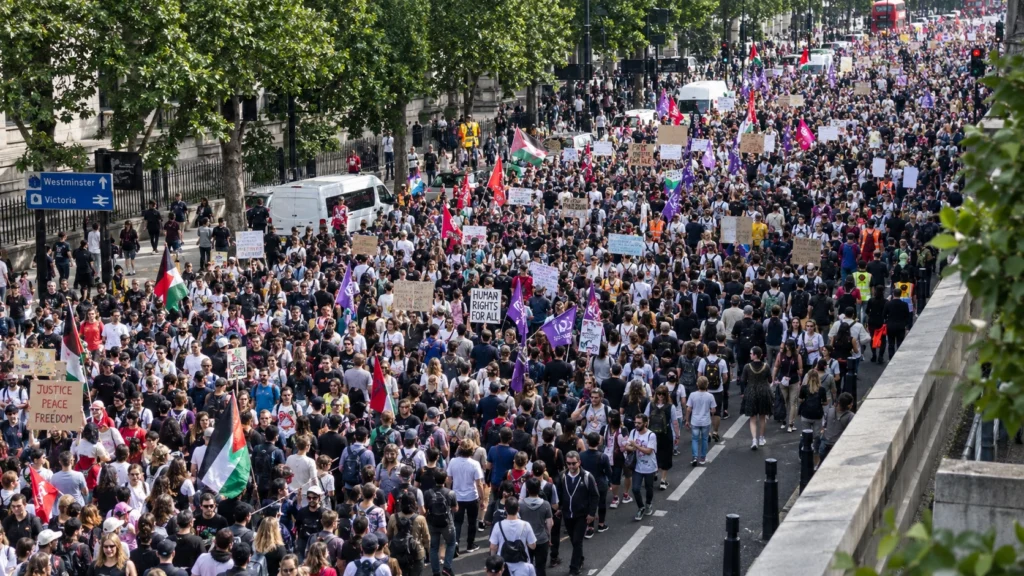













































































































































































































































































































Stanford Graduates Walk Out on Google CEO as AI Anxiety Grows
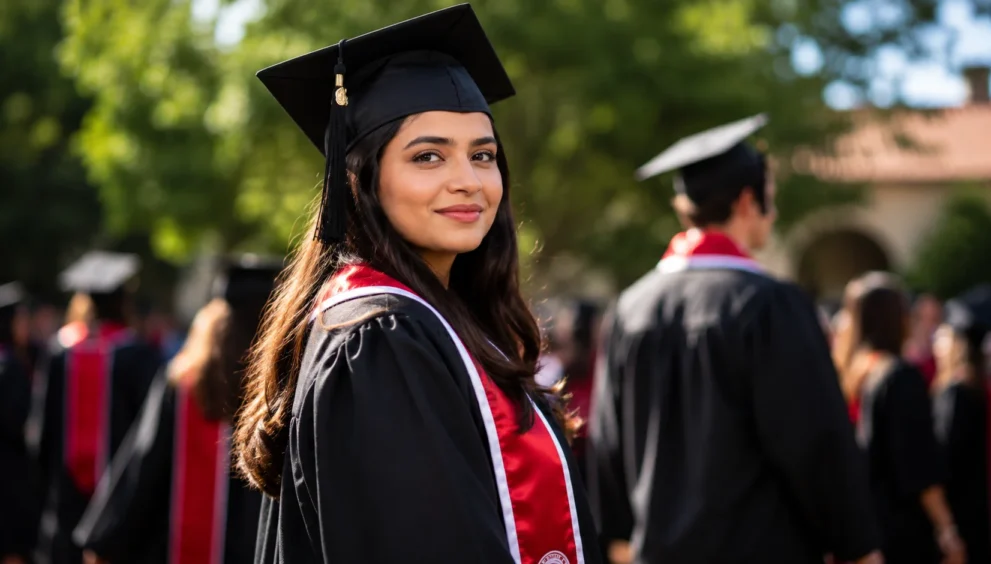
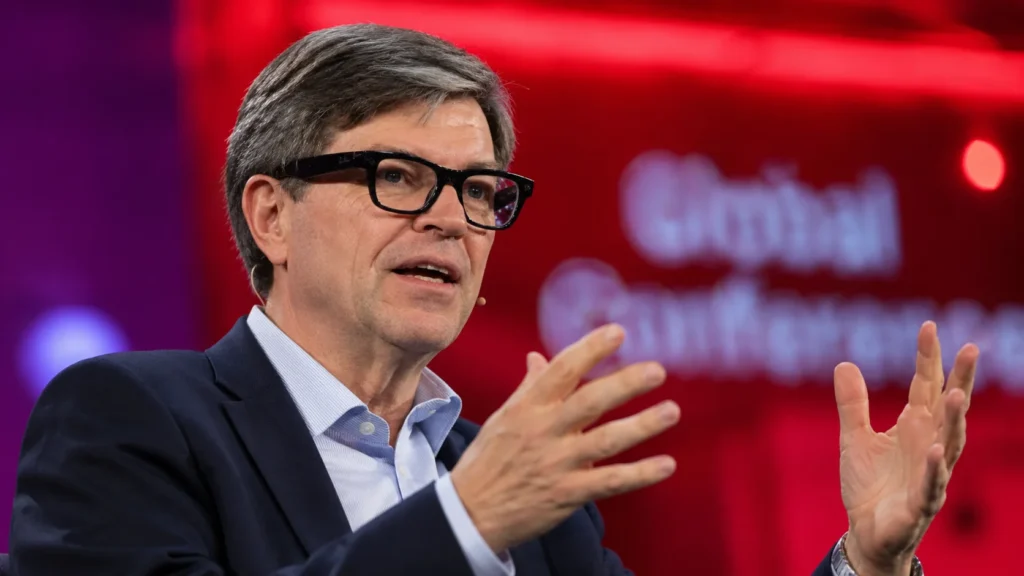
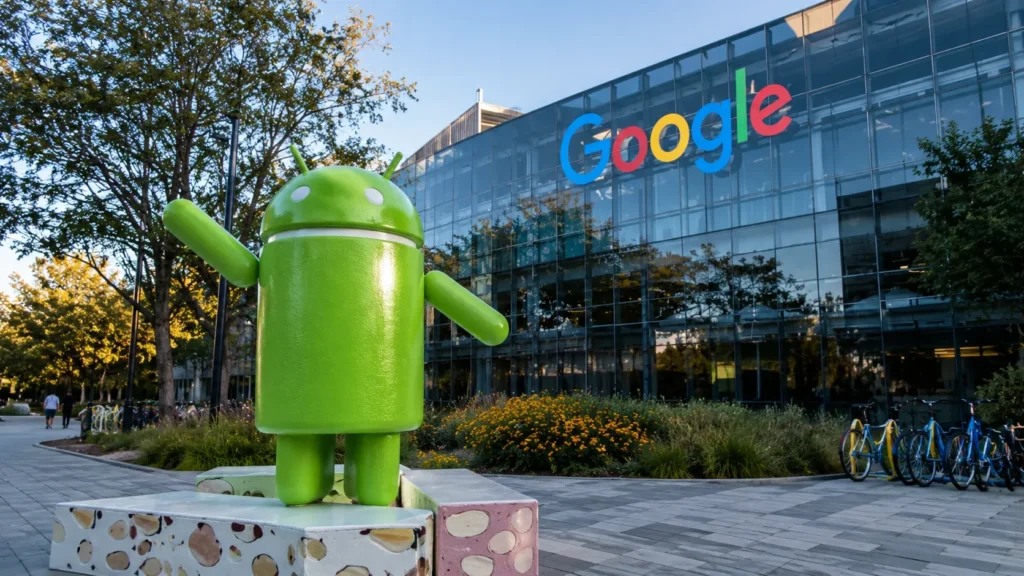
STANFORD, California — At least 200 Stanford University students walked out of Google CEO Sundar Pichai’s commencement address last weekend, carrying signs that read “ICE spies with Google AI” and waving Palestinian flags, as protests over the technology industry’s role in surveillance, military contracts, and immigration enforcement reached one of America’s most prestigious campuses. The walkout came during the graduation ceremony for the class of 2026—the first cohort to spend most of their undergraduate years in a world where artificial intelligence was a consumer product rather than a research project. Pichai, who earned his master’s degree at Stanford, had joked early in his remarks about being advised to avoid the topic of AI. A group of graduates left anyway.
The protest encapsulated the complicated relationship Stanford students have with the technology their university helped create. Interviews with graduates revealed a generation that is simultaneously building AI, using it, protesting it, and worrying about what it means for their futures.
The Campus and the Industry
Stanford occupies a unique position in American technology. The term “artificial intelligence” was coined here by computer scientist John McCarthy. Google began as a research project by Stanford PhD students Larry Page and Sergey Brin. The headquarters of Google, Meta, and Apple all sit within a 25-kilometre radius of the campus. The “Godmother of AI,” Fei-Fei Li, serves as a professor. OpenAI CEO Sam Altman dropped out in 2005.
A four-year undergraduate degree can cost nearly $400,000 with expenses. Fewer than 4% of applicants are admitted. For decades, the bargain was clear: pay the price, earn the credential, enter the network, collect the career.
That bargain is now under revision. A Stanford study published in November found that employment for early-career workers in the US has fallen substantially in fields most exposed to AI, including software development. Unsubstantiated rumours have circulated on social media claiming that even Stanford computer science graduates are struggling to find work. The university told the BBC it did not have statistics to share on job placement rates. Most graduates interviewed either had jobs lined up or planned to continue their studies.
According to the Federal Reserve Bank of New York analysis of recent college graduate employment trends, early-career workers across the US are facing a more difficult job market than in previous years.
As our analysis of AI’s impact on graduate employment and the tech job market documented, the uncertainty is particularly acute in fields where AI tools are changing the nature of entry-level work.
The Builders
Ifdita Hasan, a graduating computer science and AI major, expressed optimism about the technology. “AI gives us the opportunity to learn more about the universe,” she told the BBC. “It’s a tool that people should try to use and try to adapt to.” She also said she was not surprised by the backlash. “This is what happens. It happened with the internet.”
Lucy Zimmerman, also a computer science major, served as a teaching assistant during her degree. She noticed a difference between the take-home work students submitted—often completed with AI assistance, she suspects—and their exam results. Some classes have reintroduced proctoring and shifted to spoken-word tests to prevent cheating.
“I’m worried about future generations,” Zimmerman said, before adding: “And for my generation.” She will join a tech startup in San Francisco after graduation. “I’m right in the thick of it.”
The paradox is sharp. Students who see the cognitive cost of AI—the “cognitive offloading” that lets machines handle mental tasks humans once performed—are entering careers that demand they use those same machines. They worry about dependency. They are also dependent.
The Protesters
The students who walked out of Pichai’s speech carried signs referencing Google’s Nimbus contract, a deal to provide AI tools to the Israeli military. Others highlighted the company’s ties to the Trump administration’s immigration enforcement.
“His presence represents what this political climate is empowering, and who is benefiting from the AI race,” one graduate who walked out told the BBC, asking not to be identified. “We cannot relate to him at all.”
Some walked to an alternative ceremony elsewhere on campus featuring pro-Palestinian activist Mahmoud Khalil, the Columbia University graduate who faced deportation attempts by Immigration and Customs Enforcement agents despite his status as a legal permanent resident. Stanford students also staged protests at graduation ceremonies in 2024 and 2025.
Atash Heil, an Earth Systems major, had just visited an exhibit of AI-generated art before the ceremony. “I thought it was scary, especially on my graduation day, to see that. Is the future… that? I want art to be made by humans. That’s what makes it art, right?”
Heil plans to work on climate resilience in New Orleans. He believes AI can help with climate modelling. He also believes it is not being developed ethically. Both things, he suggested, can be true.
According to Stanford University’s official history of artificial intelligence research and the Stanford AI Lab, the institution has been central to AI development since John McCarthy coined the term in the 1950s. That history is now colliding with student activism over how the technology is deployed.
The Psychology Major Who Wants to Stop Progress
Colbey Harlan, a psychology graduate, uses AI for creative writing. It helps him start projects despite his ADHD. He also sees the environmental cost.
“Data centres are taking a lot of resources, a lot of energy,” Harlan said. “I’m kind of at a point where it’s like—’Okay, AI is cool, but can we just stop progressing it?’ because if we continue, things are going to get out of control.”
He knows the question is unanswerable. The progression will not stop. He uses the tool. He fears the tool. Both things can be true.
Harry Kaplan, a Management Science and Engineering graduate, described Stanford as “the centre of ingenuity in the entire country and in the world.” But he said the impact AI would have on his future remained unclear. “It’s too early to tell. It’s an exciting place to be. It feels like we’re at the edge of something.”
As our coverage of the environmental impact of AI data centres and energy consumption has tracked, the resource demands of AI infrastructure have become an increasing concern for climate-conscious graduates entering the workforce.
FAQ
Why did Stanford students walk out of Sundar Pichai’s speech?
At least 200 students protested Google’s Nimbus contract providing AI tools to the Israeli military, as well as the company’s ties to the Trump administration’s immigration enforcement. Some signs read “ICE spies with Google AI.” The walkout continued a pattern of protests at Stanford graduations in 2024 and 2025.
How much does a Stanford degree cost?
A four-year undergraduate degree from Stanford can cost nearly $400,000 when expenses are included. Fewer than 4% of applicants are admitted.
What is cognitive offloading?
Cognitive offloading refers to the practice of relying on AI to carry out problem-solving and other mental tasks rather than performing them independently. Stanford students and teaching staff have observed its impact on learning, with some classes reintroducing proctoring and spoken-word tests.
Are Stanford graduates struggling to find jobs?
A Stanford study published in November found employment for early-career workers has fallen in fields most exposed to AI. Unsubstantiated rumours on social media claim even Stanford computer science graduates face difficulties. The university told the BBC it did not have statistics on job placement rates. Most graduates interviewed had jobs or planned further study.
Who coined the term “artificial intelligence”?
Computer scientist John McCarthy coined the term at Stanford University, where the Stanford AI Lab has been a centre of AI research for decades.