

 English




















































































































































































































































































































































































AI Is ‘Not Smart’: What’s Next for Artificial Intelligence

PARIS — One of the world’s leading artificial intelligence researchers has said current AI systems like ChatGPT are “not smart” and cannot lead to human-level intelligence, as he and other experts pursue a new approach to building machines that can understand the physical world. Yann LeCun, who left his role as chief AI scientist at Facebook-owner Meta in 2025, told the BBC at the VivaTech conference in Paris that large language models “basically just accumulate knowledge” and can “regurgitate something” but lack underlying understanding. His new company, Advanced Machine Intelligence Labs, has raised more than $1 billion from investors including Nvidia and the fund managing Jeff Bezos’s private wealth to develop an alternative AI architecture.
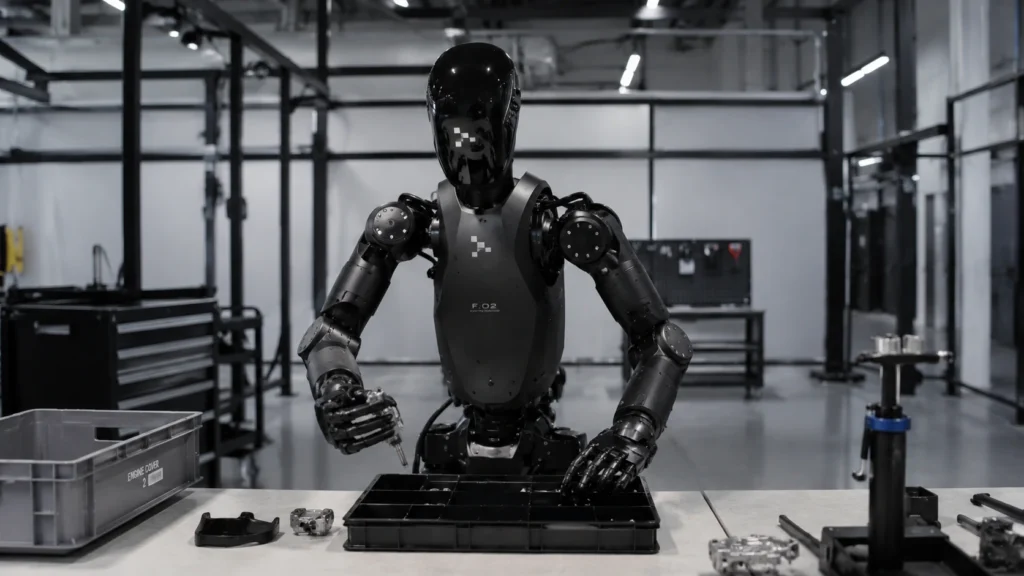
“LLMs are largely hopeless for robotics,” LeCun said. “The claims that somehow by just scaling up LLMs, we’re going to reach super human intelligence, that is simply not going to happen.” His comments reflect a growing view in the AI research community that the path to machines that can operate in the real world requires a fundamentally different approach.
What’s Wrong With Current AI
Large language models like ChatGPT, Claude, and Gemini work by predicting the next word in a sequence based on patterns in their training data. They are highly capable at tasks such as coding, solving mathematical problems, and generating text. But LeCun argues these are well-defined, predictable problems.
In the physical world, outcomes are probabilistic and unpredictable. LeCun demonstrated this with a pen. Hold a pen upright and let go. A toddler knows it will fall, but no human would try to predict the exact direction. An LLM, however, would generate a statistically plausible prediction—and it would almost certainly be wrong, because the system is not reasoning about physical reality. It is generating what appears to be statistically plausible based on text it has processed.
“The claims that somehow by just scaling up LLMs, we’re going to reach super human intelligence, that is simply not going to happen,” LeCun said. “We don’t have robots that are nearly as good at understanding the physical world as a rat.”
According to Yann LeCun’s comments at VivaTech and AMI Labs’ funding and research announcements, the Paris-based company is working on a new type of AI called Joint Embedding Predictive Architecture, designed to create abstractions of the real world that filter out useless information.
As our analysis of large language models and their limitations in understanding physical reality has documented, the gap between digital intelligence and physical intelligence is one of the defining problems in AI research.
The Alternative: World Models
The approach LeCun and others are pursuing falls into a category called World Models. The concept has existed for decades, but an influential 2018 paper by David Ha and Jurgen Schmidhuber helped catalyse the current wave of research. Their insight was that advances in machine learning and computing power made it possible for AI to learn from simulated mental models of the world rather than from direct experience.
A Google variant called Dreamer learned to collect diamonds in the video game Minecraft by imagining future scenarios. The simulation taught the AI what to do.
Ingmar Posner, professor of Applied Artificial Intelligence at Oxford University and an Amazon Scholar, is leading a team of about 10 researchers working on what he calls a “mechanistic world model.” The system is designed to structure knowledge so it can be recalled, combined, and modified when required.
“You need systems that are able to compartmentalise and organise knowledge in such a way that it can be recalled, combined and modified when it matters,” Posner said. He described the next decade of AI as being about “systems that can explain… You need models that can answer questions like: What matters? What causes what? What would happen if I did something else?”
Other major research efforts include DeepMind’s Genie model, Wayve’s Gaia system for autonomous driving, and Fei-Fei Li’s World Labs, founded in San Francisco in 2023.
According to Oxford University Applied AI Lab research on mechanistic world models and published work from DeepMind, Wayve, and World Labs, the field is attracting significant investment and research attention as the limitations of language models become clearer.
What Comes Next
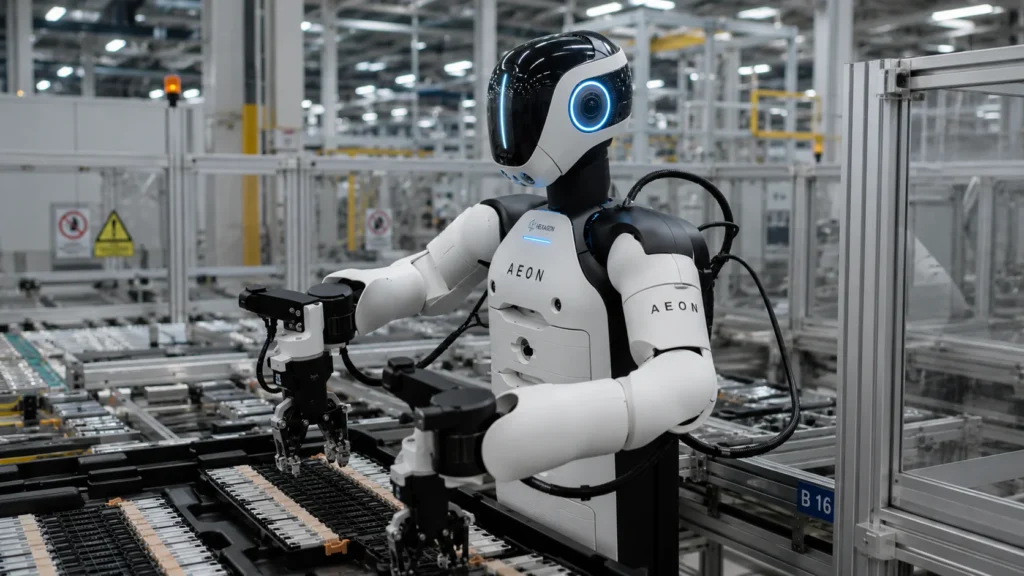
AMI Labs plans to refine its model through the rest of this year and deploy it in industrial settings in 2026. LeCun said the first applications would be in controlled environments such as factories and warehouses, where outcomes are more limited and failures are manageable.
“Eventually down the line we’ll have sort of general generic intelligence systems that can be applied to just about anything in the world with minimal training or fine tuning,” he predicted.
Posner noted that timelines in AI are difficult to forecast. “If you asked anyone in 2017 or 2018, how long it would be until you can have a ChatGPT sort of thing, they would go: ‘Decades, decades of work.'” The original ChatGPT launched in November 2022.
On the question of what happens to humans in a world where robots can operate independently, LeCun offered an optimistic analogy. “Our interaction with future AI systems—even if they are smarter than us—is going to be like the interaction between a captain of industry or a political leader with their staff of assistants—many of whom are smarter than they are.”
He added: “We’re still going to need humans to figure out what questions to ask, what to build, what to create, which is really the properly human aspect.”
As our coverage of AI investment and the race to develop robotics and physical-world AI has tracked, billions of dollars are flowing into humanoid robotics and the AI systems required to control them.

FAQ
Why does Yann LeCun say AI is “not smart”?
LeCun argues that large language models like ChatGPT can generate text and solve defined problems but lack underlying understanding of the physical world. They cannot reason about real-world situations like a toddler or even a rat can.
What is AMI Labs?
Advanced Machine Intelligence Labs is a Paris-based AI company founded by LeCun in 2025 after he left Meta. It has raised more than $1bn from investors including Nvidia and Jeff Bezos’s personal fund to build a new type of AI based on World Models.
What are World Models?
World Models are AI systems that create abstractions of the real world, filtering out irrelevant information to focus on what matters. Unlike LLMs, which predict text, World Models are designed to understand physical reality and navigate uncertain environments.
Can ChatGPT be used for robots?
LeCun says LLMs are “largely hopeless for robotics” because they are not designed to handle the unpredictable, probabilistic nature of the physical world. Training robots to perform household tasks remains difficult and expensive.
When will the next generation of AI arrive?
AMI Labs plans to deploy its technology in industrial settings in 2026. LeCun predicts more general intelligence systems will follow, though the timeline remains uncertain. Previous AI breakthroughs have often arrived faster than researchers expected.