

 English



































































































































































The Obama Center Opens. It’s Not Really a Library.
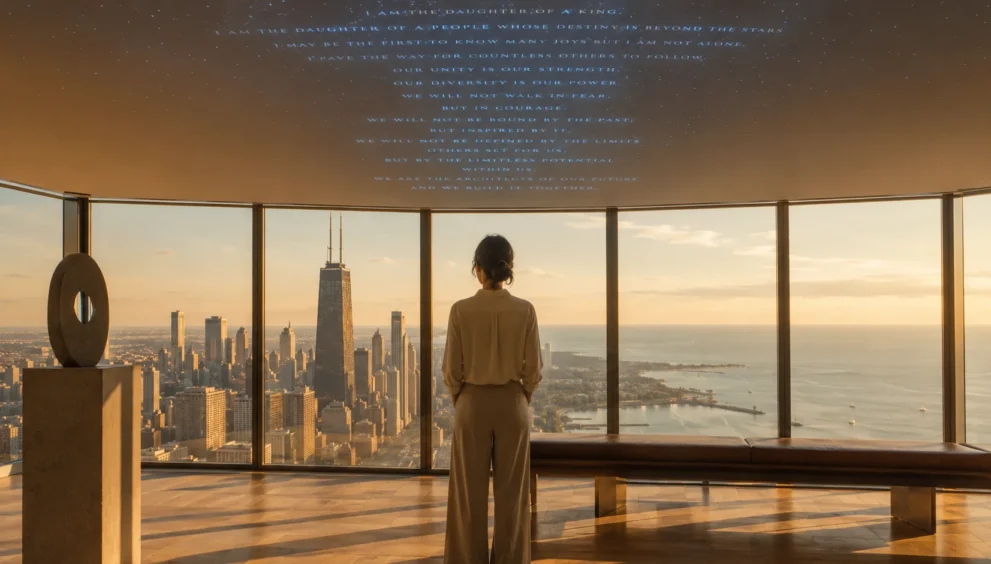
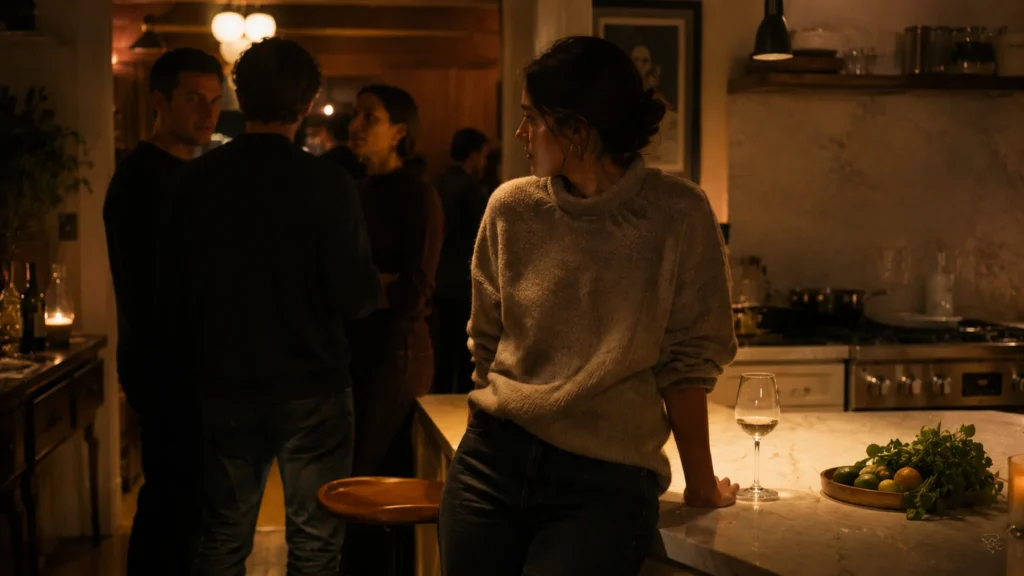
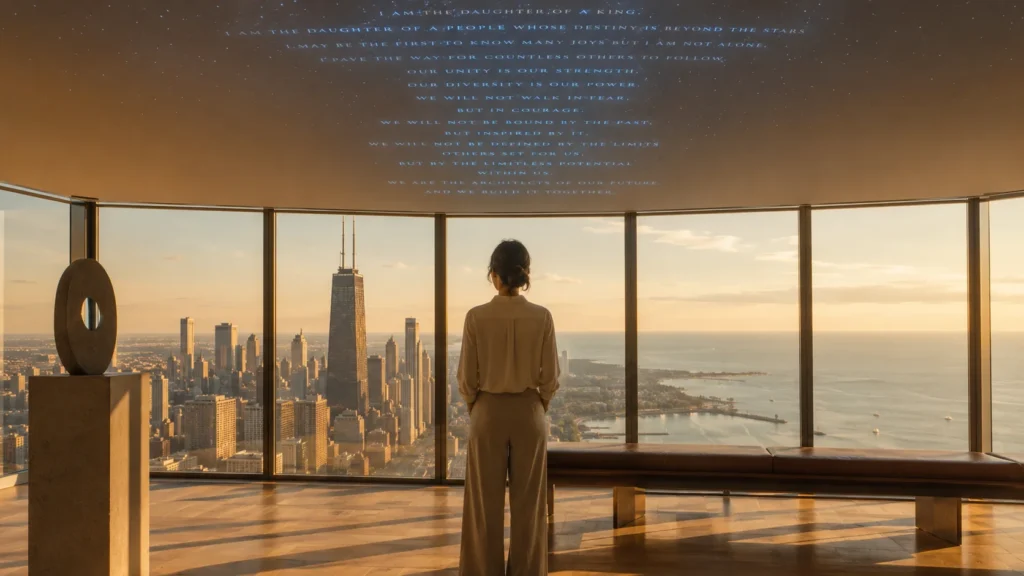
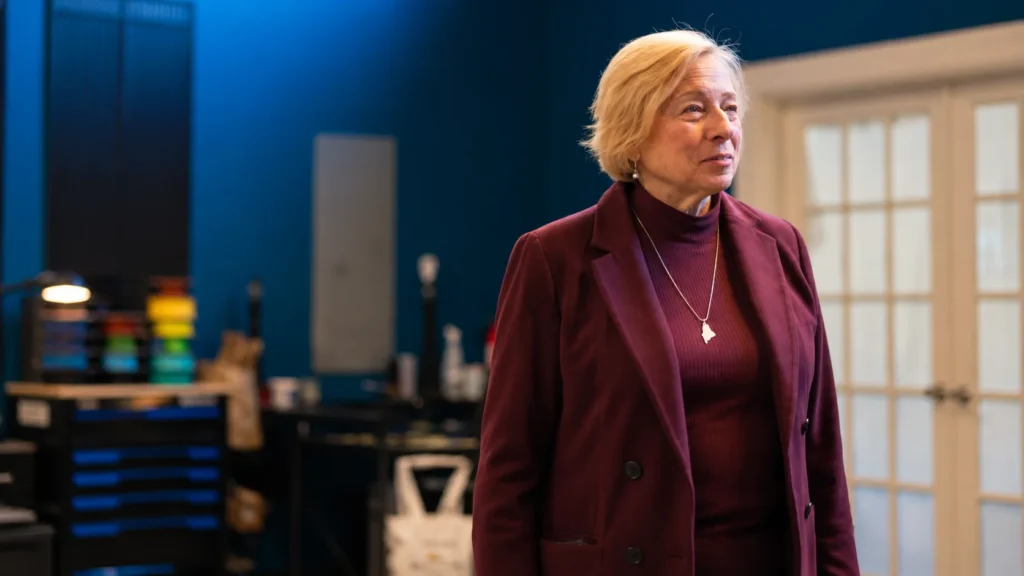
The woman stood in the Sky Room for a long time. Not taking photos. Not checking her phone. Just looking out at the South Side, the West Side, the blue blade of Lake Michigan. Above her, Idris Khan’s artwork pulled words from Obama’s Selma speech upward into a rim of light. She didn’t read them. She didn’t need to. She lived a few blocks away. Her grandchildren would learn to read in the new library branch downstairs.
This is not a presidential library. Not really. The National Archives does not run it. The archive is digital—30 million pages, no paper, no reading room with white gloves and hushed voices. The Obama Foundation, a private nonprofit, controls the campus. The campus cost $850 million. The number kept growing. It became the most expensive presidential library in history, then stopped being a presidential library at all.
What it became is harder to name. A museum. A community center. A fruit and vegetable garden. An NBA regulation-sized basketball court. A sledding hill. A teaching kitchen with a Rashid Johnson mosaic beside it. A new branch of the Chicago Public Library. A 19.3-acre bet that a building can belong to the people who live near it, not just the people who fly in to see it.
But the architecture wasn’t the question. The question was older than the design, older than the legal battles, older than the nicknames—Death Star, Obamalisk, the words people use when they’re not sure whether to trust something monumental. The question was: Who is this actually for?
The Shape of Four Hands
Tod Williams and Billie Tsien designed the museum building as four hands coming together. They said they wanted a 500-year-old building. “Every decision that was made was really about making something that felt lasting and timeless,” Tsien said. She stood in the Forum building during the soft opening, watching community members fill the spaces. “You have a sense when people walk in, they look up, and they feel like it belongs to them, like it’s theirs.”
That word—”theirs”—does a lot of work. The center embedded itself in Jackson Park, a historic public space on the South Side. The decision triggered lawsuits. An environmental group sued the city for allowing a private project on public land. The lawsuit was dismissed. The center added 3.7 acres to the park. It also removed hundreds of trees and demolished the historic Women’s Garden from 1937. The garden has been reimagined. Reimagined is not the same as restored.
Obama Foundation CEO Valerie Jarrett emphasized the community meetings. Thousands of them. The athletic field went in before the main buildings. The gardens and green spaces followed. “We wanted to ensure that this campus was going to blend into the urban fabric, that the people who live proximate to this center would feel the sense of ownership and participate with us in developing the plans for it.”
Ownership. Participation. Proximate. The language is careful. The building is not.
The Art That Does the Talking
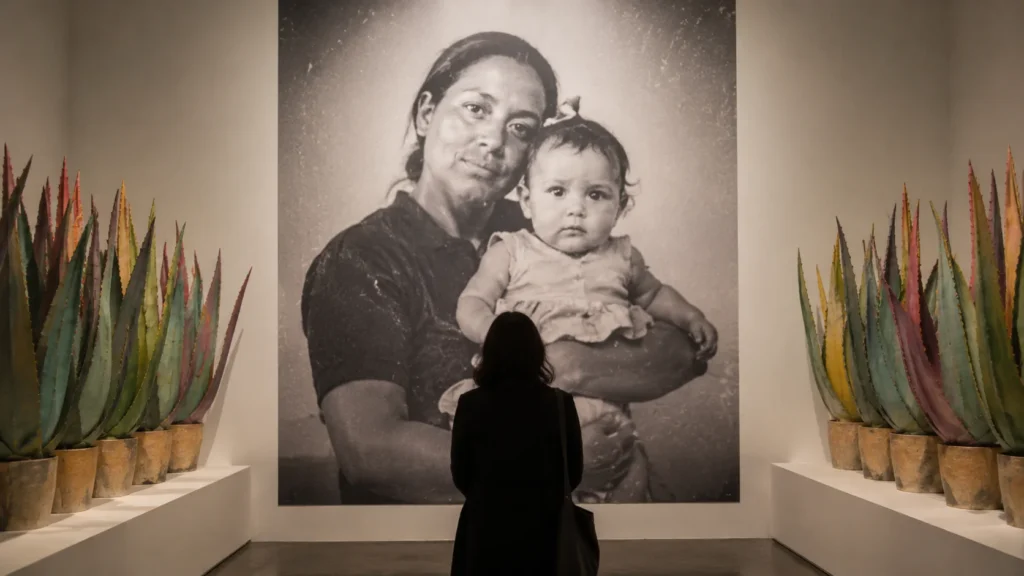
Thirty artists made permanent works for the campus. Not small pieces. Site-specific installations on a scale that would challenge a major contemporary art museum. Curator Virginia Shore, formerly of Arts in Embassies, brought together leading names and Chicago-connected artists in equal measure.
Mark Bradford’s “City of the Big Shoulders” dominates one space—a massive, tactile painting of Chicago that does not just celebrate the city. It examines redlining. It holds the inequities inside the map. Nick Cave and Marie Watt built a nearly two-story beaded and jingle-adorned tapestry. Martin Puryear’s arcing outdoor sculpture honors Martin Luther King Jr. Richard Hunt’s bird takes flight from a book in a quiet courtyard by the library.
Theaster Gates, a neighbor to the center through his Rebuild Foundation, created a frieze of archival images from Ebony and Jet magazines for the Forum building. He told CNN last year: “I hope that when people come to the center they come with an open heart about the future of democracy, collective imagining, collective storytelling, and collective belief.”
The language is aspirational. The art is specific. Bradford’s redlining map does not let you forget where you are standing. The South Side is not a backdrop. It is the subject.
The Oval Office and the Tan Suit
Inside the museum, the exhibitions track the Obama era through campaign ephemera, grassroots organizing videos, and Michelle Obama’s iconic looks—the Isabel Toledo coat and dress from Inauguration Day 2009, the Milly gown she wore for Amy Sherald’s portrait. Jarrett noted that Obama’s tan suit did not make the collection. He gave it away.
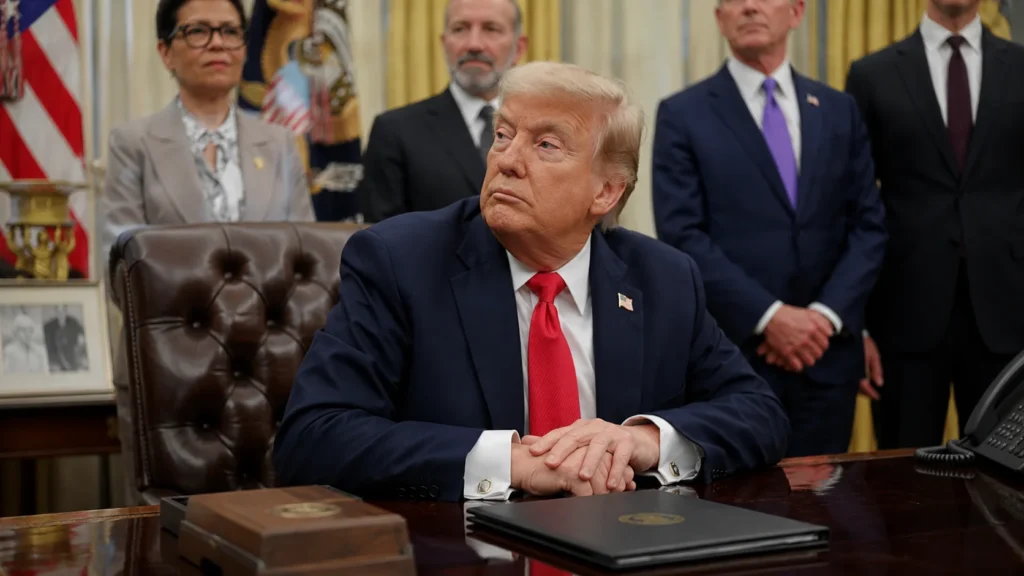
A full-scale replica of the Oval Office lets visitors sit at the desk. The tradition is not new—Bush, Reagan, and Carter all built versions. But the contrast lands differently in 2026. The Obama Oval Office reads as understated. The current one, under Trump, has tilted toward overgilded. Michael Smith, the former White House interior designer, visited the replica in March and teared up. “I did not think that would be emotional,” he said, in a video posted by the Foundation.
The room is not just a room. It is an argument about taste, about power, about what a presidency looks like when you strip away the gold leaf. The argument is not spoken. It does not need to be.
The Nicknames and the Noise
People called it the Death Star. The Obamalisk. The names arrived before the building did. Some were affectionate. Some were not. The granite weight of the museum invited comparisons. Williams shrugged them off: “I don’t care about the names. I think we only care about what it is and what it does and what it will be in the future.”
What it does, on opening day, is let school groups take the escalator past Julie Mehretu’s 83-foot painted vertical window, “Uprising of the Sun.” What it does is let a grandmother stand in the Sky Room and look at her neighborhood from inside a building that cost $850 million and wonder if any of that money will reach her block. What it does is open a library branch where her grandchildren will learn to read.
The question of who it is for will not be resolved on opening day. It will resolve in years, in usage patterns, and in whether the community meetings Jarrett described translate into community presence. The sledding hill will matter more than the speeches. The basketball court will matter more than the archive. The teaching kitchen will matter more than the Oval Office replica.
Two Small Things
Try this: If you visit, skip the museum first. Go to the library branch. Sit in the garden. Watch who else is there. The building will still be standing when you’re ready for the exhibitions.
Consider this: The most honest thing about the center is not the architecture or the art or the archive. It’s the tension. The building wants to be monumental and welcoming. Those two things do not always coexist. Sometimes a place matters most when it stops trying to impress you and just lets you sit down.