

 English














































































































































































































































































Dame Penelope Keith Dies Aged 86, Tributes Paid to Good Life Star
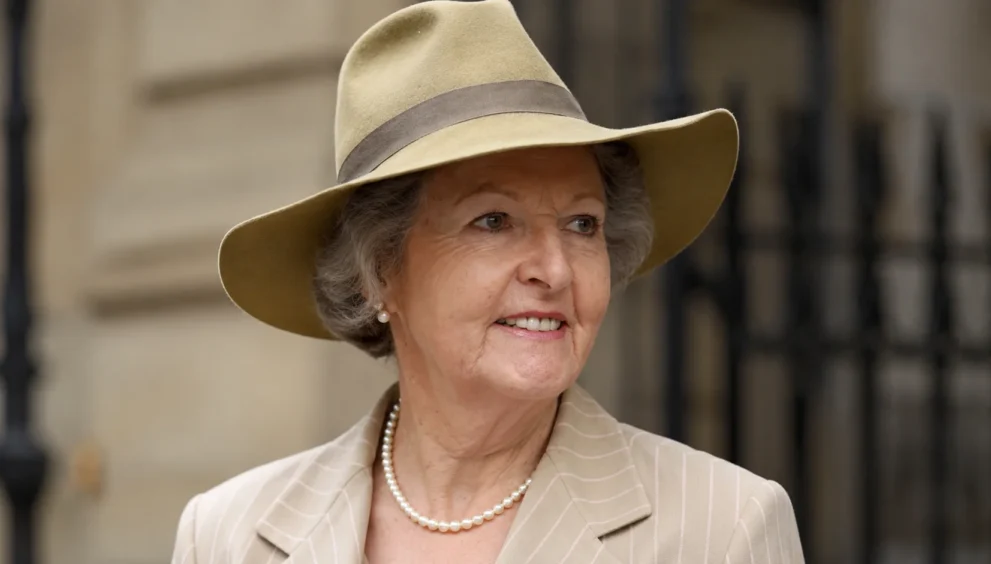
LONDON — Dame Penelope Keith, the award-winning actress best known for her roles as Margo Leadbetter in the classic 1970s sitcom The Good Life and Audrey Forbes-Hamilton in To the Manor Born, has died at the age of 86. Her family said in a statement on Monday that she “died peacefully whilst living with cancer at her home in Surrey,” where she had lived for more than 50 years. Felicity Kendal, her co-star in The Good Life, led the tributes, remembering her as a “comic genius” who was “a joy to know and work with.” The BBC will broadcast a classic episode of The Good Life on Monday evening in tribute. London’s West End theatres will dim their lights in her memory on Wednesday.
Dame Penelope became a household name in the 1970s and went on to win BAFTA TV awards, an Olivier Award, and a damehood for services to the arts and charity. She also served as president of the Actors’ Benevolent Fund, succeeding Laurence Olivier.
The Roles That Made Her Famous
The Good Life, which ran from 1975 to 1978, followed Tom and Barbara Good, played by Richard Briers and Felicity Kendal, in their attempts to become self-sufficient by turning their suburban garden into an allotment and keeping animals. Dame Penelope played their neighbour Margo Leadbetter, a snobbish suburbanite horrified by the experiment next door.
The show was voted one of the UK’s top 10 sitcoms of all time in a 2004 BBC poll. Dame Penelope won the BAFTA TV Award for Best Light Entertainment Performance in 1977 for the role.
She followed that success by playing Audrey Forbes-Hamilton, a widowed aristocrat forced to sell her country estate after her husband’s death, in To the Manor Born. The final episode of the first series in 1979 drew nearly 24 million viewers—the highest audience for any non-live event on British television in the 1970s.
According to BBC archive data on 1970s television audience figures and The Good Life 2004 poll results, the programmes remain among the most successful British sitcoms ever produced.
The Tributes
Kendal, her co-star in The Good Life, said: “I am deeply saddened to hear of my friend Penelope’s death. The shows I worked on with her were such special times in our lives and demonstrated her comic genius. My heart goes out to her beloved Rodney at this time; theirs was a great love story and partnership. She was a joy to know and work with, and she will be much missed.”
Comedian and presenter Sue Perkins praised her on Instagram as the “creator of some of the greatest sitcom characters of all time.” Broadcaster Gyles Brandreth called her “such a special lady—a wonderful actress, a real friend, so funny, so generous with the time she gave to good causes.” He added: “Hers was indeed a good life.”
Former culture secretary Sir Jeremy Hunt, who was her neighbour in Milford, Surrey, said she “helped Britain laugh at itself, one of our best national qualities, and brought happiness to millions.”
Novelist Lissa Evans noted the marked difference between Dame Penelope’s characters and her real personality. “Margo Leadbetter was snobbish, humourless and entitled, and Penelope Keith managed to make her into one of the most adored (and oddly vulnerable) characters ever seen on a sitcom,” Evans posted. “She delivered every line as if it were a jewelled crown on a velvet cushion. An utter genius.”
Dame Janet Suzman, who worked with her at the Royal Shakespeare Company and later on the 1981 film Priest of Love, told BBC Radio 4’s World at One that her friend became “like a comedy Mount Rushmore” and described “those ice pick consonants of hers, that tremendous self-assurance in her character.”
According to BBC director of comedy Jon Petrie’s statement on Penelope Keith’s legacy, she was “one of the defining figures of British television comedy” and her performance as Margo “remains one of the nation’s most beloved sitcom roles.”
As our coverage of British television comedy and its cultural legacy has documented, the 1970s sitcom era produced a generation of performers whose work continues to find new audiences on streaming platforms.
A Career Beyond the Suburbs
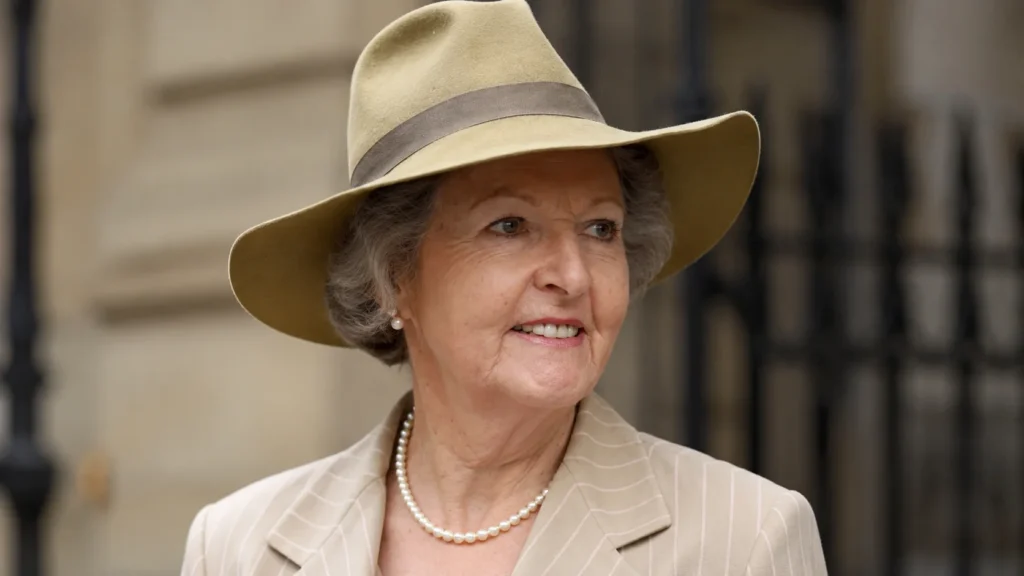
Born in Surrey, Dame Penelope joined the Royal Shakespeare Company in 1963. She won an Olivier Award for best comedy performance in 1976 for her role in the play Donkey’s Years. She won a second BAFTA TV award for The Norman Conquests and Saving It For Albie.
Her later sitcom work in the 1980s and 1990s included Executive Stress, set in a publishing house; No Job for a Lady, in which she played a Labour MP; Moving; Law and Disorder, playing a barrister; and Next of Kin.
She succeeded Laurence Olivier as president of the Actors’ Benevolent Fund after his death in 1989, a role she held for years while continuing to work in theatre. Her stage roles this century included Madame Arcati in a 2004 production of Blithe Spirit and Lady Bracknell in a 2007 version of The Importance of Being Earnest. She was made a dame in 2014.
Claire Walker, co-chief executive of the Society of London Theatre and UK Theatre, said: “We are proud to come together as an industry and honour the life and extraordinarily prolific career of Dame Penelope Keith, who will undoubtedly be remembered for many years to come as one of this country’s most venerated actors.”
FAQ
What was Penelope Keith best known for?
She was best known for playing Margo Leadbetter in The Good Life (1975-1978) and Audrey Forbes-Hamilton in To the Manor Born (1979-1981), two of the most successful British sitcoms of the 1970s.
What awards did she win?
She won a Bafta TV award for The Good Life in 1977, another Bafta for The Norman Conquests, and an Olivier Award for Donkey’s Years in 1976. She was made a dame in 2014.
What other shows was she in?
Her sitcom credits included Executive Stress, No Job for a Lady (playing a Labour MP), Moving, Law and Disorder (as a barrister), and Next of Kin. She also had an extensive stage career with the Royal Shakespeare Company.
Who paid tribute to her?
Co-star Felicity Kendal called her a “comic genius.” Sue Perkins, Gyles Brandreth, Jeremy Hunt, Lissa Evans, and Dame Janet Suzman were among those who paid tribute. The BBC will air a tribute episode, and West End theatres will dim their lights.
How many people watched To the Manor Born?
The final episode of the first series in 1979 drew nearly 24 million viewers—the highest audience for any non-live event on British TV in the 1970s.