

 English
































































































































































































































José Andrés Wants You to Eat Tapas. He Also Wants You to Leave.
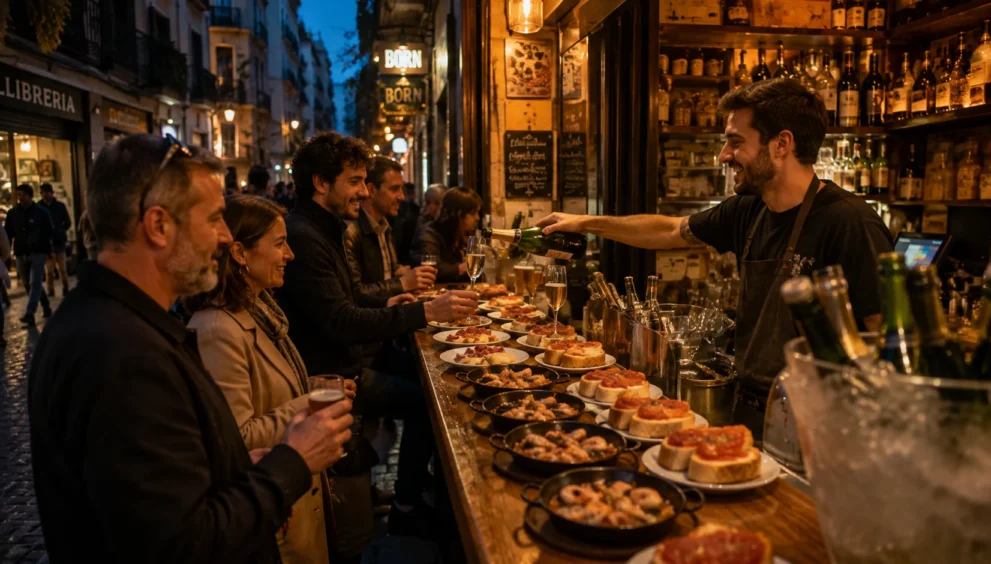
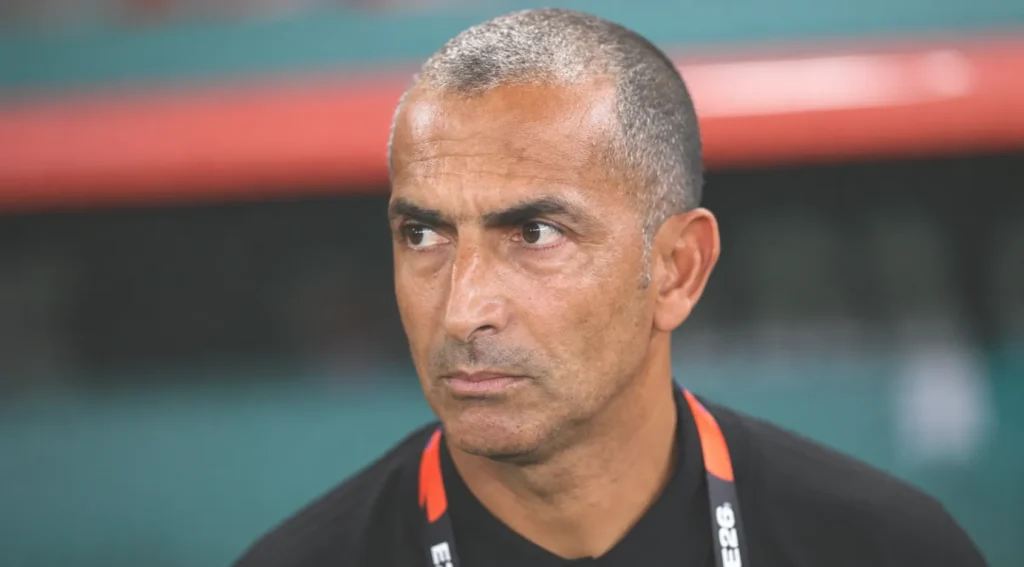
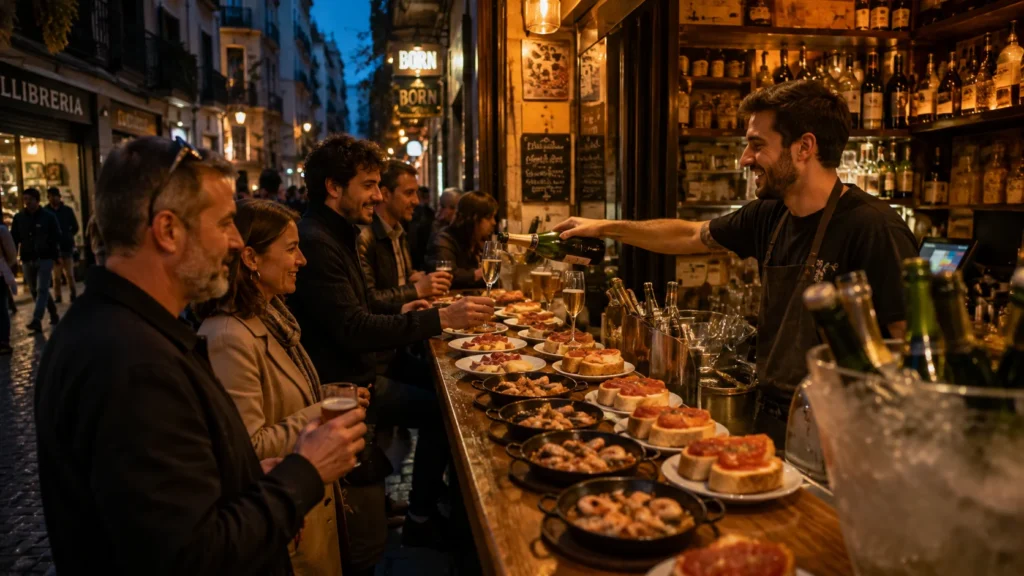
The first rule of tapas, according to José Andrés, is not about the food. It is about the tempo. “Don’t stay in one place!” the Michelin-starred chef commands, with the authority of someone who has spent 35 years in Washington, DC, trying to teach Americans to push their plates to the centre of the table. “A drink, a few bites, and keep it moving, people!”
The second rule follows from the first: watch what everyone else is eating. “Are they all eating the same tapa? That might mean it’s the specialty of the house.” The third rule is implicit in everything Andrés says about tapas culture, and he never quite states it directly: the tapeo—the tapas crawl, the movement from bar to bar—is not a meal structure. It is a social technology. It distributes bodies across neighbourhoods. It prevents any single bar from becoming a destination. It resists the gravitational pull of the guidebook recommendation, the viral TikTok, the queue that forms outside the famous place, while the equally good place next door sits empty.
Andrés, whose new book, Spain My Way: Eat, Drink and Cook like a Spaniard, arrives in May 2026, has spent decades watching tapas travel the globe. When he opened Jaleo in Washington more than 30 years ago, “no one was familiar with sharing plates… everyone wanted to have their own meal.” That has changed. Tapas are now a global format. The format has detached from the culture that produced it. The small plates can travel. The crawl—the movement, the dispersal, the refusal to stay put—cannot.
But the recipe wasn’t the story. The story was Cultural Authenticity vs Commercial Experience—and what happens when a culinary tradition built on movement and spontaneity meets a global tourism industry built on fixed itineraries and advance bookings.
The Tapeo as Infrastructure
Andrés insists there is no correct drink for tapas, only incorrect ones. “Spaniards, we tend to have a few rules about what you do and don’t drink when. We don’t usually drink things that are too high in alcohol ahead of the meal; it goes straight to your head. That’s why gin-tonics are for after dinner.” The rules are not arbitrary. They are functional. A tapeo involves visiting multiple bars. You need to arrive at the fourth bar still standing. The small beers, served in tiny glasses so each one is ice cold, are not a preference. They are a pacing mechanism.
The spatial logic is equally deliberate. Andrés maps out the neighbourhoods where the tapeo still functions as designed: Calle 31 de Agosto in San Sebastián for pintxos, Calle Laurel in Logroño where every restaurant has its own specialty, el Born and Barri Gotic in Barcelona where you set your destination to El Xampanyet or Cal Pep or La Plata and “wander from there,” Calle Ponzano in Madrid where you “look to see where the Madrileños are eating.” The directions are specific. The principle is general: go where the locals go. Do not stay long. Move.
The tapeo distributes economic benefit across multiple establishments. It prevents the concentration of tourism spending at a small number of famous venues. It requires a density of bars to function. It requires the bars to be close enough to walk between. It requires the city to be legible on foot. These conditions are not universal. They are not even permanent in the places that still have them. The tapeo is a fragile ecosystem. The fragility is part of what makes it valuable.
The Booking Problem
The globalisation of tapas has produced a paradox. The format—small plates, shared, informal—has spread everywhere. The culture—moving, watching, deciding spontaneously—has stayed in Spain. The reason is structural. The tourism industry that brings visitors to Spain is built on reservations. Flights are booked months in advance. Hotels are booked weeks in advance. Famous restaurants are booked days in advance. The tapeo requires none of this. It requires you to walk into a bar, look at what is available, order what looks good, and leave.
The tension between these two systems is intensifying. The restaurants Andrés names—El Xampanyet, Cal Pep, La Plata in Barcelona—are no longer secrets. They appear on lists. They attract queues. The queue is the enemy of the tapeo. A tapeo cannot function if the first bar requires a 45-minute wait. The crawl breaks. The movement stops. The social technology fails.
Andrés does not directly address this tension. His advice—watch what the locals are eating, go where they go—assumes the existence of bars where locals still predominate. Those bars still exist. There are fewer than they were. The tapeo is not dying. It is being compressed into the spaces the reservation economy has not yet reached.
Who Gains, Who Loses
The power recalibration is visible across multiple axes.
The bars that remain embedded in the tapeo ecosystem gain a diversified customer base. They do not depend on a single guidebook mention or a single viral moment. They depend on the street, the neighbourhood, and the flow of people moving from one place to the next. The dependency is more stable than the alternative. It is also harder to scale.
The bars that become destinations lose the tapeo’s rhythm. They are filled with tourists who have come specifically for them. The tourists stay longer. They order more. They treat the bar as a meal rather than a stop. The economy improves. The culture changes. The bar that was once part of a crawl becomes an endpoint. The crawl routes around it.
Travellers who understand the tapeo gain access to a version of Spain that the reservation economy cannot provide. They eat better for less money. They experience the city as a sequence of discoveries rather than a checklist of destinations. The experience is not replicable at scale. It depends on spontaneity. Spontaneity cannot be pre-booked.
Travellers who do not understand the tapa queue outside the famous places, eat well, and miss the point. The food is still good. The experience is still Spanish. It is not a tapeo. The distinction may not matter to them. It matters to Andrés. It matters to the neighbourhoods that still function as tapeo ecosystems. It matters to the bars that depend on movement to survive.
The Cultural Signal
Andrés calls tapas “a Trojan horse to understand Spain.” The phrase is precise. The small plate is the entry point. The sharing is the mechanism. The movement is the revelation. You cannot understand the tapeo by eating in one place. You cannot understand it by ordering the same dish in every bar. You understand it by moving, comparing, discovering that the tortilla española in Logroño is different from the one in Barcelona, that the gilda in San Sebastián—”the very famous skewer of anchovies, peppers and olives that maybe was the very first pintxo”—tastes different at different bars, that the croqueta de lacón at Melo’s in Madrid is worth the walk to Lavapiés.
The tapeo tells travellers something about how culture transmits. It does not transmit through monuments. It transmits through small, repeated actions—the cold beer in a tiny glass, the toothpick on the bar, the decision to move after two bites rather than stay for a full meal. The actions are legible to anyone who watches. They are easy to imitate. They are hard to institutionalise. The tapeo resists the reservation economy not because it is old but because it is designed for a different way of moving through a city. The two systems are not compatible. The tension between them is the story of Spanish food tourism over the next decade.
The 12-Month Trajectory
Andrés’ book will introduce more travellers to the tapeo. Some of them will follow his advice: move, watch, do not stay. Others will use the book as a checklist, visiting the named restaurants without understanding the logic that connects them. The restaurants will adapt to the customers they receive. The ones that receive tapeo customers will maintain the rhythm. The ones that receive destination diners will adjust their operations accordingly.
The tapeo will survive. It survived the transformation of Spanish food culture from local tradition to global phenomenon. It survived the arrival of Michelin stars in San Sebastián and the gentrification of el Born. It will survive the next wave of food tourism. The question is whether it survives in a form that is still legible to the traveller who wants to understand it, or whether it retreats further into the neighbourhoods where the reservation economy has not yet reached. Andrés knows the answer. He gave it already. Look for where the locals are eating. Go there. Do not stay long.