

 English









































































































































Anicka Yi Let Bacteria Grow for Two Years. It Became Art.
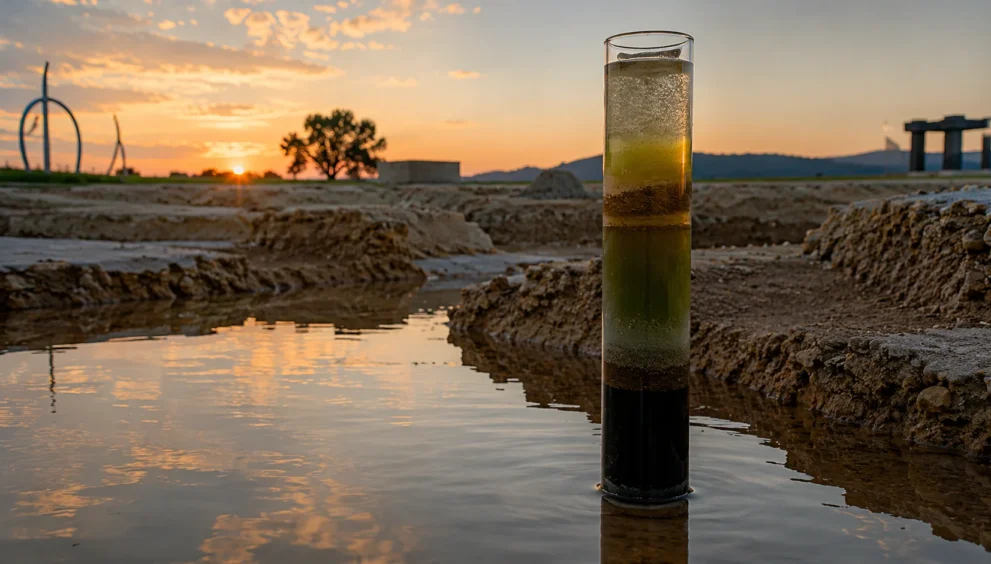
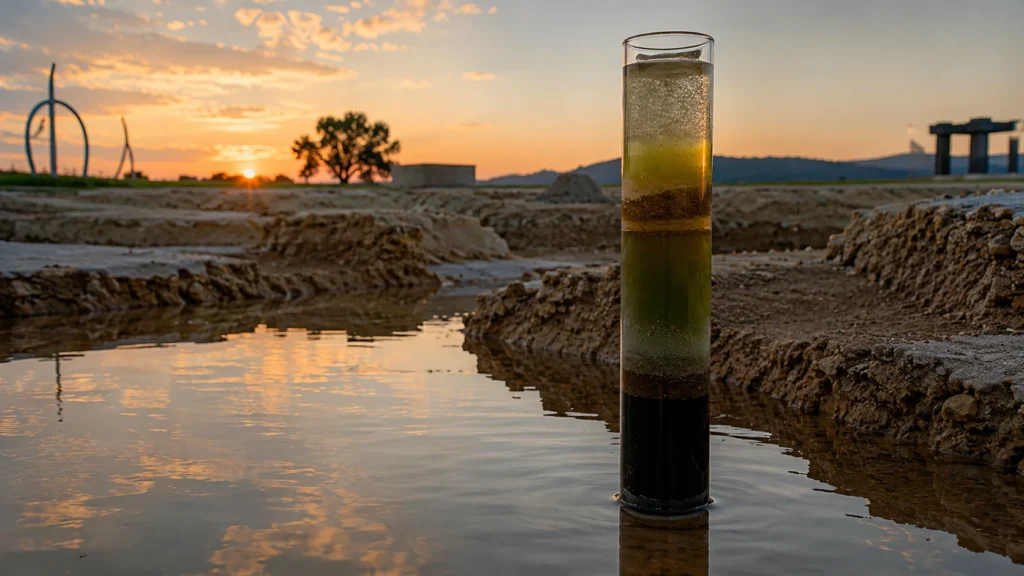
The columns sat in a shallow pond in the Hudson Valley, murky with local soil and water, pulsing with life too small to see. Acid green. Coffee brown. Layers forming over two years in a heated barn under UV lights. Anicka Yi had not painted them. She had not sculpted them. She had set the conditions and waited.
Sixty miles south, on the Lower East Side, two jellyfish-like machines drifted through the fourth floor of the newly reopened New Museum. Their tentacles opened and closed. Their flight paths changed based on information they absorbed in real time. No one controlled them. Two technicians sat nearby to refill helium and change batteries. A manual override existed for emergencies. Otherwise, the machines made their own decisions.
At Frieze New York, a radiolaria-inspired sculpture hung suspended, curling its fiber-optic arms with the slow hypnotic logic of a deep-sea organism. It had no brain. It had motors and algorithms.
The same artist made all three. She does not see them as separate projects. She sees them as a single syntax, developing over decades.
So what is actually happening here? An artist who started with the ephemeral—bacteria, scent, decay—is now building a universe where the living, the dying, and the algorithmic share the same room. The art world does not yet have language for this. Yi does.
The Anti-Monument
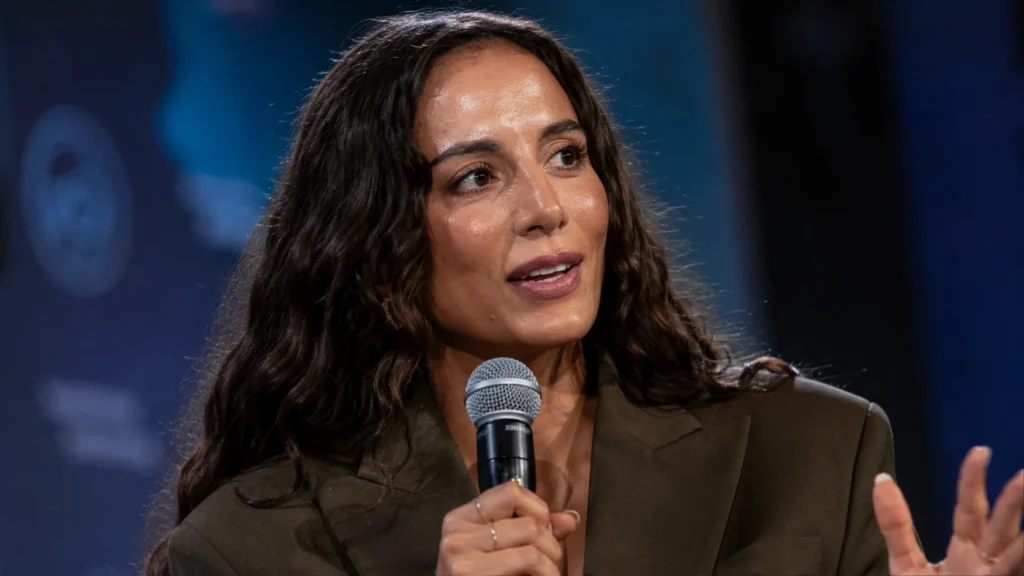
Yi began with a refusal. “I started my practice with the ephemeral, the perishable as a protest against this monumentality of art that had been handed down to my generation by the modernists and especially the 1960s minimalist sculptors,” she said from her Greenpoint studio. “I wanted to make more impermanent statements, because we’re all impermanent.”
The studio holds the evidence of that refusal. Glass biomorphic prototypes. Bottles of proprietary fragrances, a Chanel No. 5 mixed in. Cocoon-like lanterns. Samples of dyed and embroidered kelp, numbered and bagged. A lone prototype from her Storm King commission stands in a corner, murky with the water that now teems with microbial life in the sculpture park.
The work at Storm King, “Message from the Mud,” uses Winogradsky columns—small self-contained ecosystems invented by the Russian-Ukrainian microbiologist Sergei Winogradsky a century and a half ago. Inside them, microbes and algae establish zones over time, creating vivid layers from local soil, pond water, shredded newspaper for carbon, eggshells for calcium, and diatomaceous earth.
The other ingredient is time. “They’ve just been cooking for two years,” Yi said.
An artist friend called the work an “anti-monument.” The description clicked. Modernist sculpture promised permanence—steel, stone, the assertion that art outlasts its maker. Yi’s columns will only survive the summer and fall season. They depend on light and heat. Without the right environmental variables, the microbial neighborhoods die. She worried about bears tipping them over. She looked forward to turtles and frogs joining the pond.
Listening to What We Cannot See
Yi’s entry into the scientific world began with her own body. Chronic gut health issues sent her down rabbit holes about bacteria exerting power over her life. She had studied film theory and philosophy, not biology. Philosophy gave her the framework for deep thinking and disentangling abstract ideas. She collaborates with scientists—microbiologist Frank Cusimano assisted on her first Winogradsky cultures at the 2019 Venice Biennale. She is working on an undisclosed AI project with a neuroscientist exploring machine consciousness.
But the impulse is not academic. It is attentive. “There’s such a dense intelligence there,” she said of the microbial world. “It just seems like I should be listening to that.”
The listening has produced work that could tilt toward dread. Her Tate Modern commission opened during the Covid-19 pandemic. Now, Hantavirus and Ebola make headlines. The microorganisms are “calling the shots,” she said, “as pervasive as the air that we breathe.”
And yet her work does not alarm. It stages playful or contemplative settings with multiple sensory points of discovery. At the Tate, the aerobes—her autonomous helium-filled flying machines—occupied the Turbine Hall like a private ecosystem, wafting in groups. At the New Museum, they share space with hundreds of works by artists, filmmakers, architects, and scientists examining fraught relationships with machines.
Massimiliano Gioni, who leads the New Museum’s curatorial team, sees the difference. “She thought it would bring levity or a sense of optimism that maybe the entire exhibition doesn’t have,” he said. “There is an immediate sense of elation, or fantastical surprise when you see them.”
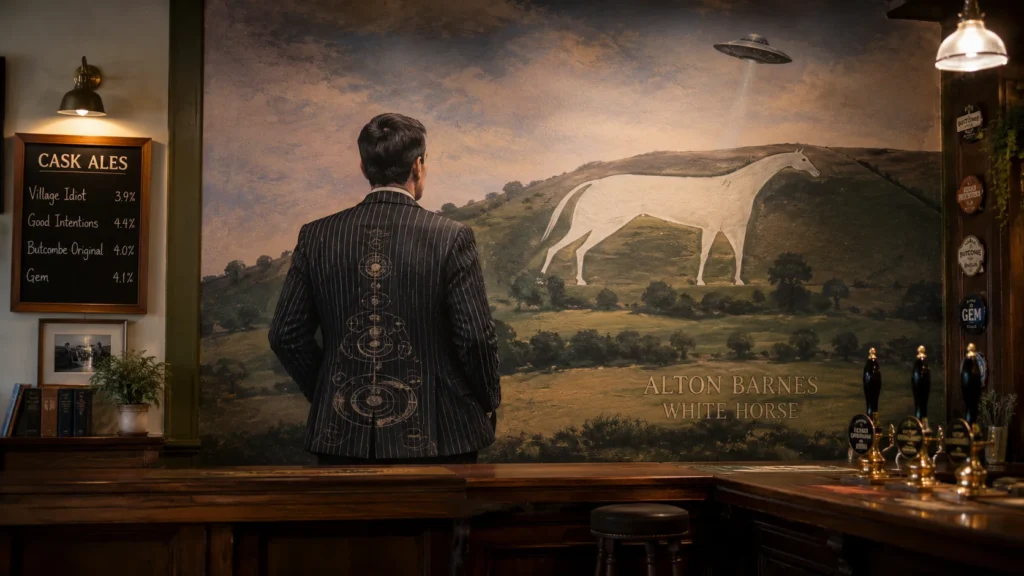
He also sees something else. The machines can read as ominous—drones, or the spindly aliens from “War of the Worlds.” Yi accepts both interpretations. She has stopped over-explaining. “I don’t like to set people up for the experience they’ll have.”
What Changes When the Art Makes Itself
The core tension here is Artist Intent vs Material Autonomy. Yi sets conditions. The work continues without her.
The Winogradsky columns changed color and pattern while she watched over two years. Nora Lawrence, executive director of Storm King, recalled: “Every change delighted her—the ways in which the works were constantly changing color, changing patterns, moving and growing in front of our eyes. It showed this real allowance of the work to become different things.”
The aerobes vary their flight behavior based on the information they take in. They are not programmed to repeat. They are programmed to learn. Two technicians monitor them. The artist does not direct them.
This is not the death of the author. It is the author stepping aside to let the materials speak for themselves. The microbes, the algorithms, the helium, and the motors—they are not passive media waiting for the artist’s hand. They are participants. Yi’s role is to create the conditions for their agency.
The Gooey Exchange
Yi’s practice now feeds itself. The radiolaria sculptures were born from “Alien Ocean” paintings made with machine-learning algorithms trained on her earlier works. She has returned to Winogradsky columns after experimenting with them on a smaller scale. The bacteria cultures could become a fragrance or an image or both. “It’s just this gooey kind of exchange,” she said.
The language is deliberately unmonumental. Gooey. Cooking. Marinating. She describes her ideas as needing “to age and season and marinate, and you can’t do that as a young artist.” The vocabulary is culinary, biological, and patient. It rejects the modernist assertion that art arrives fully formed from the mind of a genius. It insists that art grows, rots, transforms, and sometimes dies.
The art world has always struggled with impermanence. Museums exist to preserve. Collectors exist to acquire. Markets exist to assign value that endures. Yi’s work does not reject those structures. It simply makes work that does not depend on them. The columns will be dismantled in the fall. The aerobes will land. The microbes will continue living, or they will not. The work does not require the institution to outlast it. It only requires the institution to make space for it, temporarily.
What Comes Next
The art world is watching Yi because she has solved a problem most artists cannot. She has made work about interconnectedness—human, animal, plant, microbial, technological—without becoming didactic. The work is serious without being severe. It makes room for bears tipping over columns and technicians overriding flight paths. The uncertainty is not a bug. It is the point.
Over the next two years, expect more institutions to commission living or autonomous works. Few will have Yi’s patience. The Winogradsky columns cooked for two years before anyone saw them. Most museums operate on 18-month exhibition cycles. The temporal mismatch will force choices: shorter timelines, less complex systems, or a genuine shift in how institutions commission and care for work that changes without the artist present.
Yi will continue the AI project with her neuroscientist collaborator. She will continue the gooey exchange between her own works. She has built a universe. The universe now builds itself.