

 English







































































































































































































































































































































NHS Said Too Complex. He Flies 5,000 Miles for Allergy Treatment.
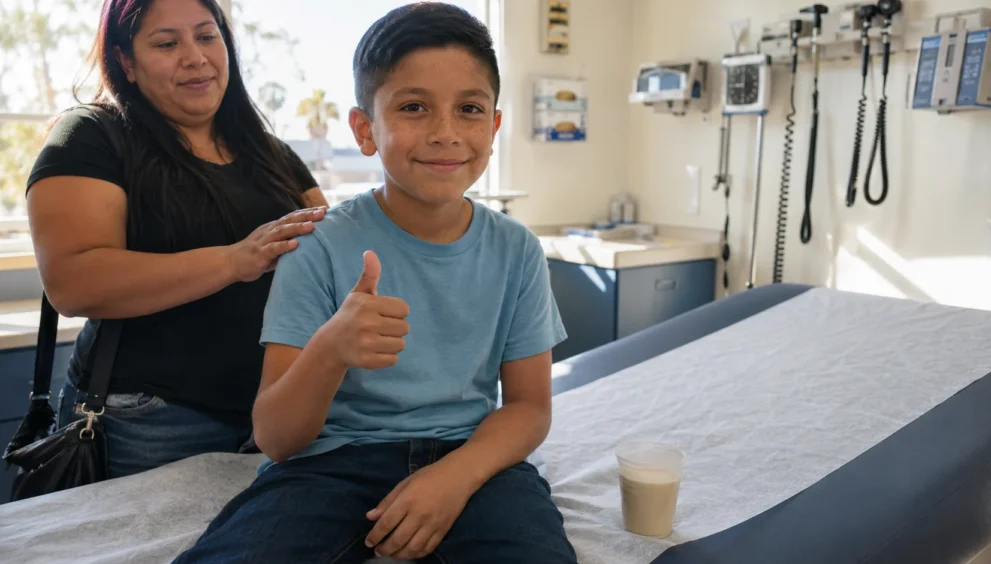
The blood tests came back when Yann Jennings was six months old. Milk, peanuts, eggs—all positive. By the time he was three, the list had grown to 20 allergens. Dairy, wheat, tree nuts, coconut, seafood, red fish, pulses and beans, kiwi, sesame, dogs, cats, horses, pollen, flaxseed, chia, poppy seed, buckwheat, millet, peas, chestnut, quinoa, rye, oats, pumpkin. Some of them were airborne. He could not sit in a room with a cat without flaring up. He felt safer outdoors, with the windows open, even in winter. His mother, Katie Hutt, learned what anaphylaxis looked like from Facebook groups for parents whose children already lived with it.
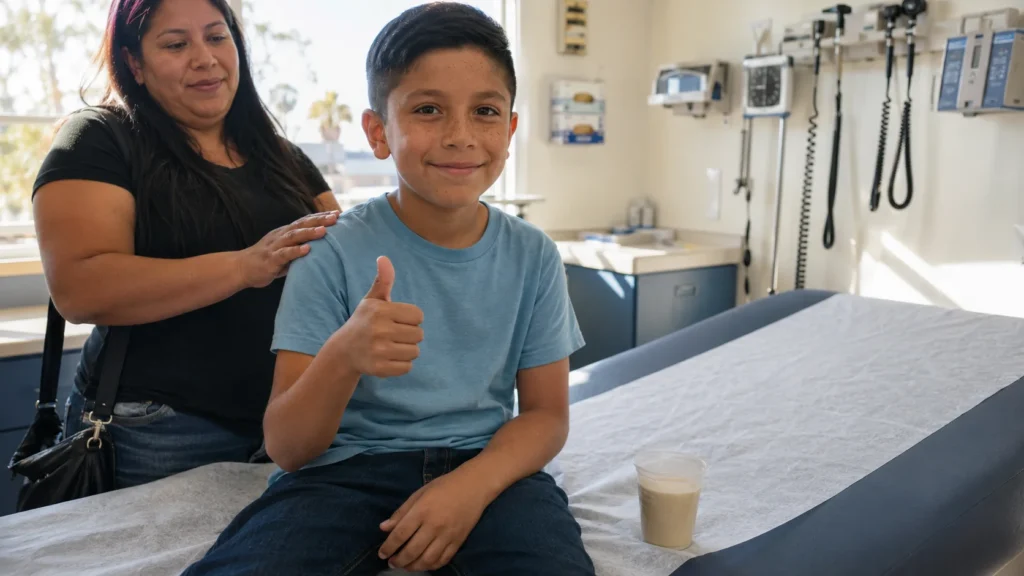
The NHS in Wales told the family that Yann was too complex, too high-risk for the available treatment pathways. A medical trial for peanut allergy in toddlers helped temporarily. Oral immunotherapy caused other issues and was stopped. By August 2024, Hutt and her husband, Neil Jennings, had found a not-for-profit clinic in California running an allergy elimination programme. They enrolled their son. They now fly 5,000 miles every 12 weeks. The treatment costs £30,000 a year, most of it travel. Yann will miss 18 months of school by the time the four-year programme is complete. He is now 10. He has not had an airborne reaction in 18 months. He can sit next to classmates eating foods that would once have put him in the hospital. He has a grey belt in jiu-jitsu. He swims, plays golf, and cycles. “He’s now able to live much more than he ever has been able to,” his mother says.
The family is fundraising to cover the costs. The UK government has announced that schools in England must stock adrenaline auto-injectors from September. The Welsh government says local health boards are responsible for allergy services and that people “deserve timely access to the services and support they need.” Prof Adam Fox of the National Allergy Strategy Group says the treatments Yann is receiving are available privately in the UK. Hutt says her son’s combination of severe allergies, asthma, hay fever, and eczema makes him a high-risk case for which no viable alternative exists on the NHS. The family continues to fly.
This is not an isolated event. This is a structural shift in what it means to access healthcare when the system that is supposed to treat you decides your case is too difficult for the pathways it has built—and the treatment that works exists, but in another country, at a price your family must crowdfund.
The Allergy Epidemic: The NHS Was Not Built For
Hospital admissions for allergies and anaphylaxis in England have doubled in 20 years. More than 25,000 people are admitted annually. Roughly 1,000 in Wales. Up to 4% of preschool children and 2.4% of UK adults live with food allergies, according to Anaphylaxis UK. Fatalities are rare—less than 0.001% of cases—but the daily experience of managing severe allergies is not captured by mortality statistics. It is captured by families who keep windows open in winter, who cannot enter certain rooms, who learn to recognise the first signs of anaphylaxis from other parents on Facebook because no clinician has walked them through it.
The NHS allergy infrastructure was not designed for this volume or this complexity. Prof Fox acknowledges that NHS provision of advanced allergy treatments is “extremely limited” and that most people access them through clinical trials rather than routine practice. The treatments exist. They are available privately in the UK. They are not available to everyone who needs them. The gap between what science can do and what the system will fund is the gap Yann’s family crosses every 12 weeks at 35,000 feet.
Dr Douglas Jones, co-founder of the Food Allergy Support Team, describes the treatment landscape as one in which “evidence-based options now include oral immunotherapy, sublingual immunotherapy, and biologic therapies such as Omalizumab.” The word “options” is technically accurate. The word “access” is where the accuracy ends. Access depends on geography, specialist availability, and financial resources. The resources are not distributed equally. The geography is not distributed equally. The specialists are concentrated in centres that are not equally reachable.
The Treatment That Works
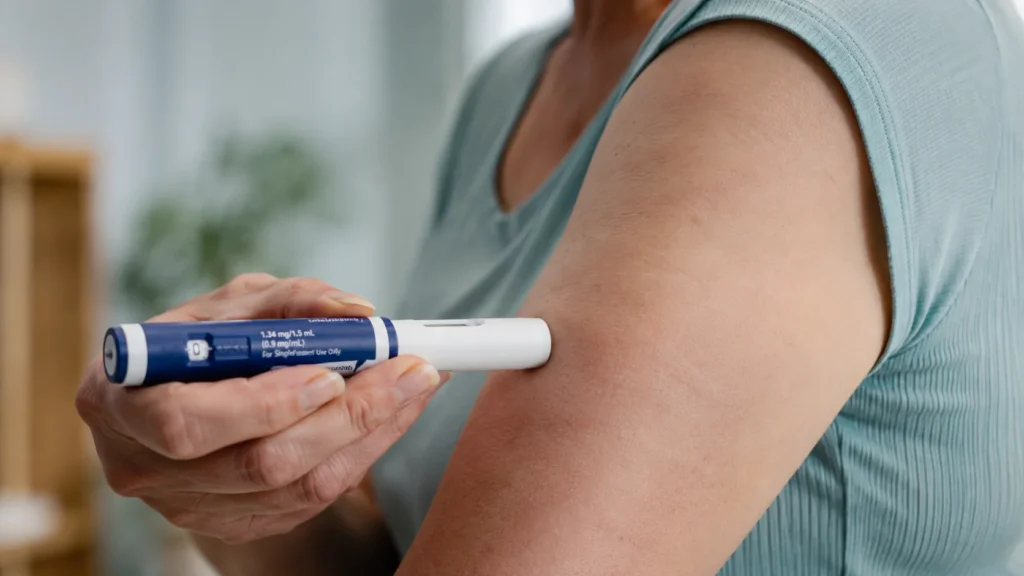
The California programme Yann is on uses a bespoke protocol. He receives tiny amounts of a protein that is a close relative of his allergens. The dose is adjusted every 12 weeks. Between visits, he takes small daily doses at home. The aim is to increase his tolerance over time—to retrain his immune system so that it no longer treats peanuts or cats or pumpkin seeds as threats. The programme takes four years. The hope is for remission by secondary school.
The science behind this approach—oral immunotherapy, or OIT—is not new. It has been studied for decades. It works by exposing the immune system to increasing amounts of an allergen under controlled conditions, gradually desensitising the body’s response. The treatment is not a cure. It is a recalibration. The immune system learns to tolerate what it once attacked. The learning takes time. The learning requires monitoring. The monitoring requires infrastructure.
For children with single, well-defined allergies, OIT is increasingly available through clinical trials and private practice in the UK. For children like Yann, with 20 allergies, severe asthma, hay fever, and eczema, the risk-benefit calculation changes. Anaphylaxis is more likely. The monitoring must be more intensive. The protocols are more complex. The NHS, Hutt was told, could not manage that complexity. The family found a clinic that could. The clinic is in California.
The Price of Access
The £30,000 annual cost is mostly travel. Flights, accommodation, and the logistics of moving a family of four across the Atlantic every three months. The treatment itself is provided by a not-for-profit clinic. The price tag is not for the medicine. It is for the distance the family must travel to reach a system willing to treat their son.
The fundraising is ongoing. The family hopes to raise £20,000 of the annual cost. The remainder comes from their own resources. The calculation is one that no family should have to make: how much of your savings, your income, your future earnings, do you spend to give your child a chance at a normal life? The answer, for the Jennings family, is whatever it takes. The question is why the question exists at all.
The UK government’s announcement that schools in England must stock adrenaline auto-injectors from September, and that teachers will receive compulsory training, with each school required to have a dedicated allergy policy, addresses one part of the problem. It makes schools safer for children who have already been diagnosed. It does not make the diagnostic and treatment pathways more accessible. It does not reduce the number of children who need the auto-injectors in the first place.
Who Gains, Who Loses
The power recalibration is visible across multiple axes.
The US clinic gains a patient that the UK system could not treat. The case adds to its clinical experience with complex allergy presentations. The experience may inform protocols that benefit future patients. The asymmetry is stark: the UK generates the patient, the US refines the treatment, the knowledge flows back across the Atlantic, and the patient’s family pays for the privilege.
The NHS loses credibility with the families it cannot serve. The Welsh government’s statement that people “deserve timely access to the services and support they need” is aspirational. The reality, for Yann’s family, is that timely access required a passport and a crowdfunding campaign. The gap between the statement and the reality is the gap the NHS will need to close if it wants to retain the trust of families with complex conditions.
The family gains a child who can sit in a classroom, eat a meal, play a sport, and not fear that the air around him will send him into anaphylaxis. The gain is enormous. The cost is enormous. The cost should not have been necessary.
Other families with complex allergies set a precedent. The Jennings family’s story is now public. It will be cited by other parents seeking similar treatment. It will be raised with clinicians who say the NHS cannot help. It will be used to argue for expanded access to immunotherapy for high-risk patients. The argument will be made. The outcome is uncertain.
The 12-Month Trajectory
Yann will continue the programme. The 12-week cycles will continue. The hope is for remission by secondary school. If the treatment works, the family will stop flying to California. The NHS will inherit a child whose immune system has been retrained by a clinic in another country. The maintenance of that retraining—the ongoing management, the monitoring, the eventual transition to adult services—will fall to the system that could not treat him in the first place.
The policy landscape will shift incrementally. Schools will stock auto-injectors. Teachers will receive training. Allergy services will continue to be commissioned by local health boards in Wales and clinical commissioning groups in England. The postcode lottery will persist. The families who can afford to travel will travel. The families who cannot will manage as best they can. The gap between the treatments that exist and the patients who can access them will remain.
The National Allergy Strategy Group and the Food Allergy Support Team will continue to press for expanded NHS provision. The pressure will grow as the evidence base for immunotherapy strengthens. The question is whether the NHS can fund what science can do. The answer, for now, is that some families must fly to find out.