

 English
















































































































































































































The Brides Weren’t Told. The Show Knew. The Format Depends on It.
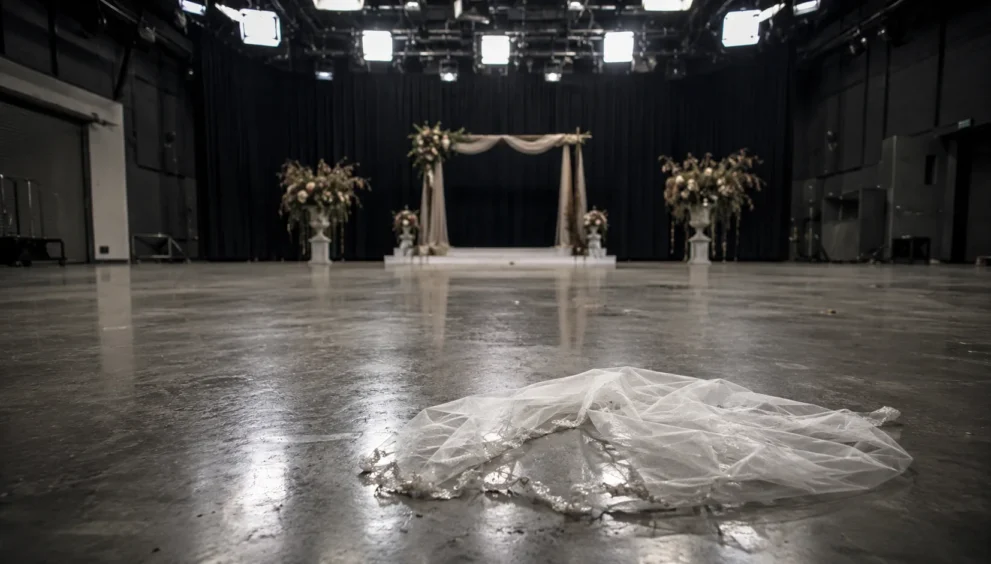
The mock wedding is the ritual. The stranger at the altar is the premise. The honeymoon, the shared apartment, the cameras filming almost every day—these are the mechanisms. Married at First Sight, the Australian version that airs on Channel 9 and reaches British audiences through Channel 4, has built an empire on the idea that love can be engineered by experts and captured by producers. Single people agree to marry total strangers. The marriages are not legally binding. The drama is.
A BBC investigation has now revealed what the format required keeping hidden. Sierah Swepstone, from last year’s series, was paired with Billy Belcher, who had been arrested and sentenced in 2014 for multiple drug-related offences in Perth. She says she was not told. She found out after the show ended. “There should be informed consent,” she told the BBC. “Why is the show accepting that risk on our behalf? We should have the choice.”
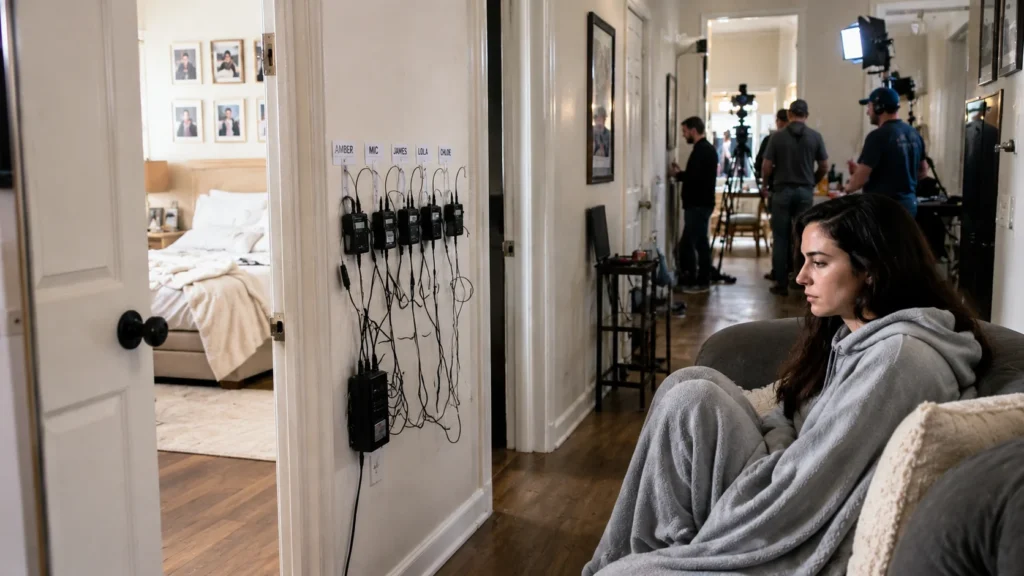
Another contestant, given the pseudonym Anna for fear of repercussions, says her on-screen partner told her during filming that he had behaved aggressively in the past, and that producers knew. She says he threw a mic-pack at a wall, smashing it into pieces while swearing. On another occasion, she says he threw an object at producers. The BBC has seen a photograph of a bruise she sent during filming to a number verified as belonging to her on-screen partner. His response: “Shit! I’m so sorry.”
Adrian Araouzou, a groom on the 2025 series, had a 2017 conviction for affray. His on-screen partner, the BBC understands, was not told. Timothy Smith, from the 2024 series, had spent a year in a US prison after pleading guilty to drug trafficking. Chris Nield, from the latest series, had been found guilty of common assault. One groom told the BBC that only two weeks passed between his application and the start of filming, and when he could not find certain documentation to prove he had no criminal record, producers told him they would “just take his word for it.” Nine former cast members have now called on the show to improve its background checks and stop allowing individuals with previous convictions or allegations to participate.
Channel 9 and Endemol Shine Australia, the production company behind the show, said in a joint statement that they had “strong protocols in place to ensure participant safety and wellbeing.” They did not answer the specific question of whether female cast members had been informed about their partners’ criminal pasts, but told the BBC their protocols did not include sharing personal or background information between participants.
This is not an isolated event. This is a structural shift in how entertainment formats negotiate the boundary between consent and coercion. The premise of Married at First Sight depends on participants agreeing to marry strangers. The format depends on those strangers carrying secrets the participants are not allowed to know. The ignorance is not a failure of the system. It is the system’s condition of operation.
The Economy of Not Knowing
Reality television has always traded on the gap between what participants know and what audiences know. The audience watches the wedding knowing something the bride does not. The revelation, when it comes—after the show, through investigative journalism, through court records on a publicly accessible database—functions as a second drama, a darker one, unfolding after the credits have rolled.
The economic logic is straightforward. Background checks cost money. Rigorous background checks cost more money. Background checks that discover convictions or allegations create a choice: exclude the participant, or include them and manage the risk. The risk, for the production, is primarily legal and reputational. The risk, for the bride paired with a man she has not been told about, is physical and psychological. The two risks are not aligned. The format profits from their misalignment.
Swepstone’s question—”Why is the show accepting that risk on our behalf?”—is the question the format cannot answer without collapsing. If the show informed participants about their partners’ histories, some would refuse to continue. The wedding would not happen. The content would not exist. The season would be shorter, less dramatic, less profitable. The format requires the secret. The secret requires the bride’s ignorance. The ignorance is the product.
The Protocol Paradox
Channel 9 and Endemol Shine Australia describe their protocols as “structured” and “multi-stage.” Every participant must complete and clear police and criminal-history checks in each declared country of residence, independent clinical psychological assessment, medical screening, disclosure supported by a statutory declaration, and legal and digital due diligence. The list is extensive. The purpose of the list is to demonstrate thoroughness. The effect of the list, in practice, is to produce information that is then withheld from the person most at risk.
The protocols do not include sharing personal or background information between participants. The omission is deliberate. If participants knew what the production knew, the premise would collapse. The bride would ask why she had been matched with a man with a conviction for affray. The groom would ask why his past had been disclosed without his consent. The experts who engineered the match would be revealed as having engineered a situation in which one party was denied information the other party possessed. The format would be exposed as a structure of asymmetrical knowledge. The exposure would be fatal.
The show’s defenders will point to the protocols as evidence of care. The protocols are evidence of process. Process is not care. Process is the documentation that care was considered. The distinction is legible only to those who were not left alone with a stranger whose history they were not permitted to know.
The Groom Who Said It Was None of Our Business
Araouzou, when contacted by the BBC about his affray conviction, responded: “None of your business.” The answer is instructive. The conviction is a matter of public record, accessible on a database the BBC consulted. It is the public’s business because the public funds the courts that produce the records. It is the audience’s business because the audience watches the show that cast him. It is his on-screen partner’s business because she shared a room with him without knowing.
The response also captures something structural about the format. The show treats the past as private. The present—the wedding, the honeymoon, the cohabitation—is public. The boundary between past and present is where the danger lives. A conviction for affray is in the past. A man throwing a mic-pack at a wall is in the present. The format depends on treating the first as irrelevant and the second as content. The bride experiences both as a continuous reality. The format splits them into separate categories. The split is the injury.
Who Gains, Who Loses
The power recalibration is visible across multiple axes.
The production gains plausible deniability. The protocols exist. The checks were performed. The information was gathered. The decision not to share it was consistent with policy. The policy was disclosed—not to the participants, but to the BBC, after the fact, in a statement. The statement functions as a shield. The shield is legal. The damage is done.
The participants lose the ability to consent. Consent requires information. The information existed. It was not shared. The decision to participate was made under conditions of ignorance that the production actively maintained. The ignorance was not accidental. It was procedural. The procedure protected the production. It did not protect the participants.
The audience gains a second drama. The revelation that the brides were not told becomes part of the show’s extended narrative. The original broadcast was the first season. The investigation is the second. The format absorbs the criticism. The criticism generates engagement. The engagement justifies the next season. The cycle continues.
The culture loses something harder to name. The mock wedding is a ritual. The ritual is supposed to be safe. The safety was an illusion maintained by withholding information from the people who needed it most. The exposure of the illusion does not necessarily end the ritual. It simply makes clear what the ritual has always required: a bride who does not know what the production knows, walking toward a stranger she has been told to trust.
The 24-Month Trajectory
The British version of the show has already been pulled from Channel 4’s streaming service following a BBC Panorama investigation in which two women contestants reported rape allegations—allegations the men involved have denied. MAFS Australia remains available. The Australian version is produced by a different company, Endemol Shine Australia. The legal and regulatory frameworks differ. The format is the same.
Pressure will mount for regulatory intervention. Our Watch, an Australian non-profit aiming to prevent violence against women, told the BBC that allegations or convictions must be treated as “a serious safeguarding issue” by TV productions, “and not withheld from the people most at risk.” The statement names the principle. The principle conflicts with the format’s operational logic. The conflict will intensify.
The industry will respond with enhanced protocols—more checks, more documentation, more statements about safety and wellbeing. The protocols will not address the structural problem. The structural problem is that the format requires secrets. The secrets require ignorance. The ignorance produces risk. The risk is borne by the participants. The profit is extracted by the production. The relationship between risk and profit is the relationship the protocols are designed to obscure. The obscuring will continue until regulation makes it impossible, or until audiences stop watching. Audiences have not stopped watching.