

 English































































































































































































































































Scotland Beat Haiti for First World Cup Win Since 1990
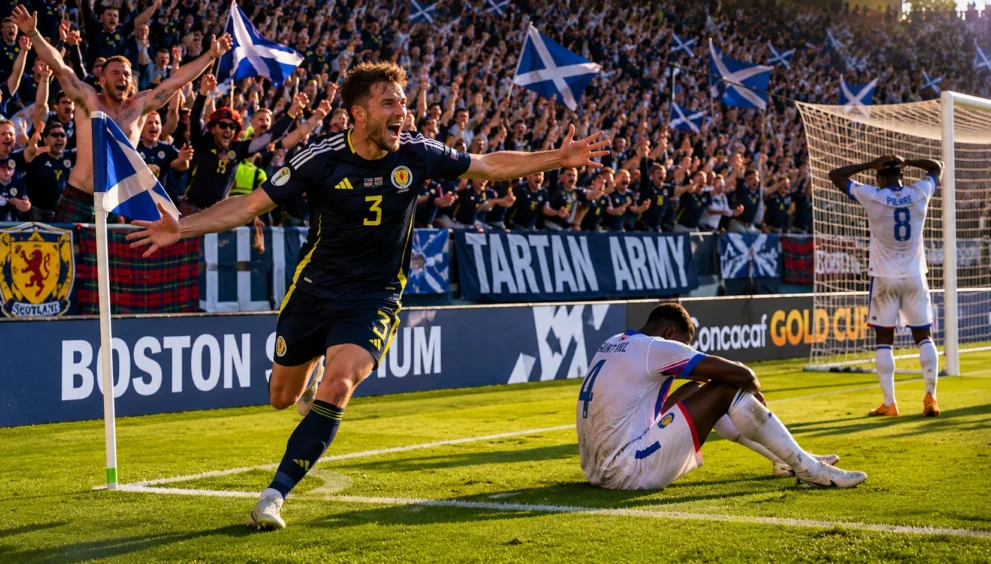
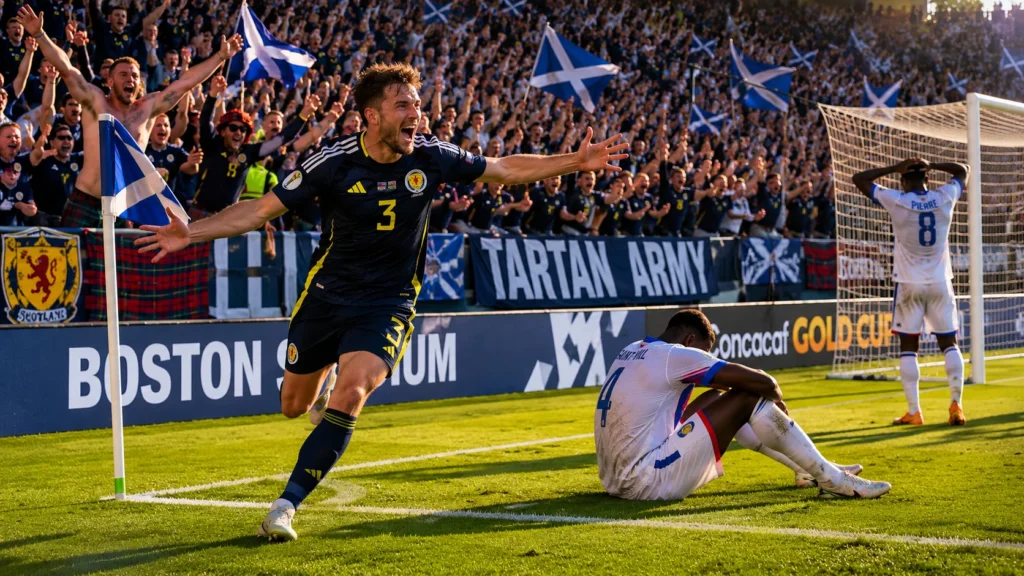
John McGinn’s deflected second-half strike gave Scotland a 1-0 victory over Haiti at Boston Stadium on Saturday, securing the nation’s first win at a men’s World Cup since 1990 and ending a 36-year wait for victory on football’s biggest stage. The result, combined with Brazil and Morocco’s earlier draw, sends Scotland to the top of Group C and leaves Steve Clarke’s side needing a point from their remaining two matches to likely reach the knockout stage for the first time in the country’s history. The performance was far from fluent—Haiti, ranked 83rd in the world, created repeated pressure and forced goalkeeper Angus Gunn into multiple interventions—but McGinn’s persistence paid off when his driven effort took a decisive deflection past Haitian goalkeeper Johny Placide.
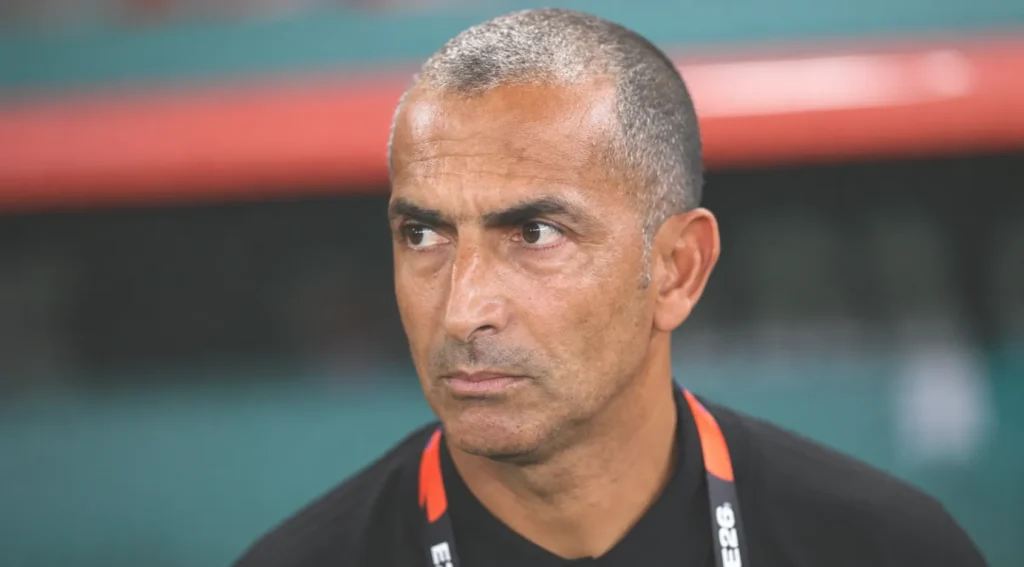
Clarke had described the decision to start McGinn ahead of Ryan Christie as “probably the hardest decision I’ve ever had to make,” challenging the 31-year-old Aston Villa captain to prove him right. The goal was scrappy. The victory was nervy. The 28-year absence from the men’s World Cup is over. The 36-year wait for a win is over. Scotland leads the group.
The Road Back: Key Dates
Scotland’s return to the World Cup after a 28-year absence did not happen overnight. The timeline tells the story.
1990: Scotland played their last World Cup match before this tournament, losing to Costa Rica in the group stage. The defeat becomes part of the catalogue of Scottish disappointments—alongside Iran in 1978 and Peru in 1978—that defines the national team’s relationship with the tournament.
1998: Scotland qualify for the World Cup in France, their last appearance before the 28-year drought that follows. They fail to advance past the group stage.
2022: Scotland missed qualification for the Qatar World Cup, extending the exile that Clarke was hired to end. As Scotland’s qualification struggles under Clarke previously documented, the manager’s early tenure was defined by near misses.
2025: Scotland secures qualification for the 2026 World Cup, ending the longest active drought of any European nation. Clarke describes himself as “different” in the build-up to the tournament.
June 13, 2026: Scotland beat Haiti 1-0 at Boston Stadium. McGinn scores the winner. The Tartan Army celebrates a World Cup victory for the first time in 36 years.
How the Match Was Won
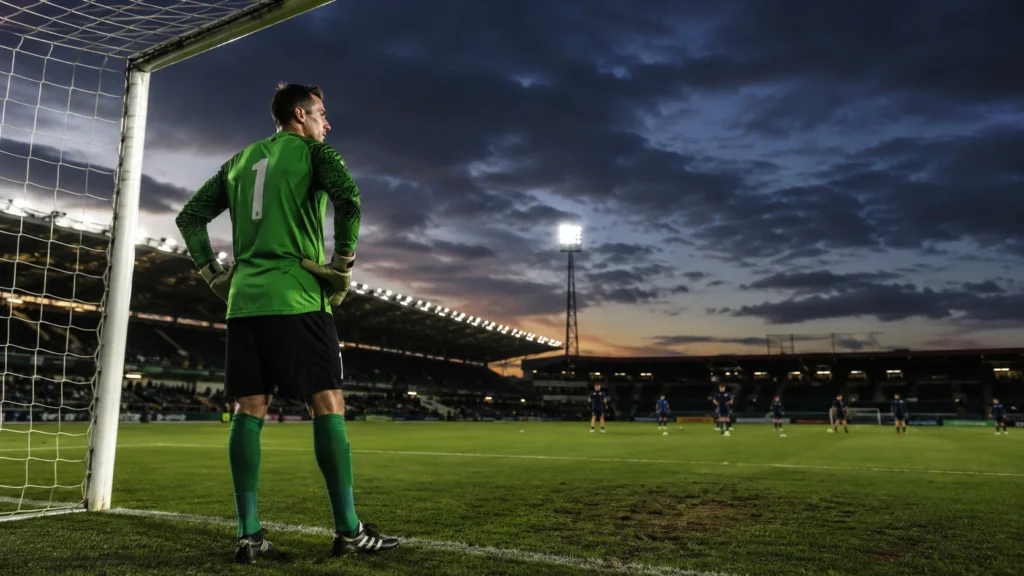
Scotland started sharply but quickly found themselves unable to control the game. Haiti, ranked 83rd in the FIFA world rankings, repeatedly threatened on the counter-attack and swung dangerous crosses into the Scottish penalty area. Gunn, selected ahead of 43-year-old Craig Gordon—the oldest player at the tournament—was forced to remain on high alert throughout the first half.
The breakthrough came not from sustained pressure but from persistence. McGinn, who had dragged an earlier effort wide with 20 minutes remaining, continued driving into the box. His shot took a deflection off a Haitian defender, wrong-footed Placide, and nestled in the net. The goal was not beautiful. It did not need to be.
Scott McTominay had earlier struck the post when the game was still goalless—the closest Scotland came to a moment of genuine attacking quality. Ben Gannon-Doak, the Bournemouth winger, provided energy down the right flank and celebrated winning a goal-kick with a ferocity that suggested he understood the stakes. Che Adams and Lawrence Shankland, the starting strikers, were largely starved of service.
Haiti pressed late. Frantzdy Pierrot directed a header wide in the closing minutes, a chance that would have equalised and changed the complexion of Group C. The ball sailed past the post. The final whistle blew. Scotland had won.
The Psychology of Endurance
The Scotland team that took the field in Boston carried the weight of a specific history. Costa Rica in 1990. Iran in 1978. Peru in 1978. The names function as shorthand for a pattern: Scotland qualify, Scotland believe, Scotland lose to a team they expected to beat. The recrimination follows. The recrimination becomes part of the identity.
Clarke, who described himself as “different” this week, has tried to reshape the psychological profile of a squad that has historically struggled to match performance with occasion. The friendly against Bolivia last Saturday suggested progress. The Haiti match suggested something else: the old anxieties do not disappear. They submerge. They resurface.
As Scotland’s tournament psychology analysis has examined, the distinction between surviving history and transcending it is the central challenge for this squad. They did not transcend their past in Boston. They endured it. The difference matters. Endurance implies the past is still present but no longer determinative. The win does not erase the catalogue of past failures. It adds a new entry.
What Changes in Group C
Brazil and Morocco played out a draw earlier on Saturday evening. The result created the opening Scotland needed. The victory gave them the top of the group.
Scotland’s next match is against Morocco on June 19 in Boston. A point will likely secure progression to the knockout stage for the first time in the nation’s history. Brazil, the tournament favourites, await in the final group match. The calculation is simple. The psychology is not.
Scotland must now manage the unfamiliar experience of being the team that other teams need to beat. The role of frontrunner is not one the national side has worn comfortably. Clarke’s side has two matches to secure the point that will rewrite the history they spent three decades carrying.
Frequently Asked Questions
When was Scotland’s last World Cup win before 2026?
Scotland’s last World Cup victory came in 1990, 36 years ago. Their last appearance at the men’s tournament came in 1998—a 28-year absence that ended with qualification for the 2026 tournament.
Who scored the winning goal for Scotland against Haiti?
John McGinn scored the only goal of the match. His driven effort took a deflection off a Haitian defender and wrong-footed the goalkeeper. McGinn had earlier missed a chance and was selected ahead of Ryan Christie in what Steve Clarke called “probably the hardest decision I’ve ever had to make.”
What does the result mean for Scotland’s qualification chances?
Scotland tops Group C after Brazil and Morocco drew. A point from their remaining two matches will likely guarantee progress to the knockout stage for the first time in the nation’s history.
Who were Scotland’s key players against Haiti?
McGinn scored the winner. Goalkeeper Angus Gunn, selected ahead of 43-year-old Craig Gordon, made several important interventions. Ben Gannon-Doak provided energy on the right wing. Scott McTominay hit the post when the game was still scoreless.
When is Scotland’s next World Cup match?
Scotland plays Morocco on June 19 at Boston Stadium. A draw would likely secure progression to the knockout stage.