

 English






























































































































































































































































































































































He Conceded 76 on Debut. His Brother Said He Wasn’t Himself.

The video call cut out mid-story. Sonny Baker had been talking about a bike from Facebook Marketplace and a tomahawk steak, the energy pouring through the screen like he was still running in from the boundary. Then the phone died. The symbolism was almost too neat. Baker’s England career to date has been a series of interrupted charges—flashes of the bowler he might become, cut short by the bowler he was on the day.
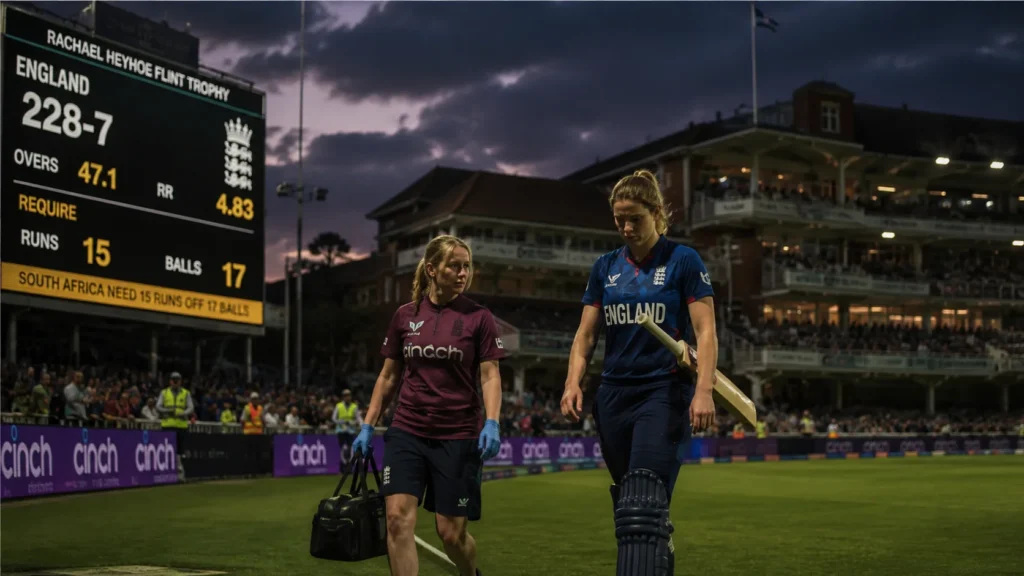
His one-day international debut produced figures of 0-76 against South Africa at Headingley. No England man had ever conceded more on debut. Three weeks later, in his only T20 international, Ireland took 52 from his four overs. The numbers were brutal. The context—a team bowled out for 131 in the first match, a career still finding its feet in the second—did not soften them. What stung more was the feeling that he had not given himself the best chance. His little brother Blaise told him after the Ireland game that he had not been himself.
“I’m an absolute carry-on merchant,” Baker says. “If someone plays and misses, I’m like, ‘woooaaahhh’. I can’t help but to give it a massive carry-on. But in Dublin, I was still trying to clutch back my ODI debut. I’d beat the bat, be thankful not to have been hit for a boundary, then walk back to my mark to go again.” The bowler who had always been too loud, too expressive, too much for opposition batters to ignore, had gone quiet. The silence was the problem. The silence was fear.
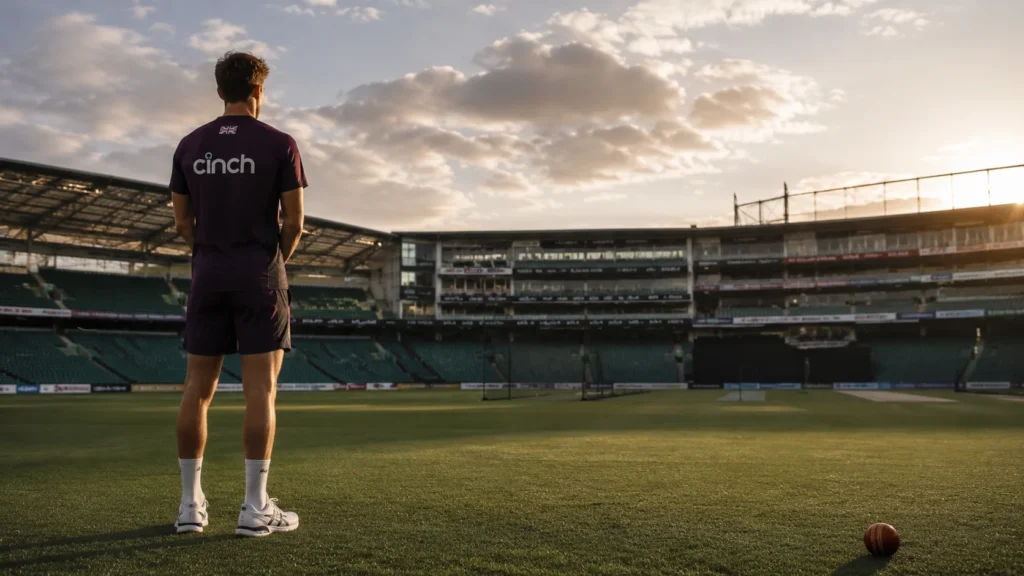
On Wednesday, Baker will make his Test debut against New Zealand at The Oval. He is 23. He has played 13 first-class matches. He has been clocked at 92 miles per hour this season. He talks about Dale Steyn—”the king of going up and down the gears”—with the reverence of a man who has studied every frame. “He’d take the new ball, click into third gear, swing and nip it, put it on a sixpence. Then, when some guy needed a bouncer, fifth gear and bang!” Baker’s own gears are still being discovered. The Test debut is the next one.
But this wasn’t about the debut. This was about Pressure vs Composure—and what happens when a young fast bowler learns that the only way to survive international cricket is to be the person he was before international cricket told him to be someone else.
The Debut That Silenced Him
Baker’s first two international appearances were not failures of talent. They were failures of authenticity. The bowler who had taken wickets for Hampshire by being loud, aggressive, and relentlessly himself had tried to become something else on the biggest stage. He had tried to be careful. He had tried to be contained. He had tried to stop conceding runs rather than start taking wickets. The result was 0-76 and 0-52. The runs kept coming. The wickets did not.
His brother’s observation was the turning point. “My little brother Blaise said to me after the game that I hadn’t been myself.” The sentence landed because it was true. Baker had spent two international matches trying to be the bowler he thought England wanted—disciplined, restrained, economical—rather than the bowler who had got him there. The correction was simple. “If I get the opportunity again it’s about being myself. If I get someone to play and miss, I have to carry on like I normally do. There’s no point worrying about what everyone will think. Who cares? That’s how I am. I have to be authentic.”
The word “authentic” is not one most fast bowlers reach for. Baker reached for it. The authenticity he describes is not a personality quirk. It is a competitive mechanism. The carry-on, the noise, the theatrical response to a play-and-miss—these are not distractions from the job. They are the job. A fast bowler who goes quiet is a fast bowler who has stopped believing he belongs. Baker stopped believing. His brother told him. He is trying to start again.
The Pace and the Gears
Baker has added pace this season. He has been clocked at 92 miles per hour, and he describes the change in technical terms: running in faster, maintaining momentum through the crease, letting the speed build rather than cruising. “Last year, when I was trying to operate at that cruise control, it didn’t really feel like it had enough zip or energy on the ball. My control wasn’t quite as good because I was always thinking, ‘I need to give it some to create a chance.’ This year, in a small sample size, it’s been much better.”
The sample is small because Baker’s career has been interrupted by stress fractures—the occupational hazard of bowling fast. He drinks bone broth to help stave them off, a practice that began as a personal ritual and has now attracted a sponsor after a woman at a farm show mentioned him to a bone broth company. “Thank you to whichever lady passed on my name,” he says. The broth is a detail. The fractures are the context. Fast bowlers break. Baker has broken before. The central contract England have given him is a bet that he will not break again, or that if he does, he will be worth the wait.
His hostility in a duel with James Rew during Somerset’s narrow win over Hampshire earlier this season was the glimpse that convinced England to accelerate his path. With Ollie Robinson injured, Gus Atkinson suspended, and the combined 1,619 wickets of Broad, Anderson, Woakes, and Wood exiting the Test arena in under three years, the need for pace is acute. Baker’s 92 miles per hour is not a luxury. It is a requirement.
The Theatre of Fast Bowling
Baker talks about fast bowling the way actors talk about theatre. “What do people come out of the bar to watch? Guys hitting massive sixes, guys bowling rapid and spinners ragging it. Who wasn’t watching Jofra Archer in the 2019 Ashes? Everyone was. We pretended to be Jofra in the back garden. Why wouldn’t you want to be that guy? Steaming in. It’s what is exciting about the game.”
The theatre is not separate from the performance. It is the performance. The carry-on, the noise, the energy—these are not accessories to the bowling. They are the mechanism by which the bowling works. Baker learned this by forgetting it. He learned it again by listening to his brother. The Test debut will test whether the lesson holds under the highest pressure he has yet faced.
England’s winter was defined by bad PR and a team that, at times, seemed to have too many introverts for the heat of an Ashes battle. Baker’s personality—loud, unguarded, enthusiastic to the point of interruption—is not a corrective to that. It is simply what he brings. If he bowls fast enough and carries on loud enough, the wickets may follow. If he goes quiet again, the runs will.
What Changes Now
Baker will run in at The Oval with a central contract in his pocket and a brother’s words in his head. He will try to be himself. The authenticity he describes is not guaranteed to succeed. International batters are less forgiving than county ones. The step up from Hampshire to New Zealand is steep. But the lesson of his white-ball debuts is that trying to be someone else guarantees failure. Being himself at least gives him a chance.
The bone broth will be there, delivered by his sponsor. The pace will be there, honed by a winter of technical work. The carry-on will be there, or it will not. The difference between the two is the difference between the bowler who conceded 76 on debut and the bowler England believe is worth a central contract and a Test cap. Baker knows which one he needs to be. His brother told him. Now he has to bowl like it.