

 English



























































































































































































































































































Dressing for Heat That Doesn’t End: Dolce & Gabbana’s Answer
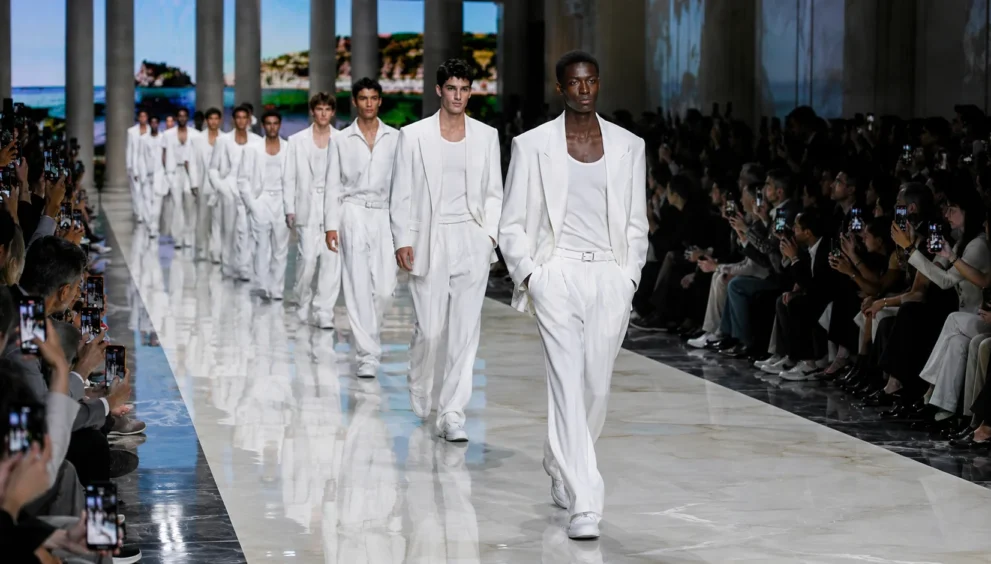
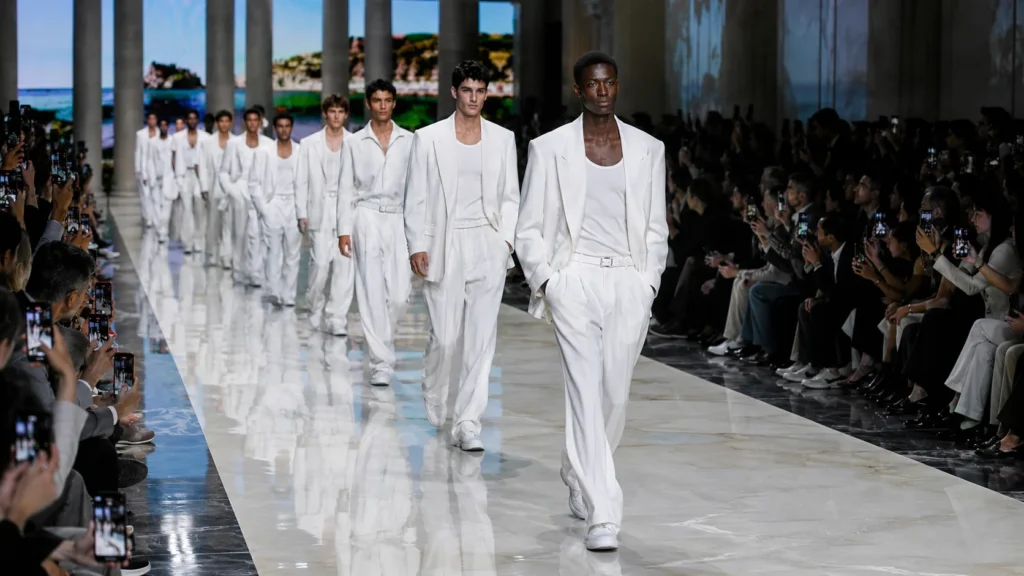
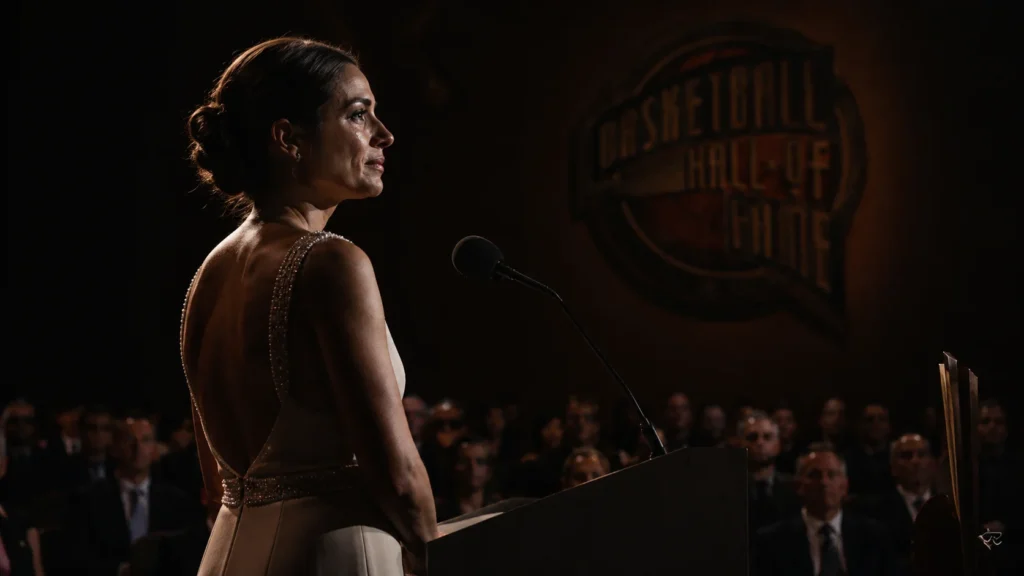
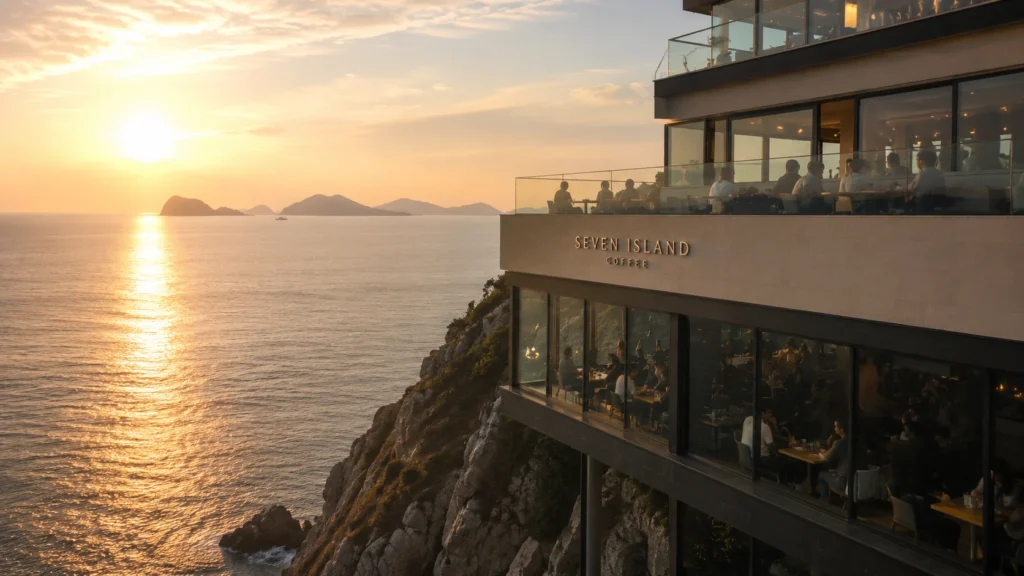
The models walked past a video of a rocky coastline at sunset. A Mediterranean terrace. Columns. The suggestion of sea air. But they weren’t on a Sicilian beach. They were in Milan, where the heat wave had turned the city into a kiln, and the clothes on the runway weren’t fantasy. They were a solution.
Dolce & Gabbana showed laser-cut suits with back panels that unbutton for ventilation. Short shorts. Loose-knit tops that let torsos breathe. Tunics. Silk pajamas are worn as daywear. The collection wasn’t about escaping to the coast. It was about what happens when the coast won’t come, and the city keeps getting hotter, and the old rules of dressing—structured, layered, serious—start to feel like a punishment.
But this wasn’t really about fashion. This was about the quiet surrender to living differently when the climate demands it.
The Jacket That Admits Defeat
There’s a particular kind of dignity in a well-cut suit. It says control. It says competence. It also says: I am not sweating through my shirt right now.
But Milan in June tests that bargain. The city’s heat has become harder to ignore, less seasonal inconvenience, more structural fact. And the suit jacket—the garment that once signaled arrival—has started signaling something else. Stubbornness. Disconnection. A refusal to read the room or the thermometer.
Dolce & Gabbana’s answer was clever because it didn’t abandon the suit. It altered it. Upright lapels kept the silhouette sharp. The back panels—hidden, unbuttoned—let the heat escape. The message was quiet but clear: you can still look like you belong somewhere. You just don’t have to suffer for it.
The woven leather jackets pushed further. Craftsmanship you could see from across the room. But also: leather that breathes. Footwear is woven the same way. The technique wasn’t decorative. It was functional. Every hole, every gap, every open weave was a small concession to a warming world.
Short shorts showed off legs. Not gym legs. Just legs. The kind you have when you’ve stopped pretending that trousers are worth the discomfort. Loose-knit tops did the same for torsos—transparency not as provocation, but as ventilation. Even the standout accessory, an oversized travel bag in leather and raffia, whispered the same thing: pack light. Move easily. Don’t carry more than you need.
What We’re Really Wearing
Clothes respond to the weather. That’s their first job. But they also respond to something less visible: the slow realization that the old rules don’t apply anymore.
For decades, menswear in particular ran on stiffness. Structure. The idea that looking good required a certain amount of physical negotiation—tighter fits, heavier fabrics, more layers. Heat was something to endure, not accommodate. Sweating through a shirt was a private failure, not a design problem.
That’s changing. Not because designers decided it should. Because the people wearing the clothes stopped tolerating the discomfort. The shift is small—a back panel here, a shorter hem there—but the current underneath is bigger. It’s the body finally overruling the aesthetic. The material world bends to the physical one.
Dolce & Gabbana’s collection acknowledged this without announcing it. The rhinestones on denim, the coral beading on shirts, the religious iconography on T-shirts—all of it read as embellishment, signature, brand DNA. But beneath the decoration was a garment engineered for heat. The silk pajamas weren’t loungewear. They were daywear. The all-white finale wasn’t bridal. It was reflective. Cooler, literally and visually, in a city baking under the summer sun.
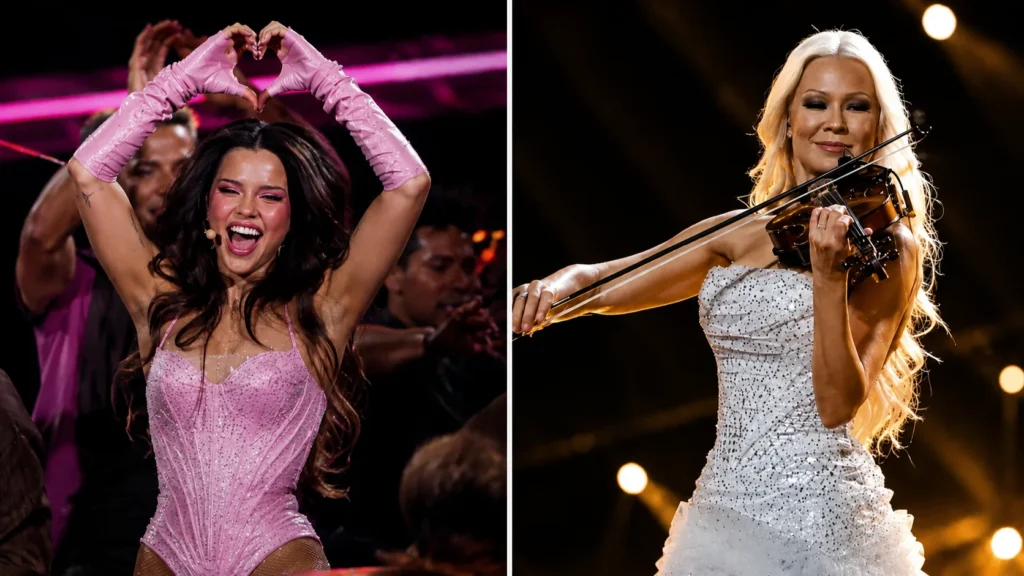
Front-row guests—Robert Lewandowski, Kawhi Leonard, a K-pop singer, and an Italian actor—watched the same show. But they probably noticed different things. The athlete noticed the ventilation. The performer noticed the drama. The regular person watching through a phone screen noticed something simpler: I could wear that. I could be comfortable in that.
That’s the quiet truth. The threshold for discomfort has dropped. We’re less willing to suffer for how we look. The climate isn’t the only thing warming. Our tolerance for unnecessary suffering is cooling.
The Hidden Tension: Looking Good vs. Feeling Human
There’s a pull between two instincts. One says: dress to impress. The other says: dress to survive.
Dolce & Gabbana’s collection sat in the gap. The laser-cut suits were impeccable—from a distance, you’d miss the ventilation entirely. The woven leather read as luxury, not utility. The embellishments—cross necklaces like rosaries, icon prints—suggested weight and history, not lightness.
But underneath every piece was permission. Permission to show skin. To let the body breathe. To prioritize sensation over presentation. That’s the tension heat forces: the gap between how you want to look and how you need to feel.
The show’s setting reinforced the duality. A rocky coastline at sunset on video screens. Columns evoking a Mediterranean terrace. The suggestion of escape—but models still walking a runway in Milan, indoors, under lights, doing a job. The fantasy wasn’t the clothes. The fantasy was the life the clothes implied: one where heat isn’t a crisis but an invitation. Where the evening cools. Where the sea is close.
Most of us don’t live that life. We live in cities getting hotter, in apartments without cross-breezes, in workdays that don’t pause for siesta. The collection’s intelligence was in offering something wearable inside that reality, not just outside it.
Two Small Things to Try
1. Find your ventilation point.
One garment you wear regularly—a jacket, a shirt, trousers—could be swapped for something that breathes. Not a full wardrobe overhaul. Just one piece. The back panel that unbuttons. The looser weave. The shorter hem. See if comfort changes your mood. It usually does.
2. Treat heat as information, not inconvenience.
When you’re uncomfortable in what you’re wearing, that’s not a personal failing. It’s data. The fabric isn’t working. The cut isn’t working. The assumption behind the outfit—that it would be cooler, that the meeting would be shorter, that the building would have air conditioning—isn’t holding. Adjust the garment. Not your tolerance.
What This Reveals About Right Now
We’re in a slow renegotiation with our own bodies. What we’ll endure. What we’ll accept. What we’ll prioritize.
For a long time, fashion asked the body to adapt to the garment. Tighten here. Suffer there. Sweat quietly. The balance is shifting. The garment is being asked to adapt to the body—to its temperature, its movement, its refusal to be uncomfortable without purpose.
Dolce & Gabbana’s collection wasn’t revolutionary. It was responsive. It looked at a heat wave and a room full of people tired of overheating and said: here’s a suit. Here’s a knit. Here’s a short. They work. You’ll feel better.
Some revolutions arrive loudly. This one arrived in linen, with the back panels unbuttoned, walking toward a projected sunset. Quietly. Comfortably. Finally.