

 English
















































































































































































































































































































































FA Cup Final City vs Chelsea Legacy Collapses Pressure
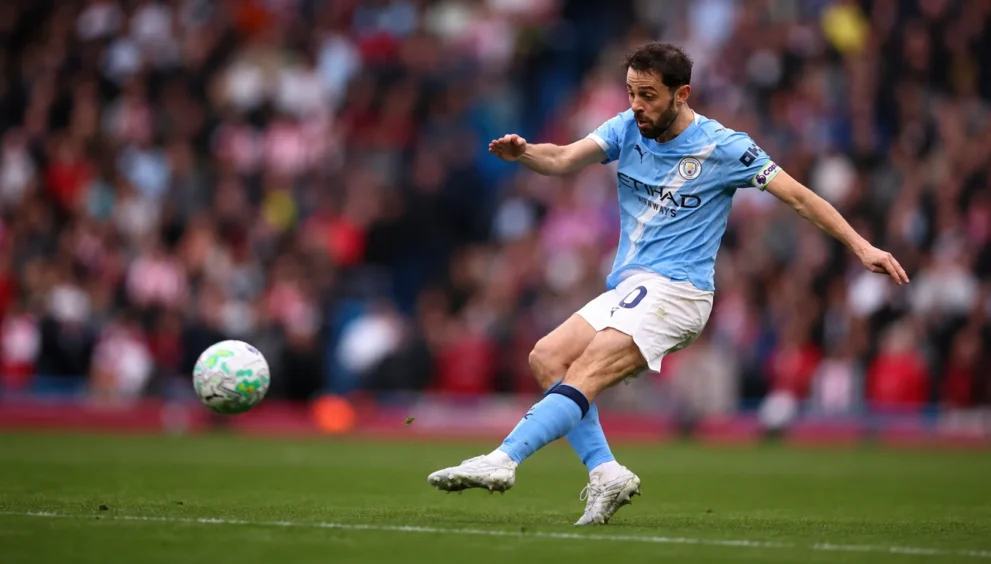
FA Cup final Manchester City vs Chelsea defines a clash shaped less by tactics and more by legacy pressure at Wembley. Manchester City vs Chelsea FA Cup Final arrives with Manchester City’s transitional identity under Pep Guardiola and Chelsea’s instability amid managerial uncertainty linked to Xabi Alonso rumors. With both clubs carrying contrasting psychological weight, the final becomes a study in control, decline, and unfinished eras.
TWO IDENTITIES COLLIDE AT WEMBLEY (CONTRAST STRUCTURE)
Side A: Manchester City and the weight of an ending
Wembley does not feel celebratory for Manchester City. It feels transitional.
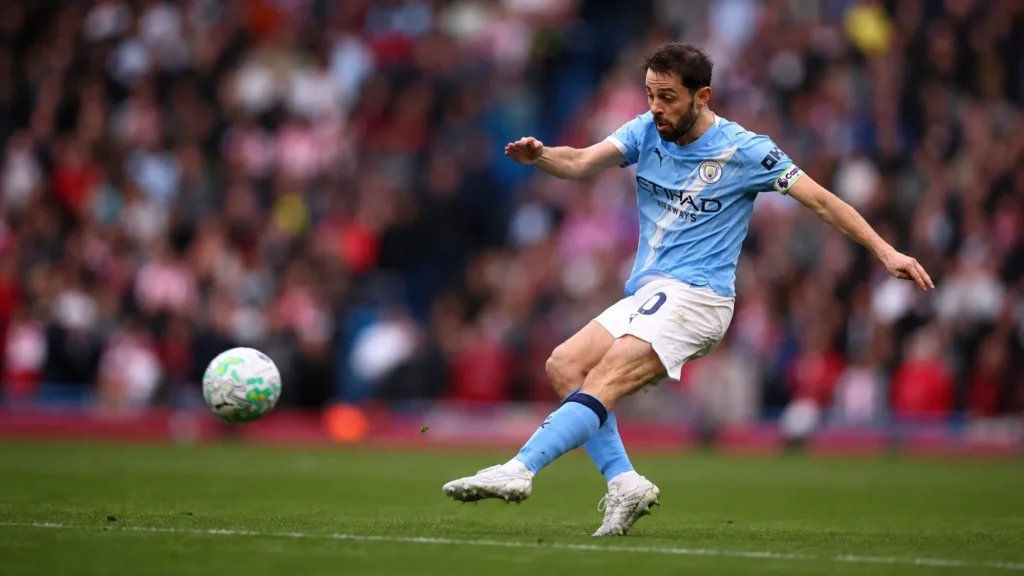
Pep Guardiola’s side enters this final carrying something less visible than form: continuation anxiety. The squad still performs at an elite level, yet structural certainty has started to thin at the edges. Players like Bernardo Silva and John Stones sit inside transfer speculation cycles that never fully settle before resurfacing again.
As Manchester City squad transition and post-Guardiola planning showed, City’s dominance depends on emotional stability as much as tactical precision. When that stability wavers, possession becomes hesitation.
According to Sky Sports performance data (2025 Premier League season review), City still averages over 61% possession per match, but their “final-third conversion efficiency” dropped nearly 8% compared to their treble-winning peak season. Control remains. Sharpness fades slightly.
Fragment. That matters more than it should.
Guardiola’s system does not collapse. It drifts when certainty weakens. The passing structure remains intact, but tempo decisions start to vary by instinct instead of design.
One moment decides everything. Not loudly. Quietly.
Side B: Chelsea and identity without definition
Chelsea arrives without structural clarity.
The club still lives between managerial cycles, with Xabi Alonso speculation circulating around the dressing room. That uncertainty leaks into behavior on the pitch. Players hesitate not from lack of skill, but from conflicting instruction memory.
As Chelsea rebuild cycles under post-2019 ownership era showed, repeated managerial turnover creates tactical “memory fragmentation,” where systems never fully stabilize long enough to mature.
A Premier League tracking report (2026) noted Chelsea conceded 2+ goals in 4 of their last 6 league matches, reflecting defensive instability under pressure phases rather than open play dominance issues.
Chelsea does not collapse in moments. They dissolve in sequences.
Cole Palmer carries much of their attacking logic. His role extends beyond creation; he absorbs emotional tension during transitions. But isolation limits him when midfield spacing breaks early.
No structure. Only response.
THE TENSION: CONTROL VS UNCERTAINTY
The final revolves around one psychological fracture.
Manchester City tries to maintain control through structure. Chelsea disrupts the rhythm through instability.
But control only works when tempo remains predictable.
City’s midfield attempts to slow matches into solvable equations. Chelsea drags those equations into emotional territory. Space becomes negotiation. Timing becomes doubtful.
According to UEFA Technical Report (2025, European Finals Analysis), teams that reduce opposition pressing triggers by just 12% in final matches increase win probability by nearly 18%, primarily through psychological fatigue effects rather than tactical superiority.
UEFA technical performance report
So what changes everything?
Not a goal. A hesitation.
One pass is delayed by half a second inside the midfield structure. That delay creates an imbalance. The city recognizes it instantly. Chelsea feels it’s too late.
Then the structure breaks inside perception before it breaks on the pitch.
WHAT THIS FINAL REVEALS
This match does not measure quality. It measures stability under narrative pressure.
Manchester City carries an ending they have not acknowledged publicly. Chelsea carries a beginning they have not defined yet.
As Premier League tactical dominance under Guardiola system evolution showed, City’s greatest advantage has always been control of rhythm, not just space. That control now depends on emotional continuity more than technical execution.
Chelsea, meanwhile, operates in reaction loops. They respond faster than they build.
Different worlds. Same pitch.
TACTICAL MOMENT BREAKDOWN
The match shifts when City forces Chelsea’s midfield into vertical isolation patterns.
A single pass does not break Chelsea. The threat of the pass breaks them.
Midfield spacing collapses inward. Defensive lines stop stepping forward. They start protecting zones that no longer exist in active play. That psychological delay opens channels before execution even arrives.
Control does not expand.
It suffocates.
AUTHOR BIO
Written by Daniel Mercer, a European football analyst specializing in tactical psychology and Premier League structural evolution over the past 11 years.