

 English






















































































































































































































































































































































































Why Moving About Is Key for Children’s Health and Happiness
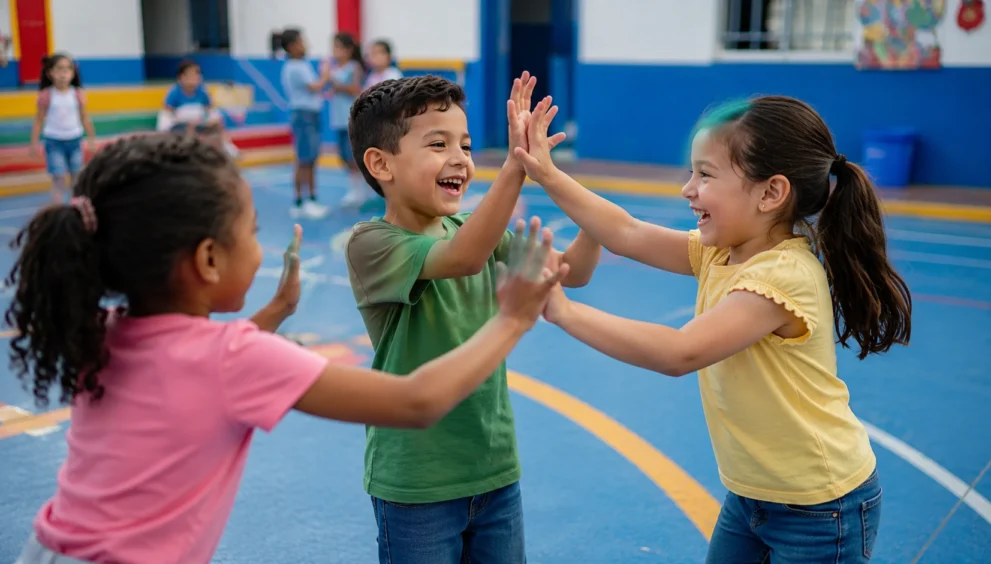
LONDON — Scientists have identified practical ways to get children moving more, and the evidence demonstrates that why moving about is key for children’s health and happiness extends beyond physical fitness into cognitive performance, mental wellbeing, and health outcomes measurable decades later. A UK study across 30 schools found that simply asking children to stand when answering questions produced an 8% decline in waist-to-hip ratio and a 10% increase in sports participation without adding any structured exercise to the school day. Globally, one in 10 children and adolescents lives with obesity, and most do not meet the World Health Organization’s recommendation of 60 minutes of daily physical activity.
The Evidence for Movement
A longitudinal study following 712 World War Two veterans for 50 years established that participation in high school sports was the strongest predictor of better health outcomes at age 70, including fewer doctor visits. Those who played sports in their youth also recorded lower body mass index, smaller waist circumference, better mental health scores, and improved cognitive performance in later life.
Nicole Logan, an assistant professor of kinesiology at the University of Rhode Island, conducted a nine-month after-school exercise programme for children with obesity. The children who participated recorded better cognitive scores and reduced body fat compared to a control group University of Rhode Island Department of Kinesiology research publication, 2026.
“It improves body composition but also improves and maintains positive cognitive functions as children develop through adolescence,” Logan said. “If we do more physical activity, we increase our cardiorespiratory fitness, and that is good for our brain as well.”
The physiological mechanism is documented. Fat stored around vital organs produces inflammation linked to poorer cognitive function. Aerobic fitness correlates with improved reaction times, greater accuracy on complex tasks, and stronger inhibitory control, the capacity to resist impulsive reactions that underpins concentration and academic performance.
How physical exercise improves children’s brain development and cognitive function
The Classroom as an Intervention Point
Flaminia Ronca, from University College London’s Institute of Sport, Exercise and Health, led the study that trained teachers across 30 UK schools to encourage children to stand when answering questions and to move around the classroom more frequently than standard practice allowed.
“It wasn’t about exercise, but about sitting down less,” Ronca said UCL Institute of Sport, Exercise and Health published study, 2026.
Follow-up research found that a single 30-minute session of physical activity also improved children’s performance on cognitive tasks measuring attention and inhibitory control. Children sit for large portions of the school day. Ronca said implementing creative ways to add movement could improve health outcomes without requiring additional curriculum time.
Michaela James from Swansea University’s medical school found that many schools concentrate on structured physical activities, which can leave some children feeling excluded and can damage their confidence around exercise. Her research emphasises the value of unstructured play, active movement breaks, and ensuring break times are not removed as a behavioural punishment, a practice some schools continue to use.
“It’s all about valuing what children want to be able to do,” James said Swansea University Medical School research publication, 2026.
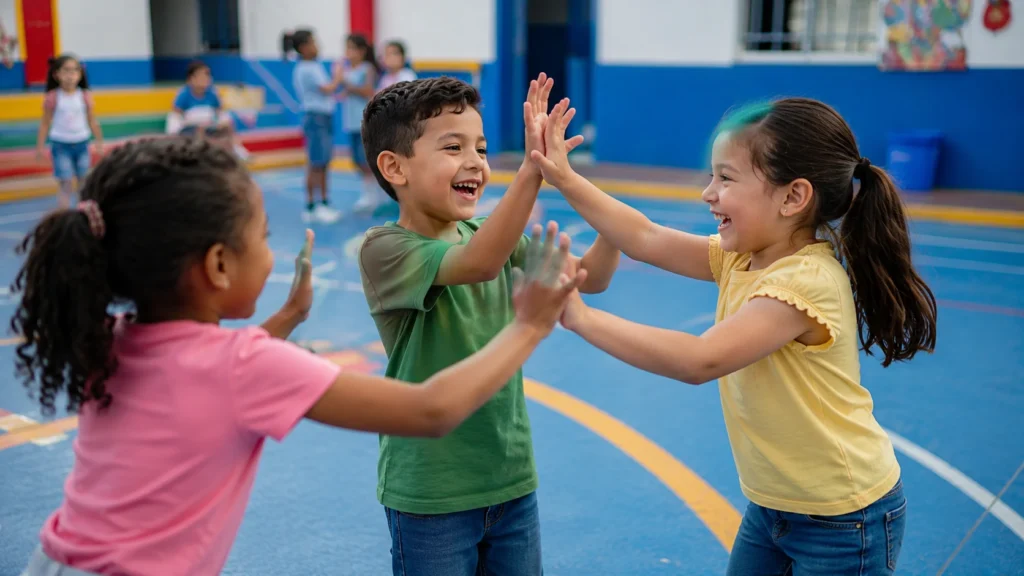
Playground design also affects activity levels. James’s research indicates that loose objects — crates, tyres, wooden pallets that encourage free play increase physical activity more effectively than fixed playground equipment.
How school playground design influences children’s daily physical activity
The Role of Parents
Research has consistently shown that children are more likely to be physically active if their parents model active behaviour and exercise with their children. A US survey of children and parents found that girls whose parents encouraged them and helped them find sports opportunities were more likely to continue participating in physical activity.
Ulla Toft, a clinical professor in the department of health at the University of Copenhagen, leads a large-scale obesity intervention study in Denmark targeting four domains: diet, physical activity, screen use, and sleep.
“The most effective way to actually help prevent obesity among children is to improve the food environment around children, promote physical activity, and have rules around screen time,” Toft said University of Copenhagen Department of Public Health research programme, 2026.
A study in Massachusetts in the United States found that increasing opportunities for physical activity before, during, and after school, combined with better access to healthy food, resulted in lower body mass index scores among elementary school children. Approximately one quarter of the children in the study had not participated in any sports in the year prior.
The four domains of childhood obesity prevention — findings from Denmark
FAQ: Children’s Physical Activity and Health
How much physical activity do children need?
The World Health Organization recommends 60 minutes of physical activity per day for children. Most children globally do not meet this target.
What happens if children are not active enough?
Physical inactivity in childhood is linked to less activity in adulthood, higher obesity rates, poorer cognitive performance, and worse long-term health outcomes. A 50-year longitudinal study found that high school sports participation was the strongest predictor of better health at age 70.
Can standing in class really make a difference?
Yes. A UK study across 30 schools found that encouraging children to stand when answering questions and move around the classroom produced an 8% decline in waist-to-hip ratio and a 10% increase in sports participation.
Do parents influence children’s activity levels?
Yes. Research shows that children of active parents are more likely to be active themselves. Parental encouragement and help in finding sports opportunities increase participation, particularly for girls.
What is the most effective way to prevent childhood obesity?
According to researchers at the University of Copenhagen, the most effective approach combines improving the food environment around children, promoting physical activity, and establishing rules around screen time and sleep.
Written by the Health Desk, drawing on peer-reviewed research from University College London’s Institute of Sport, Exercise and Health, the University of Rhode Island Department of Kinesiology, Swansea University Medical School, the University of Copenhagen Department of Public Health, and the World Health Organization’s physical activity guidelines. The desk has covered children’s health, physical activity research, and public health policy for over a decade.
Source: University College London, University of Rhode Island, Swansea University, University of Copenhagen, World Health Organization