

 English


















































































































































































































































































































































Asia Markets Slide as Tech Sell-Off Triggers Korea Circuit Breaker
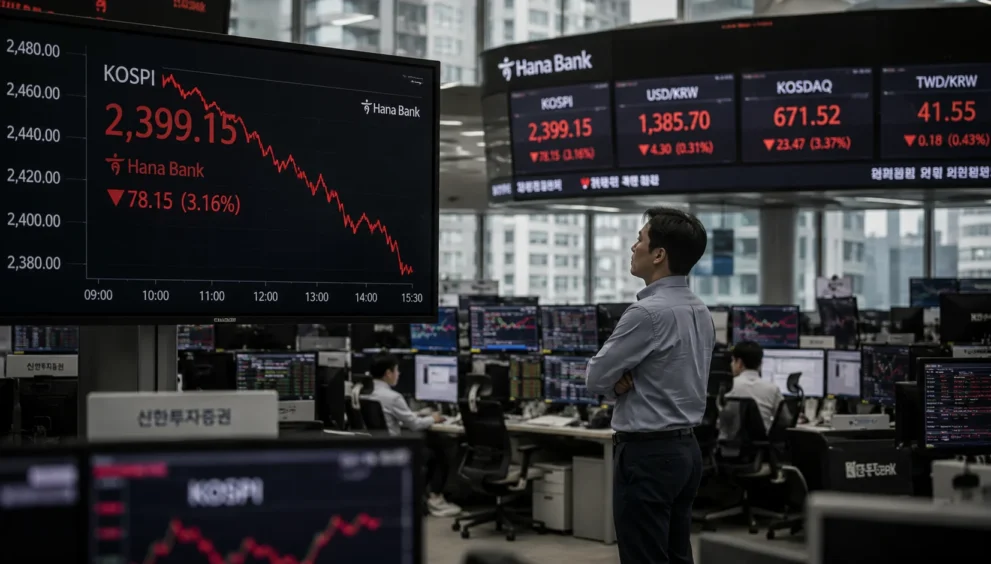
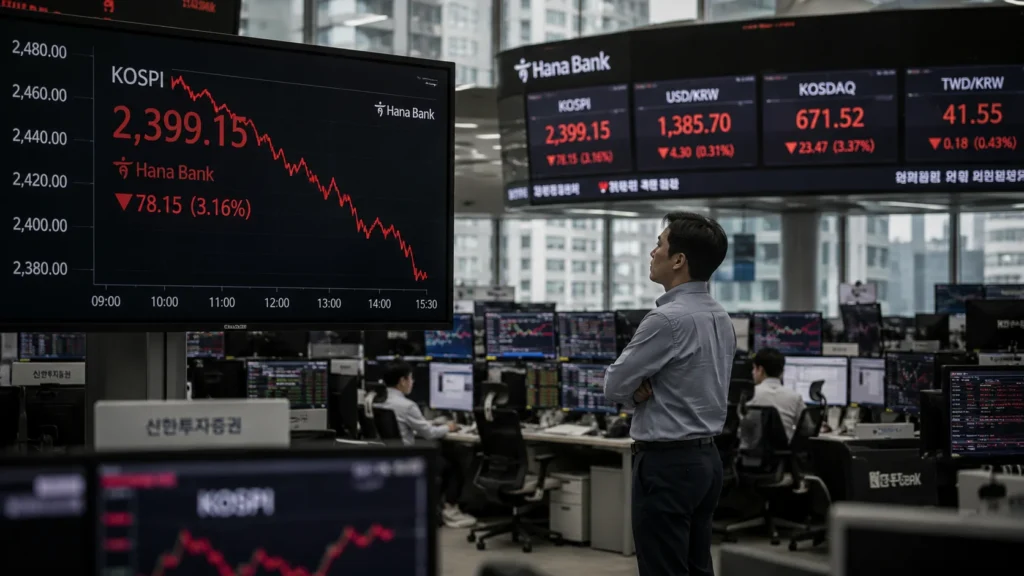
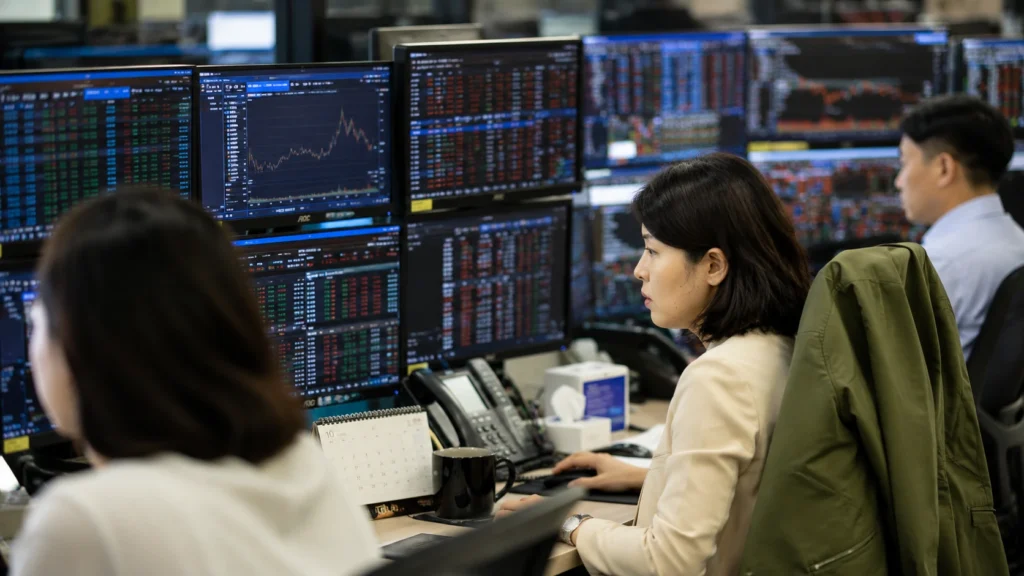
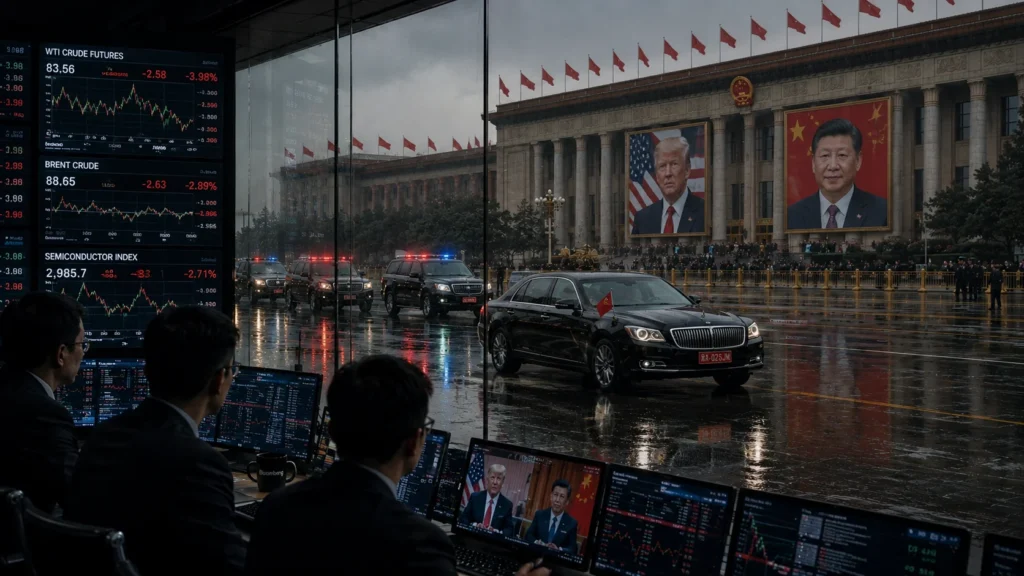
Asian stock markets fell sharply on Friday, led by a sell-off in technology shares, as investors reassessed the valuations of AI-related companies, and Apple’s announcement of price rises for iPads and MacBooks added to concerns about rising component costs. Trading on South Korea’s Kospi index was temporarily halted after an 8% decline triggered a circuit breaker designed to curb panic selling—the third such halt this week and the fifth this year. The index later recovered some ground to close 5.8% lower. Japan’s Nikkei 225 finished more than 4% down, with technology investment giant SoftBank falling 12.5%. Markets in Taiwan and mainland China also declined sharply.
The sell-off followed a 6% drop in Apple shares on Thursday—its biggest one-day fall in more than a year—after the company said it would raise prices due to the soaring cost of computer chips. Microsoft shares also fell after it announced higher prices for Xbox consoles, citing similar component cost pressures.
What Triggered the Sell-Off
Apple’s announcement that it would increase iPad and MacBook prices, directly citing higher chip costs, was the immediate catalyst. The company that defines premium consumer hardware pricing is now passing semiconductor costs to customers, signalling that component inflation is moving from the industry’s supply chain into the consumer economy.
Microsoft reinforced the signal with its own Xbox price increases. The moves have raised concerns that rising component prices could hit sales of devices, which in turn may slow demand for the computer chips that have powered the AI-driven rally in technology stocks.
Raymond Woo, an analyst at Kyoto University Innovation Capital, told the BBC that the high cost of commercialising AI tools is gradually being passed to consumers. That “naturally raises questions” about how quickly demand for such tools will match the investment into AI, and whether the valuations of tech stocks today are realistic.
According to Apple and Microsoft investor relations statements on component cost-driven price increases, the price adjustments reflect sustained pressure in the semiconductor supply chain, where demand for advanced chips continues to outstrip supply.
As our analysis of the global semiconductor supply chain and AI infrastructure investment boom documented, hundreds of billions of dollars are being spent this year by major technology firms to build artificial intelligence infrastructure. Google, Amazon, and Meta collectively plan to invest roughly $650 billion in AI this year, while Oracle is spending $50 billion. The question now is whether that spending will generate returns that justify the valuations the market has assigned.
The AI Trade Under Pressure
David Makaryan, senior partner at investment firm Alpha Pacific Group, said investors are becoming “far more selective” about which companies can justify their valuations.
“The long-term investment case for AI remains compelling, but investors are becoming far more selective about which companies can justify the valuations the market has assigned to them,” Makaryan said.
SoftBank’s 12.5% decline was the sharpest single-name move in the Asian session. The company is a technology investment vehicle with heavy exposure to AI-related companies, making its share price particularly sensitive to any reassessment of the sector’s prospects.
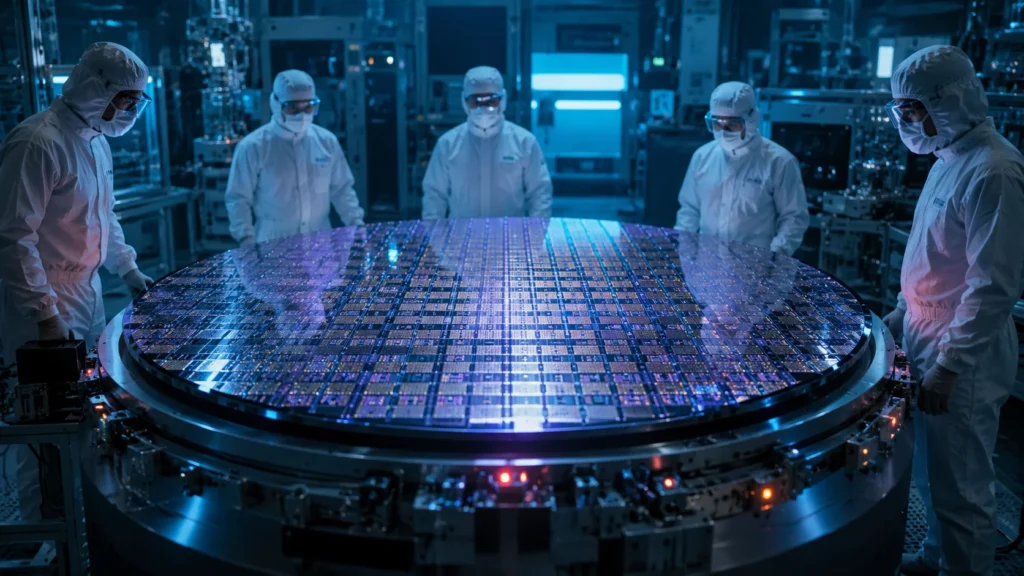
South Korea’s Kospi has been particularly volatile in recent months due to its heavy weighting toward technology stocks, including Samsung and SK Hynix, which are integral to the global semiconductor supply chain. Friday’s circuit breaker marked the fifth such event this year, a measure of how fragile the market has become as investors crowd into the same AI-related trades.
According to Korea Exchange circuit breaker activation data and Kospi index composition, the index’s concentration in technology and semiconductor names amplifies both rallies and sell-offs in the sector.
What Analysts Are Watching
The sell-off reflects a shift in market psychology from broad enthusiasm about AI’s potential to a more discriminating assessment of which companies can translate investment into revenue.
The first phase of the AI trade rewarded almost any company associated with the technology. The second phase, which markets now appear to be entering, is differentiating between those with pricing power and a clear path to profitability and those without.
As our coverage of the AI investment cycle and technology stock valuations has tracked, the hundreds of billions flowing into data centres, chips, and AI infrastructure have been made on the assumption that demand will materialise at scale. Apple and Microsoft’s price increases are an early test of whether consumers will accept higher costs for AI-enabled devices and services.
If they do, the sell-off may prove to be a buying opportunity. If they do not, the reassessment of technology valuations may have further to run. The volatility seen in Seoul—where trading has now been halted three times in a single week—suggests investors are preparing for the second scenario.