

 English






















































































































How Deschamps’ Half-Time Tweaks Transformed France’s World Cup
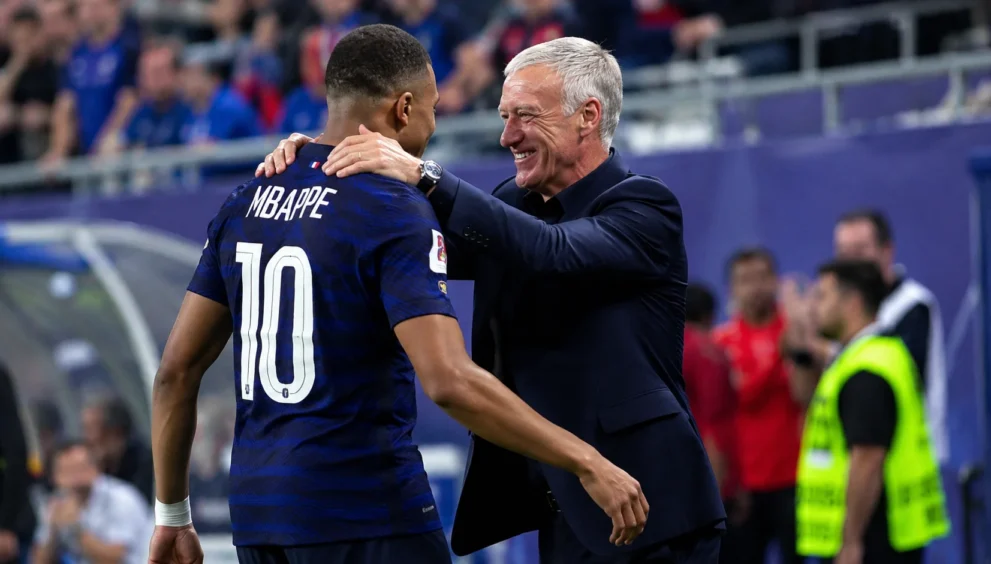
Didier Deschamps has once again demonstrated his ability to reshape his France team mid-tournament, making a series of tactical adjustments since half-time of their opening match against Senegal that have transformed the World Cup favourites into a more cohesive attacking and defensive unit. The most significant change saw Michael Olise and Ousmane Dembélé swap positions—the Ballon d’Or winner moving from a central role to the right of midfield, and the Bayern Munich playmaker shifting into the middle. Deschamps made the switch at half-time with France struggling to contain Senegal’s attacks. The team has since looked increasingly dominant, with Dembélé scoring a first-half hat-trick against Norway.
The adjustments follow a pattern established across Deschamps’ 14-year tenure. He shifted France’s system mid-tournament in 2018, winning the World Cup. He adapted to injuries in 2022, reaching the final. His ability to solve structural problems in real time has become the defining competitive advantage of the most talented squad in international football.
The Half-Time Switch
France began the tournament against Senegal with a system designed to replicate the roles each player occupies at club level. Kylian Mbappé played as the roaming striker he operates for Real Madrid. Olise hugged the right touchline as he does for Bayern Munich. Dembélé operated in the false-nine space he occupies for Paris Saint-Germain.
The logic was coherent. The execution created problems. France defended in a 4-4-2 shape with Mbappé and Dembélé up front. The distances between the forwards and midfielders, Adrien Rabiot and Aurélien Tchouaméni, were too great, and Senegal repeatedly exploited the space. The ball was played wide to a Senegal full-back before being passed into a deep-lying midfielder in the gap between France’s front two and their midfield.
Deschamps acted at half-time. He swapped the roles of Olise and Dembélé. The Ballon d’Or winner moved from a central position to the right of midfield. The Bayern Munich playmaker moved into the centre.
According to Opta tactical data and BBC Sport analysis of France’s structural changes against Senegal and Norway, the positional swap had immediate effects at both ends of the pitch.
Defensively, Dembélé’s work rate from the wider position helped France form a more compact 4-4-1-1 block. Rather than pressing high when Senegal had possession, France dropped into a shape that protected Rabiot and Tchouaméni. The gaps closed.
Offensively, Olise’s central positioning unlocked Mbappé. The Bayern Munich player is France’s most proficient passer of through-balls between defenders. From the middle, he could find Mbappé’s runs behind the back line. Dembélé, starting wider, naturally moved into central attacking positions without reducing France’s presence in the penalty area.
As our analysis of France’s tactical evolution under Deschamps across three World Cup campaigns documented, the manager has repeatedly demonstrated a willingness to make significant structural changes during tournaments rather than waiting for the next match.
Additional Adjustments
Deschamps also altered the positioning of right-back Jules Koundé. The Barcelona defender now operates more centrally in settled possession, providing immediate cover if France lose the ball and acting as a decoy to draw defenders away from the winger.
Against Senegal, the Senegalese defence left space out wide while protecting the centre of the pitch. Koundé, in his deeper and more central role, failed to exploit that space—but Dembélé, a natural forward, thrived in those situations. Against Norway, Koundé’s clever short overlapping runs helped create the space for Dembélé’s goals.
France now also position themselves more deliberately in possession. Tchouaméni drops to form a back three, splitting centre-backs William Saliba and Dayot Upamecano. This gives France a numerical advantage against the opposition’s first line of pressure. The midfield shape has been adjusted to ensure Olise and left-back Theo Hernández are positioned to support Rabiot.
According to BBC Sport’s tactical breakdown of France’s in-game adjustments and Deschamps’ history of mid-tournament system changes, the manager’s approach focuses on creating conditions that maximise individual skill-sets rather than imposing rigid patterns. The fluidity is in the system.
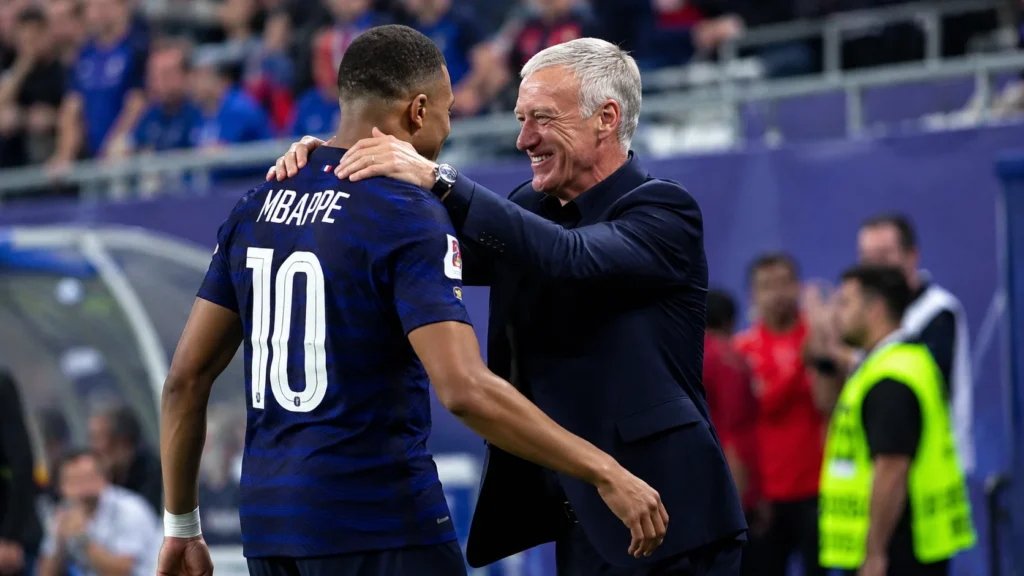
A Career Built on Adaptation
Deschamps took over a France squad in 2012 that was still recovering from the mutiny of the 2010 World Cup. He rebuilt the culture. In 2018, he shifted from a 4-3-3 to a more pragmatic 4-2-3-1 mid-tournament, sacrificing attacking fluency for defensive solidity, and won the World Cup. In 2022, he navigated injuries to key players and reached the final, losing on penalties to Argentina.
The current tournament presents a specific challenge: Mbappé is 27, no longer the teenage runner who finished moves in 2018. He wants to be involved in the game. He drops deep. He drifts wide. Fitting him into the central striking role while maintaining team balance has been Deschamps’ hardest tactical puzzle.
The solution—building the system around player skill sets and adjusting roles rather than personnel when problems emerge—has become his trademark. The small-space combinations that Mbappé, Olise, Desire Doué, Dembélé, and Bradley Barcola are now producing are built on on-field understanding rather than rehearsed patterns.
As our coverage of France’s 2026 World Cup campaign and their status as tournament favourites has tracked, the team has looked increasingly impressive since the Senegal first half. The Norway demolition was a statement. The pattern from previous tournaments is repeating: France starts with a logical plan, encounters friction, and adapts faster than opponents can exploit it.