

 English

























































































































































































































































AI-Designed Vaccine Enters Human Trials: What Cambridge Found

University of Cambridge researchers have completed the first human trial of a vaccine whose key component is an artificial intelligence designed entirely. The Phase I study, published in the Journal of Infection, tested the AI-designed antigen in 39 people and found it generated a modest immune response with no significant safety concerns. The vaccine targets all coronaviruses—not a single strain or variant—marking a shift from reactive vaccine development toward what the research team calls anticipatory immunity. A larger 200-person immunogenicity study is now planned.
The Question Everyone Is Asking
Can AI design a vaccine that protects against viruses that haven’t emerged yet?
The Cambridge trial doesn’t answer that question definitively. It answers a more immediate question: can an AI-designed antigen enter human bodies safely and teach the immune system something useful? The data says yes—with caveats.
Prof Jonathan Heeney, who leads the Cambridge team, called the technology “surprising all of us” and said it was “amazing what we can do with it for the good of humanity.” But the immune response was modest. The trial was small. The real test hasn’t happened yet.
How the AI Vaccine Works
Current vaccines target a specific virus strain. Scientists sequence a circulating pathogen, design a vaccine against it, then update the formulation when the virus mutates. This cycle explains annual flu shots and Covid variant boosters.
The Cambridge team took a different approach. They fed an artificial intelligence the genetic codes of multiple coronaviruses—strains that infect humans, bats, pangolins, and other animals—collected through years of viral surveillance. The AI analyzed the sequences and designed a “super-antigen.” Instead of targeting the rapidly mutating spike proteins that most coronavirus vaccines use, the antigen trains the immune system to recognize deeper structures that evolution preserves across the entire viral family.
The reasoning: viruses can mutate their surface proteins without losing function. They cannot mutate these conserved structures without breaking something essential. Target the conserved regions, and you target the whole family.
Prof Saul Faust of the University of Southampton, who conducted some of the trial vaccinations, told the BBC the AI approach was “an awful lot better at designing vaccines for potential pandemics when viruses are changing.” He said the technology “definitely has potential” and called it “really exciting.”
A Timeline: From Lab Bench to Human Arm
Pre-2020: Viral surveillance programs collect genetic sequences from coronaviruses found in animal reservoirs worldwide. The data accumulates for years without a clear vaccine-design application.
2023-2024: Cambridge researchers develop the AI platform capable of analyzing multi-strain viral genetic data and identifying conserved antigenic targets. As our coverage of early AI-driven antigen design proofs-of-concept documented, the computational approach showed promise in animal models before human testing began.
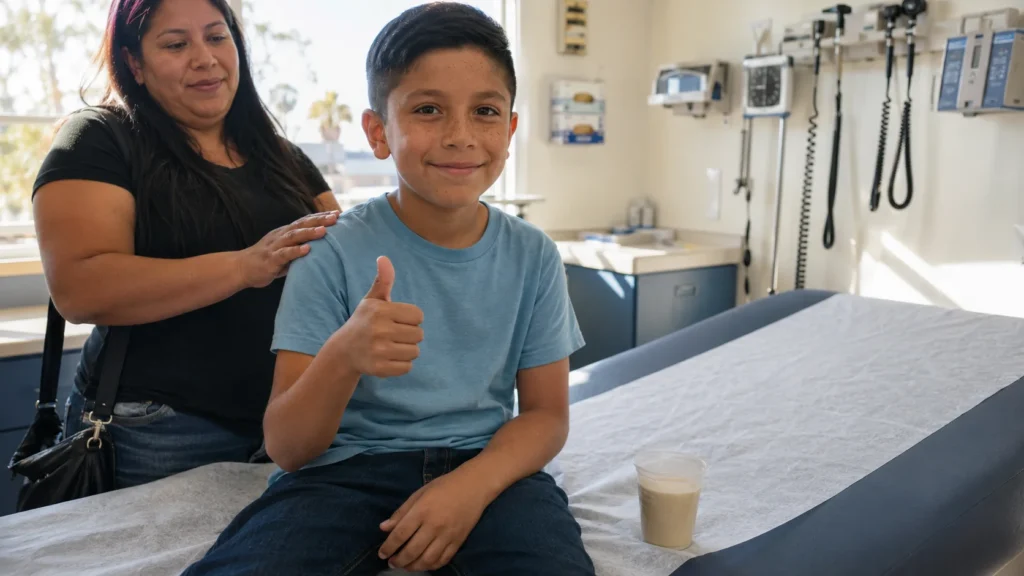
Early 2026: The Phase I safety trial enrolls 39 participants at Cambridge and Southampton. The AI-designed antigen is administered. Researchers monitor for adverse events and measure initial immune responses.
June 2026: Results published in the Journal of Infection. The immune response is “modest” but measurable. Safety data is clean. The University of Cambridge official press release on the vaccine trial confirms plans for a larger study.
Late 2026 (anticipated): A 200-person immunogenicity study will assess how well the vaccine trains human immune systems to recognize coronaviruses that the AI wasn’t trained on—the critical test of the universal claim.

What’s Happening in Parallel
The Cambridge team doesn’t work on coronaviruses alone. Animal research is underway on a universal influenza vaccine that wouldn’t need annual reformulation. An H5N1 bird flu vaccine is in preclinical development, preparing for the possibility that a virus currently devastating bird populations adapts to human-to-human transmission. Work on viral haemorrhagic fever vaccines—including Ebola species—is also in early stages.
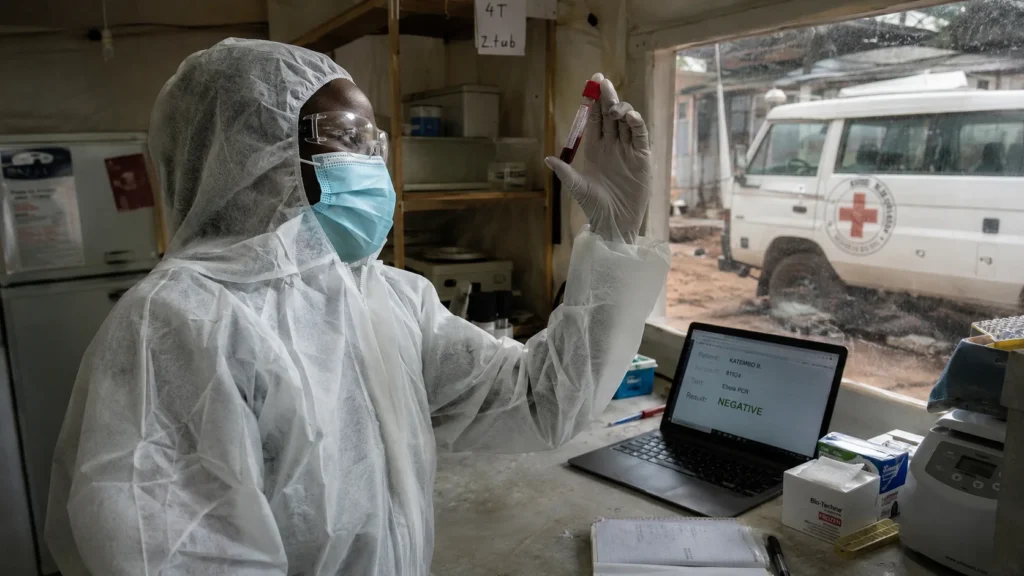
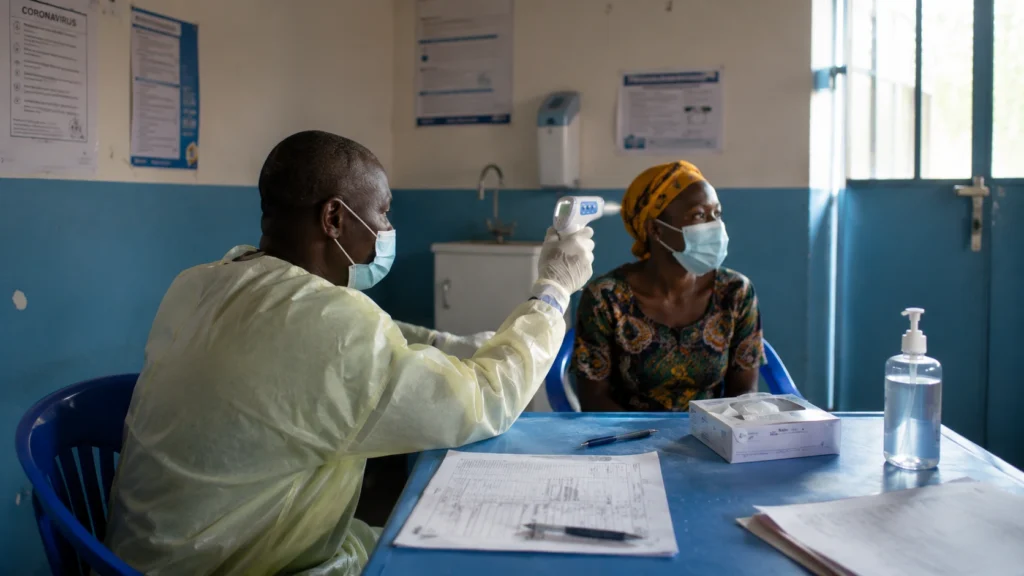
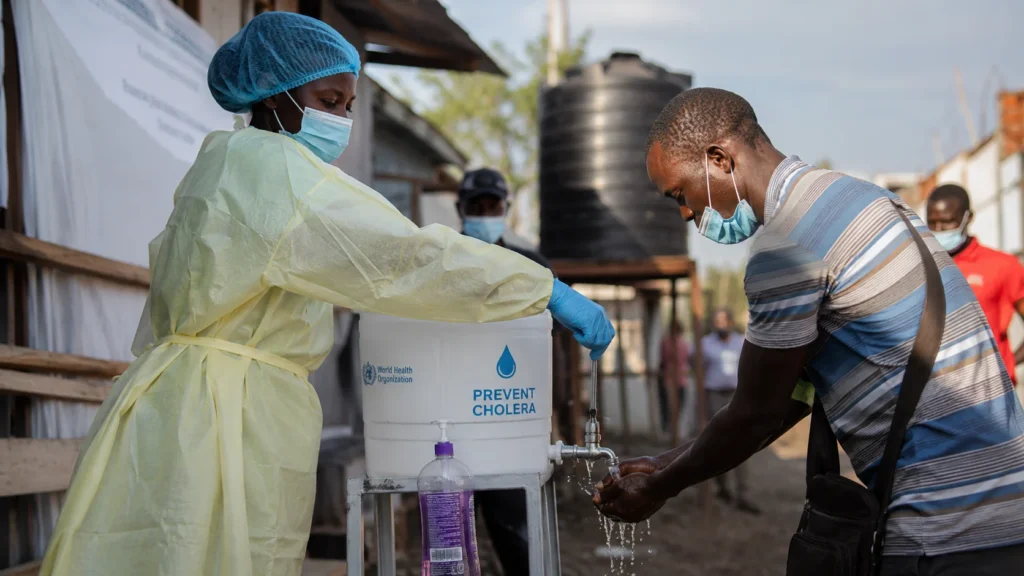
This matters because of the current Ebola outbreak in the Democratic Republic of Congo. The WHO Ebola situation reports for the DRC outbreak, 2026 document infections from a viral species for which no approved vaccine exists. An AI platform capable of rapidly designing antigens against novel viral species would change outbreak response timelines substantially.
Who conducted the AI-designed vaccine trial?
The trial was led by Prof Jonathan Heeney at the University of Cambridge, with vaccination sites also operating at the University of Southampton under Prof Saul Faust. The research was published in the Journal of Infection. Prof Marian Knight, scientific director for the National Institute for Health and Care Research, called the results “a pivotal leap forward.”
How is an AI-designed vaccine different from traditional vaccines?
Traditional vaccines target a specific virus strain using antigens designed by human immunologists. When the virus mutates, the vaccine needs updating. The Cambridge AI analyzed genetic codes from multiple coronaviruses and designed a single “super-antigen” targeting conserved structures shared across the entire viral family. The goal is protection against variants that exist now and those that could emerge in the future.
Did the trial prove the vaccine works?
No. The Phase I trial enrolled 39 people and focused on safety, not efficacy. It showed that the AI-designed antigen generated a modest immune response with no significant safety concerns. A larger 200-person study will assess immunogenicity more thoroughly. Efficacy against actual coronavirus infection would require still larger trials.
What other diseases could AI-designed vaccines target?
The Cambridge team is conducting animal research on universal influenza vaccines, H5N1 bird flu vaccines, and vaccines for viral haemorrhagic fevers, including Ebola. The platform approach—feeding viral family genetic data into AI to identify conserved antigen targets—potentially applies to any mutating virus with sequenced relatives.
When might an AI-designed vaccine become available to the public?
No timeline exists. The technology is in early clinical testing. The 200-person immunogenicity study must be completed first. If results are positive, larger efficacy trials would follow. Regulatory frameworks at the FDA and European Medicines Agency are still adapting to algorithm-designed biologics, as our analysis of regulatory gaps in AI-designed therapeutics has documented.
What did the trial’s modest immune response mean?
“Modest” means the vaccine generated measurable but not robust immune activation. That’s common in early Phase I trials, particularly for novel antigen designs. The larger immunogenicity study will test dose adjustments, and whether the response broadens to cover coronaviruses the AI wasn’t trained on—the key measure of universal protection.
What to Watch Over 12 Months
Three developments will determine whether this approach fulfills its promise.
The 200-person immunogenicity data will land first. Watch for the breadth of antibody response—specifically, whether vaccinated individuals produce neutralizing antibodies against coronaviruses that the AI never analyzed. That’s the universal claim’s critical test.
The Cambridge team’s animal data on universal flu and H5N1 vaccines will show whether the platform generalizes. One success is promising. Two successes across different viral families would suggest a replicable methodology.
Regulatory adaptation will lag behind the science. The MHRA innovation pathway for AI-designed biologics guidance document represents an early attempt at a framework. The FDA’s equivalent guidance remains in draft. Expect tension between computational design speed and regulatory deliberation pace.
Written by the Global Health & Science Desk, which has covered vaccine development, pandemic preparedness, and the intersection of artificial intelligence and drug discovery since 2019.