

 English







































































































































































This Desert Hotel Has No Bar. It Has the Milky Way Instead.
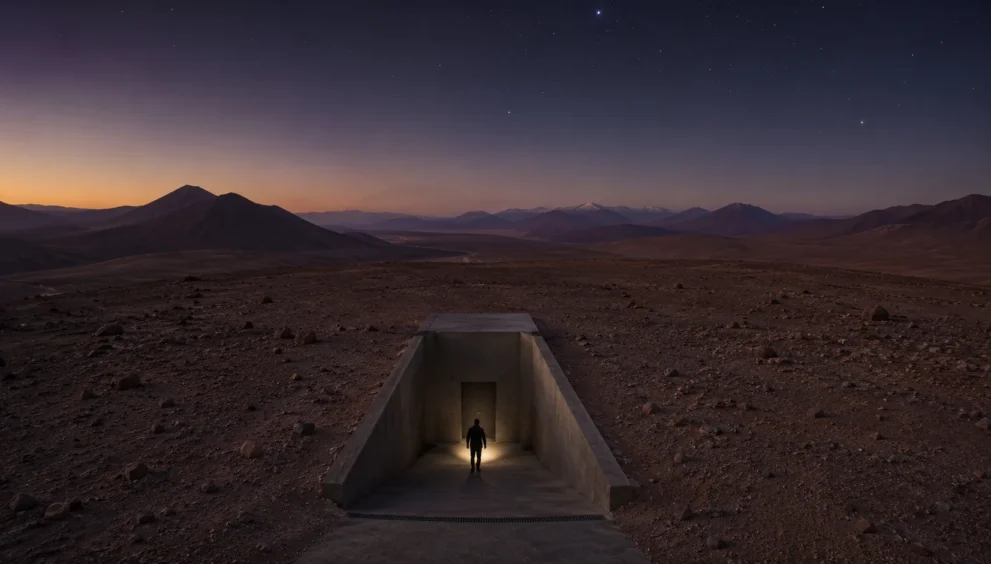
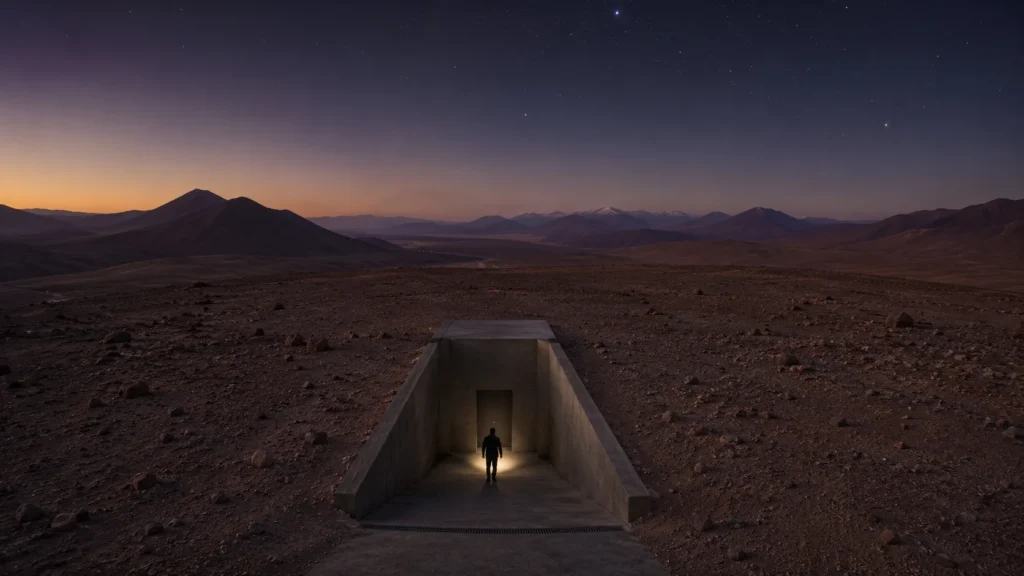
The door is unlabelled. It sits at the base of a shallow ramp, heavy, designed to be missed. Above it, bare rock and empty sky. The Atacama Desert does not announce the Residencia. It hides it. The building sinks into the landscape the way a Bond villain’s lair sinks into a mountainside—and for the same reason. In 2008, Daniel Craig’s 007 fought his way through these corridors in the finale of Quantum of Solace. There were explosions. The cameras captured the terraces, the hidden entrance, the sense that something secret operated just below the visible world.
The film crew left. The astronomers stayed.
They always stay. The Residencia is a hotel that the public cannot book. Its 100-plus rooms belong to the scientists and engineers who operate the Very Large Telescope on Cerro Paranal, a few kilometers away, and the Extremely Large Telescope now rising on Cerro Amazones. The European Southern Observatory owns and runs it. The design brief was not luxurious. It was survival. The Atacama sits more than 2,000 meters above sea level. The air outside has almost no moisture. The UV light punishes. The nearest city, Antofagasta, is two hours away by road. The Residencia exists because science requires bodies on site, and bodies require an environment that will not destroy them.
So what is actually happening here? Architecture designed for astronomy has produced an accidental masterpiece—a building that inverts every expectation of what a hotel should be. It does not serve alcohol. It keeps its occupants in the dark. It forbids headlights after sunset. And in doing so, it creates something rarer than luxury: a relationship with the universe that no five-star resort can replicate.
The Building That Darkness Built
The Residencia’s most important design feature is not the central atrium with its tropical trees and swimming pool. It is not the moist air that hits your skin when you step inside from the desert. It is the darkness. The building keeps itself dark in ways that would feel punitive anywhere else.
Individual rooms have minimal windows. Any glass that exists gets covered by solid shutters at night. The translucent dome that keeps the atrium plants alive during the day has a canopy that extends each evening. Outside, cars must switch off their main headlights after dark. Torches must point only at the ground. The precautions serve a single purpose: the telescopes on the mountain above cannot tolerate stray light. A single photon in the wrong place contaminates data collected across light-years.
The architects—who earned the building a place on the Guardian’s 2009 list of the “10 best buildings of the decade”—understood something that most hotel designers never consider. Light is not always a friend. Sometimes it is pollution. The Residencia treats it accordingly.
The result is a building that feels like a bunker from the outside and a terrarium from the inside. The contrast is not a flaw. It is the point. The desert outside is lethal. The oasis inside is artificial. The astronomers move between them in cycles—day shifts for maintenance and algorithm writing, night shifts for observation, the rhythm of the rotating sky dictating the rhythm of human labor.
The Sunset Ritual
Every evening, the astronomers put down their tools to watch the sun drop into the Pacific. It is a tradition, not a scheduled event. The telescopes cannot fire up until the sky is dark enough. The gap between sunset and full darkness is not dead time. It is the moment the night shift crosses over with the day shift, the moment the mountain switches from maintenance mode to observation mode, the moment the laser guides begin firing up into the atmosphere.
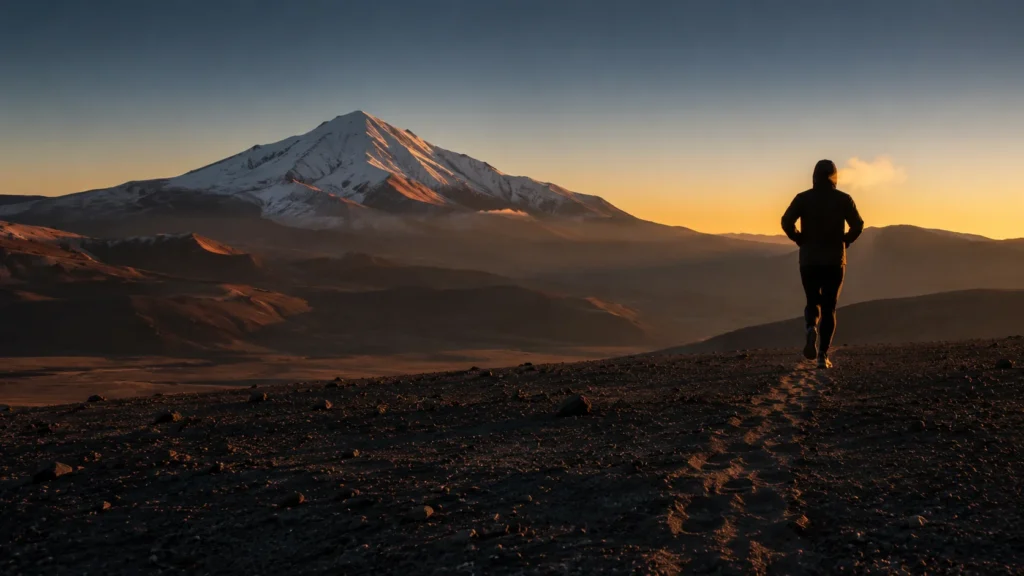
If you wake at 2 AM and step outside the rear door of your room directly onto the desert floor, the sky does something that most humans have never seen. The Magellanic Clouds hang visible to the naked eye—daubed as green splodges on black. A train of 20 or more linked satellites crosses the dense canvas, one after the other. The VLT’s laser stabs upward, guiding observations of objects so distant that the light arriving now left before humans existed.
The Residencia does not offer this view as an amenity. It offers it as a byproduct of its actual function. The building exists to support the telescopes. The telescopes exist to collect light. The darkness that makes the building strange makes the science possible. The strangeness is the point. The awe is a side effect.
What the Building Refuses to Be
The Residencia is not a retreat. It has no spa, no wellness programming, no infinity pool positioned for Instagram. The swimming pool sits under the central dome. The food is abundant but functional. Alcohol is banned—altitude and dehydration make it dangerous. Exercise outdoors requires caution and notification. The safety briefings warn of grogginess, nausea, and the punishing UV.
These are not amenities. They are constraints. The constraints produce the experience.
The building refuses to be a destination. The public cannot book it. The astronomers who stay there are not on holiday. They are working. The work requires them to live in cycles, to surrender their circadian rhythms to the sky’s rotation, to accept that their bedroom windows will be shuttered and their headlights will be off and their torches will point only at the ground. The building does not serve them. They serve the building’s purpose. The purpose is science. Science is the sky.
The Cultural Mirror
The tension here is Elite Access vs Democratic Participation. The Residencia is one of the most exclusive hotels on Earth. It is also one of the least commercial. Exclusivity usually signals wealth. Here, it signals a function. You cannot buy your way in. You have to be an astronomer or an engineer working on a specific set of telescopes in a specific desert in Chile. The exclusivity is not about status. It is about necessity.
But the necessity produces something that money cannot buy. The view of the Magellanic Clouds with the naked eye. The laser guide star is firing into the atmosphere at 2 AM. The tradition of watching the sunset over the Pacific before the night shift begins. These experiences are not a luxury. They are not even hospitable. They are the byproducts of building a structure that protects scientists from a hostile environment while protecting the sky from the scientists’ own light.
The irony is that a Bond villain’s lair—the set for a film about a man who controls global systems—now houses people who study how little of the universe we will ever control. One plot. The other observes. The building served both. Only one of them is still there.
What Comes Next
The Extremely Large Telescope on Cerro Amazones will demand more engineers, more astronomers, and more cycles of day and night shifts. The Residencia’s population will shift. The building will continue to function as it has. Its architecture will not change. Its purpose will not broaden.
The broader cultural signal is that buildings designed for scientific necessity can produce aesthetic and emotional experiences that deliberate luxury cannot replicate. The Residencia did not set out to be a marvel. It set out to house astronomers. The marvel is a side effect. The darkness is the condition. The sky is the reward.